A committee in the European Parliament endorsed a plan that calls for 10% of transportation fuels to come from sources such as plants and grains by 2020, but it also calls for a switch to other renewable sources over time.


"Putting the standards into effect still requires agreement from the full Parliament and European governments. But biofuels manufacturers, worried that their industry is coming under threat, now are seeking to ensure they have a future.
They are stepping up a publicity campaign, warning that alternatives to biofuels like hydrogen and electricity - while they might help to reduce tailpipe pollution - still would require burning of fossil fuels to manufacture.
'Renewable electric cars do not exist,' said Raffaello Garofalo, the secretary general of the European Biodiesel Board. 'People are going to charge the batteries of their cars at home with normal electricity that is predominately of a fossil fuel base. So there is no incentive given to renewables that way - instead you are just increasing the use of electricity full stop.'"
Read the full story: Europe Lowers Goals for Biofuel Use
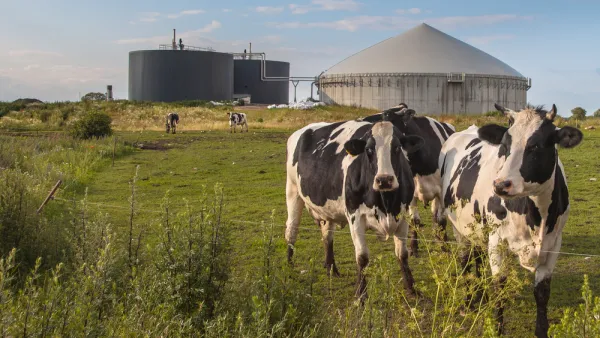
Renewable Natural Gas Makes Inroads in California, Oregon, and Missouri
What is expected to be the nation's largest dairy biogas operation opened in the Central Valley. To the north, Gov. Kate Brown signed the nation's first bill to establish goals to add renewable gas to pipelines, and pigs in Missouri also made news.
Renewable Natural Gas and Electricity Should Power Los Angeles Bus Fleet
It's not one or the other but both, argues Denny Zane of Move LA in a guest commentary for the Los Angeles Daily News about the decision that Los Angeles County Metro will make on June 22 on the future of the nation's second largest bus fleet.
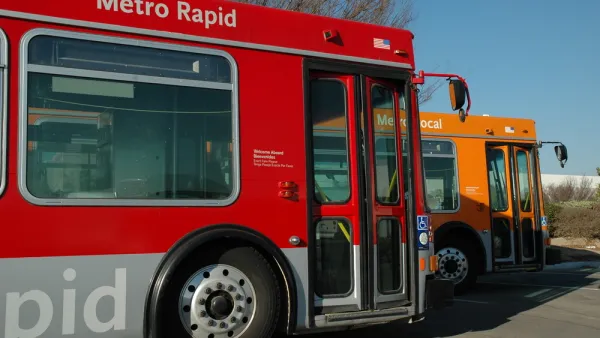
Best Fuel to Power Buses: Renewable Natural Gas or Battery-Electric?
Next month the Los Angeles County Metropolitan Authority will decide what type of buses to purchase to replace 1,000 aging diesel buses. Two op-eds in the Los Angeles Daily News present alternative viewpoints.

Planetizen Federal Action Tracker
A weekly monitor of how Trump’s orders and actions are impacting planners and planning in America.

California plans to bury El Niño’s downpour
If the state plays its cards right, it may be able to store a billion acre-feet of El Niño’s water in aquifers.

Desperate measures: Advocates weigh draining Lake Powell to fill Colorado River
Draining the reservoir could reduce evaporation losses by a couple hundred thousand acre-feet.

Los Angeles just elected an urban planner as its mayor
Transportation analysts are optimistic that Raman will be more aggressive in addressing transit issues than Bass.

Mamdani’s pied-à-terre tax survives legal challenge
A panel of judges found that the plaintiffs failed to demonstrate injury as a result of New York City's implementation of the tax.

Eastern Nebraska is running out of electricity
Data centers and electrification are straining eastern Nebraska’s grid, throttling economic development.

FREE Course: Walkable City 1: Why Walkability?
After describing his path towards focusing on walkability as the essence of good planning, Jeff Speck marches through his five principal reasons for making more walkable places.
Reinventing Malls: Planning Alchemy—Turning Gray Fields Into Gold
The course focuses on the opportunities and imperatives that shape reinvention of mall sites.

City of Rosemead
Rutgers University, Edward J. Bloustein School of Planning and Public Policy
One Hundred Miles
University of Michigan School for Environment and Sustainability (SEAS)
Hunter College, City University of New York (CUNY)
The Architects Foundation
City of Cambridge
Montrose County
The Pocatello Development Authority