A decision on whether or not to swap potentially oil-rich, protected land in the Yukon Flats with private wetlands will not be reached for another year. Appraisals will be underway to determine whether or not the controversial trade is fair.


"In the swap, the Fish and Wildlife Service would get at least 150,000 acres of Doyon land within the refuge, and Doyon would give up another 56,500 acres of land it owns inside the refuge that was selected as part of the Alaska Native Claims Settlement Act in 1970.
Doyon would get 110,000 acres of refuge lands believed to be rich in oil and gas reserves with subsurface drilling rights to another 97,000 acres of adjacent land. The Native corporation would also get to select lands outside the refuge in exchange for the ANCSA-selected lands it gives up in the refuge."
"The swap is opposed by environmentalists and many residents in Yukon Flats villages, who fear development in the refuge and the effects it will have on hunting, fishing and wildlife habitat."
Read the full story: Federal agency postpones decision on Yukon Flats swap
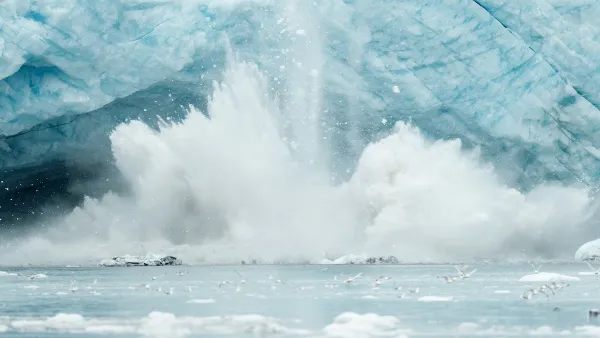
Who pays when a remote Alaska village can no longer stay?
A year after ex-Typhoon Halong, the struggle for two communities to find safer ground has become part of a national debate over who should bear the costs of the climate crisis.
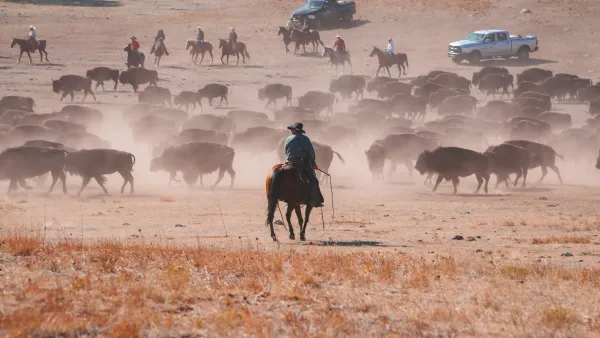
Feds want to stop notifying landowners about drilling under their land
The proposal also asks to reduce the public comment period for the BLM’s leasing decisions from 90 days to 10.
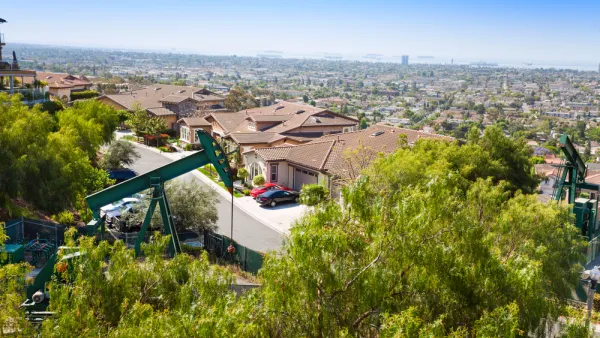
Lawsuit Challenges L.A. Oil Drilling Ban
Oil companies with operations in the city of Los Angeles are suing over an ordinance that seeks to phase out drilling within city limits due to public health and environmental concerns.

Planetizen Federal Action Tracker
A weekly monitor of how Trump’s orders and actions are impacting planners and planning in America.

Eastern Nebraska is running out of electricity
Data centers and electrification are straining eastern Nebraska’s grid, throttling economic development.

Study reveals best places in the U.S. for cycling, walking
New research from Streetlight Data examines bicycle and pedestrian miles per capita in the 100 largest U.S. cities by population.

Next-generation nuclear reactors are coming to Texas
The reactors will not require towering containment structures thanks to new safety features.

California distributes $1.3 billion to prevent transit service cuts, bolster projects
Twenty-eight projects across California received a portion of the funding.

Pennsylvania Democrats have 15 affordability, clean energy bills for flipped state Senate
Bills in consideration include a bill supporting geothermal energy and a bill supporting solar on warehouses.

FREE Course: Walkable City 1: Why Walkability?
After describing his path towards focusing on walkability as the essence of good planning, Jeff Speck marches through his five principal reasons for making more walkable places.
Reinventing Malls: Planning Alchemy—Turning Gray Fields Into Gold
The course focuses on the opportunities and imperatives that shape reinvention of mall sites.

City of Charlotte
City of Rosemead
Rutgers University, Edward J. Bloustein School of Planning and Public Policy
University of Michigan School for Environment and Sustainability (SEAS)
Hunter College, City University of New York (CUNY)
The Architects Foundation
City of Cambridge
The Pocatello Development Authority
The Urban Renewal Agency of the City of Pocatello