The city of Los Angeles forms a task force of prosecutors, police, and others to combat illegal disposal of trash all over town.


"Shawn Massey, a veteran officer with the Los Angeles Police Department, wheeled his vehicle onto a parallel street and darted into an alley connecting the two roadways. Shutting off his headlights, he and his partner waited for the dump truck to pass.
The two officers were part of a city task force formed to crack down on people who illegally dump refuse in neighborhoods south of the Santa Monica Freeway.
The effort represents a change in strategy for the city. In the mid-1990s, the LAPD conducted similar patrols but cut back in recent years so officers could focus more on violent crime. Policing alleys was left largely to street services investigators, who have authority to make misdemeanor arrests if they catch someone dumping. But because those investigators are unarmed, they tended to steer clear of some of the toughest neighborhoods unless they have a police escort."
Read the full story: Task force cracks down on South L.A. trash dumpers
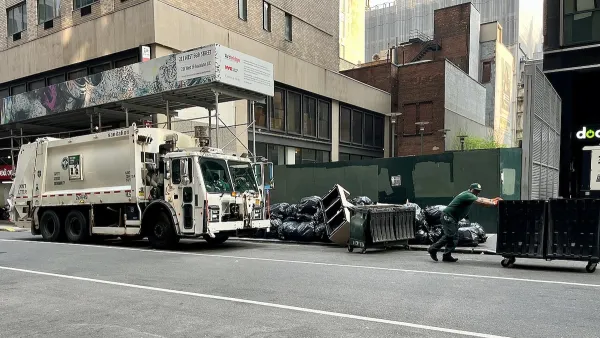
Parked Cars Hamper NYC Trash Containerization Effort
Sanitation workers must manually collect bags from containers blocked by parked cars, slowing a process that is meant to be safer and more efficient.
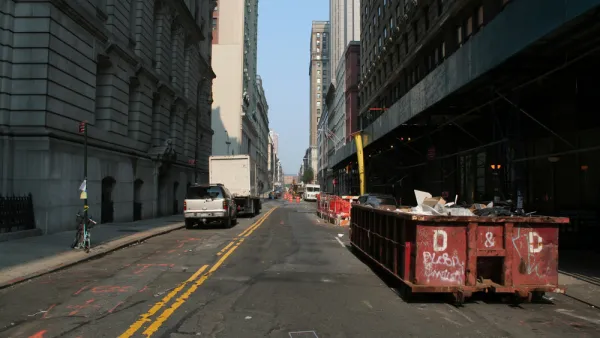
N.Y.C. Law Will Establish Waste Collection Zones
A new law will reorganize the city’s trash collection network and reduce the number of sanitation trucks crisscrossing the city.

Unique Garbage Challenges in Juneau
Juneau, Alaska's tiny capital city, is not accessible from elsewhere by road. Its isolation makes waste disposal problematic and expensive, spurring an aggressive recycling effort.

Washington state to charge fee to drivers with fuel-efficient cars
Revenue from the fee will go towards supporting the state’s highways.

Illinois considers spending $1 billion in taxpayer money on data center
A quantum computing campus and data center are currently under construction in Chicago.

Trump to blast ‘hydrocarbon highway’ through ‘world’s longest art gallery’
Environmental and historic preservation groups are suing to stop the project.

NYC, state sue feds over mixed-immigration-status housing assistance rule
The state’s lawsuit argues that the rule change violates the Administrative Procedure Act.

Michigan to turn neighborhood into virtual power plant
Residents will soon be able to divert their excess energy to the grid in exchange for compensation.

Data center, mining project swarm to long-awaited Alaska railroad line
The state-owned railroad approved final plans for the spur line this week; the project is expected to cost $311 million, mostly funded by the federal government

FREE Course: Walkable City 1: Why Walkability?
After describing his path towards focusing on walkability as the essence of good planning, Jeff Speck marches through his five principal reasons for making more walkable places.
Reinventing Malls: Planning Alchemy—Turning Gray Fields Into Gold
The course focuses on the opportunities and imperatives that shape reinvention of mall sites.

City of Charlotte
City of Rosemead
Rutgers University, Edward J. Bloustein School of Planning and Public Policy
University of Michigan School for Environment and Sustainability (SEAS)
Hunter College, City University of New York (CUNY)
The Architects Foundation
University District Partnership