Juneau, Alaska's tiny capital city, is not accessible from elsewhere by road. Its isolation makes waste disposal problematic and expensive, spurring an aggressive recycling effort.



Juneau's isolated location in the coastal mountains of the Alaska Panhandle doesn't lend itself to easy waste management. "Like most of the small communities in the Alaska Panhandle, Juneau is reachable only by boat or by plane [...] That means it's not a city surrounded by limitless acres of unused space, a fact that results in some unusual municipal dilemmas."
Pacific Standard writer Eva Holland spoke to Jim Penor, Juneau's solid waste coordinator. Penor revealed that "Unlike some [...] other major towns, where all waste is shipped to Washington by barge, Juneau keeps its solid waste close to home." That landfill, sadly, won't accept trash forever. At that point, non-recyclable waste will need to leave town by barge.
Meanwhile, Penor is dedicated to building Juneau's recycling program. Holland writes, "The city works with Waste Management to run a depot where residents can deliver their sorted recyclables. From there, the glass, tin, plastic, and paper items are collected into bales and transferred to barges headed south, to the ports in Seattle and Tacoma, and then onto trucks to recycling facilities in Washington state."
Read the full story: How Juneau Handles Its Garbage

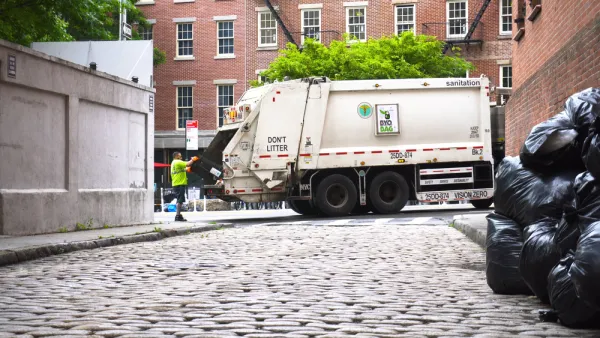
Waste Management Best Practices (And Their Impact on Urban Planning)
Urban planners can play a role in ensuring the best possible waste management practices are implemented whenever possible.
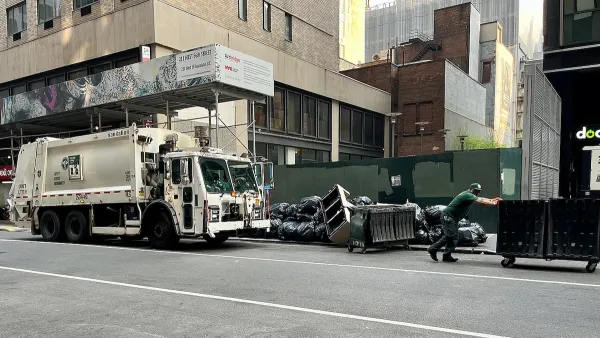
Parked Cars Hamper NYC Trash Containerization Effort
Sanitation workers must manually collect bags from containers blocked by parked cars, slowing a process that is meant to be safer and more efficient.
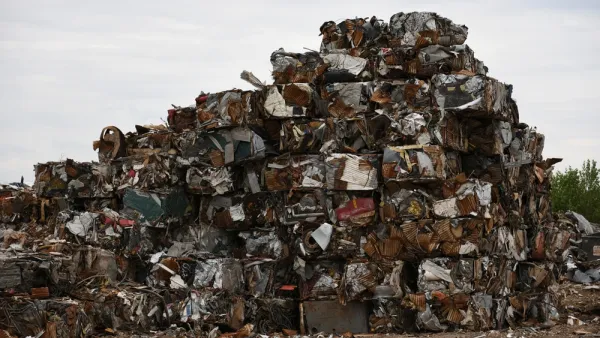
U.S. Recycling Markets in Free Fall After China Pulls Import Plug
China has stopped purchasing the recyclables that millions of Americans place curbside on recycling days, upending the industry. Recyclables are already directed toward landfills as domestic markets are sought. Berkeley, Calif. may go a novel route.

Planetizen Federal Action Tracker
A weekly monitor of how Trump’s orders and actions are impacting planners and planning in America.

Amtrak, CN end decades-long dispute with eight-year agreement
The new operating agreement establishes an updated framework for the companies to work together, including processes to resolve disputes.
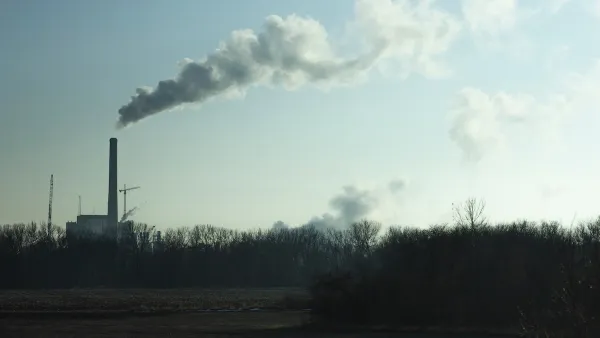
Nation's most wind-powered state turns to coal as data centers increase energy demand
For the first time in decades, Iowa has increased its generation of coal power.

Alabama scores up to $2.5 billion federal loan for largest infrastructure project in state’s history
The Mobile River Bridge and Bayway Project aims to ease congestion at Alabama’s worst bottleneck.

Trump is considering data centers on 6 states' public land — some state officials say they had no idea
If the administration approves the proposed projects, data center and data center-related developments will cover 17,600 acres of public land.

Despite court ruling, Trump is keeping nearly all wind projects in the US on hold
At least 110 wind energy projects have not heard from the government since a federal judge ruled that the Trump administration's freeze on wind turbine clearances was likely illegal.

FREE Course: Walkable City 1: Why Walkability?
After describing his path towards focusing on walkability as the essence of good planning, Jeff Speck marches through his five principal reasons for making more walkable places.
Reinventing Malls: Planning Alchemy—Turning Gray Fields Into Gold
The course focuses on the opportunities and imperatives that shape reinvention of mall sites.

KFH Group Inc.
Greater Baltimore Committee
Eagle County Government
The Architects Foundation
University of Cincinnati Online
The Pocatello Development Authority
The Urban Renewal Agency of the City of Pocatello