As the economy continues to struggle, many expect governments to increasingly look at privatizing roads and other infrastructure.


"Cash-strapped U.S. state and city governments are likely to sell or lease more highways, bridges, airports and other assets to investors desperate for stable returns after being frazzled by the credit crisis."
"The trend is set to pick up speed given worsening budget deficits in state capitals and city halls nationwide."
"The latest enthusiasm for at least partially privatizing infrastructure assets came on July 30 from New York Gov. David Paterson, who is trying to plug a budget deficit caused in part by lower tax revenue as Wall Street retrenches."
"'We're just looking at ways to be more efficient and that's why I used the term public-private partnerships -- trying to find some creative solutions,' Paterson said. 'The reason I'm avoiding taxes is because I think taxes are addictive.'"
Read the full story: Roads, airports on the block as budgets tighten

Opinion: The Slippery Slope of Privatizing Public Works
The Biden administration is changing course on a century of policy in public works ownership and management, signaling a concerning shift toward privately owned, profit-driven utilities and other essential services.
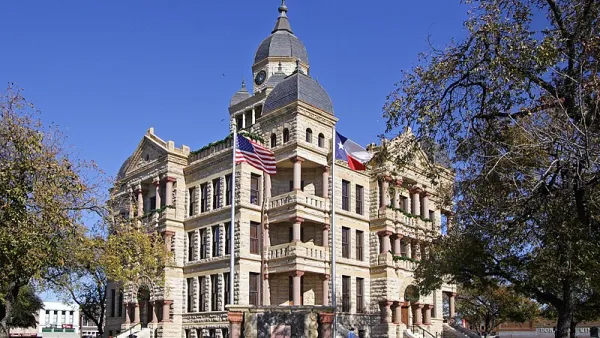
Denton Plans to Replace Most Bus Routes With On-Demand Microtransit
Transit advocates worry that outsourcing fixed-route service will decrease service levels and raise costs for riders.
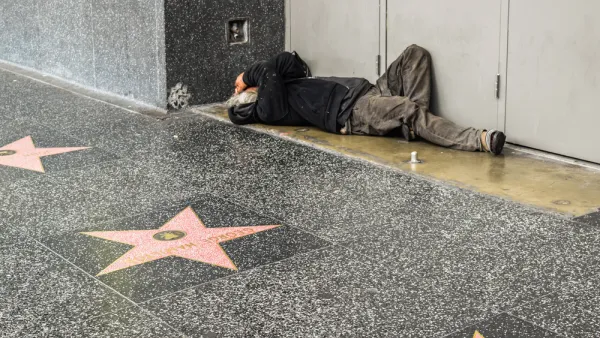
The Battle for Public Space: Business Owners vs. Homeless Residents
The role of business improvement districts in criminalizing homelessness reflects a tension between private interests and public space, Rob Waters writes.

Planetizen Federal Action Tracker
A weekly monitor of how Trump’s orders and actions are impacting planners and planning in America.

Eastern Nebraska is running out of electricity
Data centers and electrification are straining eastern Nebraska’s grid, throttling economic development.

Study reveals best places in the U.S. for cycling, walking
New research from Streetlight Data examines bicycle and pedestrian miles per capita in the 100 largest U.S. cities by population.

Federal government nominates new FTA administrator
Mark Aesch is currently the founder and CEO of a transportation management consulting firm.

Developers reveal $10 billion stadium plan as ‘Hail Mary’ to keep Bears in Chicago
The plan would also boast a public park, high- and mid-rise buildings and a youth sports complex.

As Texas embraces carbon storage, a Black community questions the risks
Texas now issues permits for companies to store carbon dioxide underground. East Texas residents fear safety risks, and skeptics doubt the climate benefits.

FREE Course: Walkable City 1: Why Walkability?
After describing his path towards focusing on walkability as the essence of good planning, Jeff Speck marches through his five principal reasons for making more walkable places.
Reinventing Malls: Planning Alchemy—Turning Gray Fields Into Gold
The course focuses on the opportunities and imperatives that shape reinvention of mall sites.

City of Charlotte
City of Rosemead
Rutgers University, Edward J. Bloustein School of Planning and Public Policy
University of Michigan School for Environment and Sustainability (SEAS)
Hunter College, City University of New York (CUNY)
The Architects Foundation
City of Cambridge
The Pocatello Development Authority
The Urban Renewal Agency of the City of Pocatello