New technologies promise to revolutionize the hunt for a parking spot in big cities like San Francisco. Donald Shoup is along for the ride.


"This fall, San Francisco will test 6,000 of its 24,000 metered parking spaces in the nation's most ambitious trial of a wireless sensor network that will announce which of the spaces are free at any moment.
Drivers will be alerted to empty parking places either by displays on street signs, or by looking at maps on screens of their smartphones. They may even be able to pay for parking by cellphone, and add to the parking meter from their phones without returning to the car.
Solving the parking mess takes on special significance in San Francisco because two years ago a 19-year-old, Boris Albinder, was stabbed to death during a fight over a parking space.
"If the San Francisco experiment works, no one will have to murder anyone over a parking space," said Donald Shoup, a professor of urban planning at the University of California, Los Angeles, whose work on the pricing of parking spaces and whether more spaces are good for cities has led to a revolution in ideas about relieving congestion."
FULL STORY: Can’t Find a Parking Spot? Check Smartphone

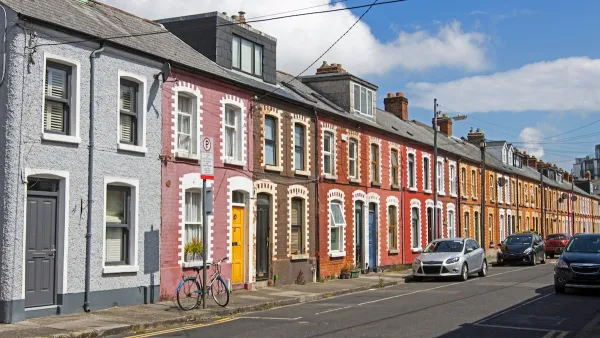
Reimagining the Curb: How Smart Curb Management is Transforming Urban Mobility
Modern demands for curbside space call for new ways to manage and allocate it.
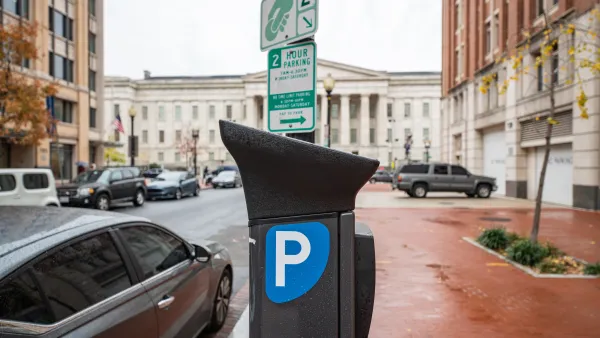
D.C. Residents Heavily Subsidize Residential Parking
The District is losing out on hundreds of thousands in potential revenue while encouraging residents to store cars on valuable public land.
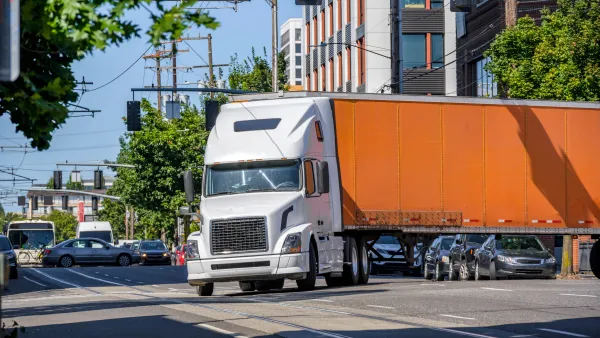
St. Paul Proposal Would Prohibit Large Trucks From Parking on City Streets
Residents and businesses are calling for a ban on trucks, which are increasingly taking up curbside parking in the city after neighboring Minneapolis instituted a similar rule.

Planetizen Federal Action Tracker
A weekly monitor of how Trump’s orders and actions are impacting planners and planning in America.

The state-sanctioned urbicide of Austin
People don’t kill cities. Freeways do.

US to reduce Colorado River water deliveries to Mexico
A new Colorado Treaty amendment reduces Mexico’s Colorado River water allocation by 250,000 acre feet.

5 New England states march closer to 800 megawatt wind energy project
Securing federal approval for the project may be complicated under the Trump administration, which has historically been hostile towards domestic wind power.

Baltimore to break ground on $50 million Transit Priority Project
The project will bring faster bus trips, safer streets and better bike connections to Baltimore.

Airbnb launches $250 million 'last-dollar financing' housing accelerator, makes first investment in Austin
The company will put $6.4 million towards affordable housing development in Texas’ capital.

FREE Course: Walkable City 1: Why Walkability?
After describing his path towards focusing on walkability as the essence of good planning, Jeff Speck marches through his five principal reasons for making more walkable places.
Reinventing Malls: Planning Alchemy—Turning Gray Fields Into Gold
The course focuses on the opportunities and imperatives that shape reinvention of mall sites.

Eagle County Government
Harvard University Graduate School of Design
Nashville Planning Department
The Architects Foundation
University of Cincinnati Online
The Pocatello Development Authority
The Urban Renewal Agency of the City of Pocatello
Journal of the American Planning Association