Wired rides the Bronx's new Bus Rapid Transit, and determines that "rapid" is in the eye of the beholder.


"Sunday, passengers taking the Bx12 Limited bus route in New York's Bronx experienced a different ride than the usual. The buses had changed colors and the stops became "stations." With the use of dedicated lanes, pre-paid boarding, and limited stops, the city hopes to reduce the time to travel the whole route by at least 10 minutes in the future. The buses, however, aren't much faster when looking at the printed schedules.
The Select Bus Service, as the Metropolitan Transportation Authority calls it, only cuts three minutes during the midday service off the pre-Select Bus Bx12 Limited service. The MTA, however, says that they will monitor the route closely and then reflect on the time savings.
One of the biggest time savers is the reduced boarding times. With automatic ticket machines, riders swipe their MetroCards or pay their fares at Select Bus stations and receive a receipt. Passengers can then board through any door of the bus. The line uses a proof-of-payment system, where ticket inspectors randomly show up to enforce the payment of fares."
Read the full story: Bus Rapid Transit Debuts in the Bronx
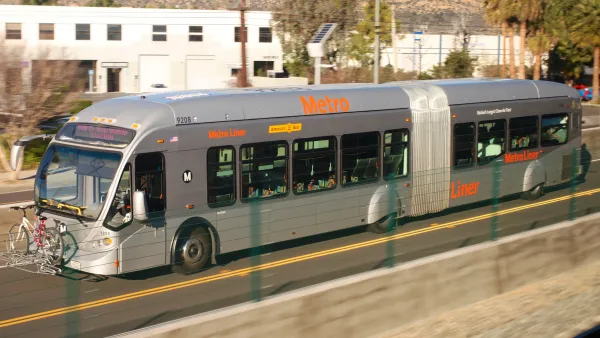
Why Replace Successful BRT With Rail?
The Orange Line, a bus rapid transit line running through Los Angeles' San Fernando Valley, has been a success. To those calling for an expensive conversion to rail, several experts say, why bother?
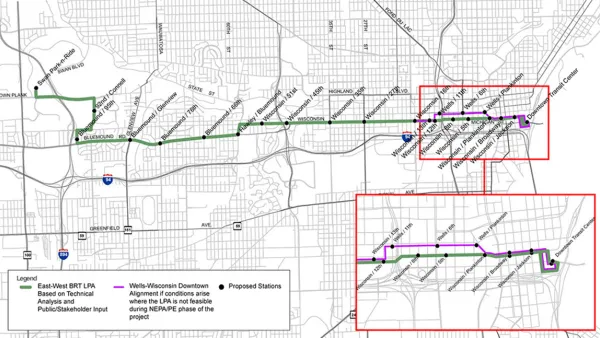
What to Know About Milwaukee's Proposed East-West Bus Rapid Transit Project
Ambitious hopes ride on a proposed bus rapid transit route connecting Downtown Milwaukee with the Milwaukee Regional Medical Center in Wauwatosa.
East-West BRT Proposal Finding Little Resistance in Milwaukee
The proposed East-West Bus Rapid Transit project has already built the political support that doomed a previous attempt at light rail along the corridor.

Planetizen Federal Action Tracker
A weekly monitor of how Trump’s orders and actions are impacting planners and planning in America.

California plans to bury El Niño’s downpour
If the state plays its cards right, it may be able to store a billion acre-feet of El Niño’s water in aquifers.

Desperate measures: Advocates weigh draining Lake Powell to fill Colorado River
Draining the reservoir could reduce evaporation losses by a couple hundred thousand acre-feet.

Los Angeles just elected an urban planner as its mayor
Transportation analysts are optimistic that Raman will be more aggressive in addressing transit issues than Bass.

Mamdani’s pied-à-terre tax survives legal challenge
A panel of judges found that the plaintiffs failed to demonstrate injury as a result of New York City's implementation of the tax.

Eastern Nebraska is running out of electricity
Data centers and electrification are straining eastern Nebraska’s grid, throttling economic development.

FREE Course: Walkable City 1: Why Walkability?
After describing his path towards focusing on walkability as the essence of good planning, Jeff Speck marches through his five principal reasons for making more walkable places.
Reinventing Malls: Planning Alchemy—Turning Gray Fields Into Gold
The course focuses on the opportunities and imperatives that shape reinvention of mall sites.

City of Rosemead
Rutgers University, Edward J. Bloustein School of Planning and Public Policy
One Hundred Miles
University of Michigan School for Environment and Sustainability (SEAS)
Hunter College, City University of New York (CUNY)
The Architects Foundation
City of Cambridge
Montrose County
The Pocatello Development Authority