Planning has become too much like a court case, with two sides and one winner. According to columnist Christopher Hume, this adversarial nature must be changed.


"City planning in Ontario has come to resemble nothing so much as the judicial system."
"Both are treated as if they're games in which there must be a winner and a loser."
"But both are too complex for such a simplistic approach. And in both, the chances for mistakes are enormous."
"And although changing cultures as ingrained as planning and the law will require generations, it is something that must be done."
"Just as Crown attorneys and defence lawyers call their own friendly expert witnesses in an attempt to win the case at any cost, so developers and opponents hire their experts to bolster their argument, no matter how wrong."
"What follows can be self-serving if not outright false, but the process allows and encourages such behaviour."
"It also favours the rich and powerful over the poor and weak."
Read the full story: Let's find a better way to plan a city
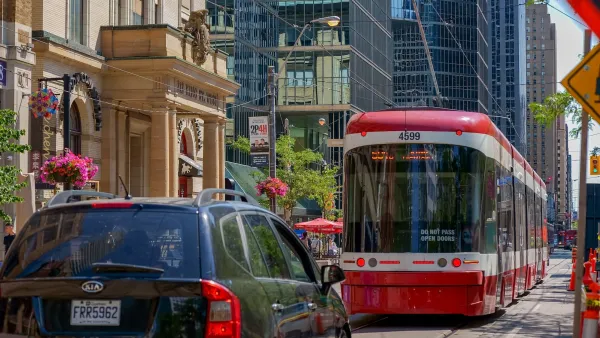
Toronto Man Beats Streetcar on Foot to Highlight Traffic Delays
Runner Mac Bauer says he hopes his project spurs the city to improve transit speed and reliability.

Ontario Judge Saves Toronto Bike Lanes
A court order bars the provincial government from removing bike lanes, saying the decision would make roads more dangerous and fail to reduce congestion.
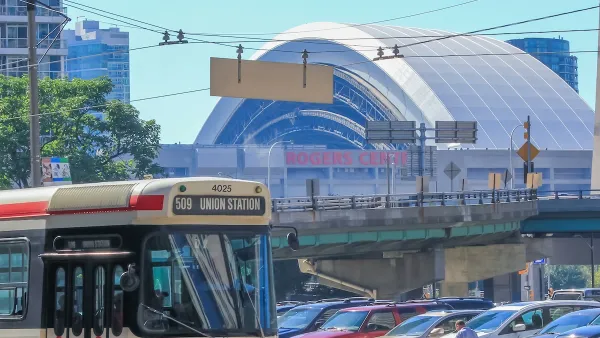
Toronto Weighs Cheaper Transit, Parking Hikes for Major Events
Special event rates would take effect during large festivals, sports games and concerts to ‘discourage driving, manage congestion and free up space for transit.”

Planetizen Federal Action Tracker
A weekly monitor of how Trump’s orders and actions are impacting planners and planning in America.

California plans to bury El Niño’s downpour
If the state plays its cards right, it may be able to store a billion acre-feet of El Niño’s water in aquifers.

Desperate measures: Advocates weigh draining Lake Powell to fill Colorado River
Draining the reservoir could reduce evaporation losses by a couple hundred thousand acre-feet.

Voters choose public transit, approve $31 billion in funding
Approved projects include $101,000 for reduced-cost transit in a Michigan town and $14 billion for regional transit in the San Francisco Bay Area.

Study reveals best places in the U.S. for cycling, walking
New research from Streetlight Data examines bicycle and pedestrian miles per capita in the 100 largest U.S. cities by population.

Los Angeles just elected an urban planner as its mayor
Transportation analysts are optimistic that Raman will be more aggressive in addressing transit issues than Bass.

FREE Course: Walkable City 1: Why Walkability?
After describing his path towards focusing on walkability as the essence of good planning, Jeff Speck marches through his five principal reasons for making more walkable places.
Reinventing Malls: Planning Alchemy—Turning Gray Fields Into Gold
The course focuses on the opportunities and imperatives that shape reinvention of mall sites.

City of Rosemead
Rutgers University, Edward J. Bloustein School of Planning and Public Policy
One Hundred Miles
University of Michigan School for Environment and Sustainability (SEAS)
Hunter College, City University of New York (CUNY)
The Architects Foundation
City of Cambridge
Montrose County
The Pocatello Development Authority