A transportation official in Toronto is hoping to convince colleagues that the system should allow advertisers to buy naming rights for transit stops in the city as a way of increasing revenue, but many remain opposed.


The Toronto Transit Commission is studying the idea, though most councillors on the commission have not looked well upon it.
Torontonians feel such attachment to their subway stations that a magazine covering public-space issues there claims to have sold more than 100,000 buttons printed with the distinctive tile patterns in the TTC's stations.
Transit commission vice-chairman Joe Mihevc has called the notion of selling naming rights "absolutely outrageous," a move toward "corporatizing our important public spaces."
In Ottawa, advertising revenue brings OC Transpo "$3 million-plus" a year, Mr. Curran said, and he'd like to add to that.
"Transit companies across Canada have to look at innovative ways of raising money," Mr. Curran said, adding that naming rights has an "interesting appeal" for many companies.
Read the full story: Bus station names for sale - for the right price
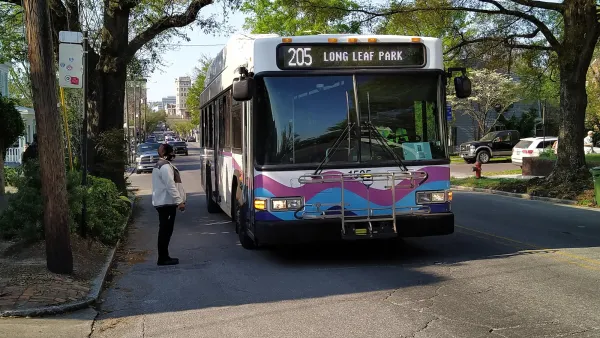
North Carolina removes bus benches installed by Democratic Socialists
NCDOT says the benches, installed without the department's permission, do not meet state standards for safety and accessibility.
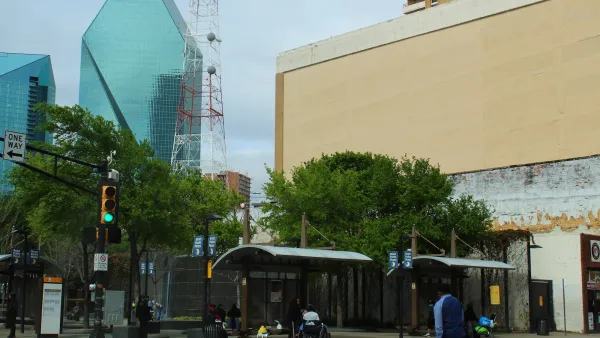
Dallas transit to invest up to $71.5M in upgraded bus shelters
The new shelters will feature solar-powered lighting and materials designed to protect riders from extreme weather.
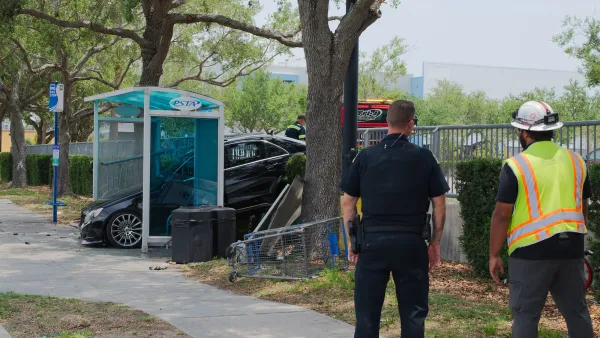
Buses are very safe. The walk to and from stations, not so much.
A disproportionate number of crashes involving pedestrians happen near transit stops.

Planetizen Federal Action Tracker
A weekly monitor of how Trump’s orders and actions are impacting planners and planning in America.

Eastern Nebraska is running out of electricity
Data centers and electrification are straining eastern Nebraska’s grid, throttling economic development.

Study reveals best places in the U.S. for cycling, walking
New research from Streetlight Data examines bicycle and pedestrian miles per capita in the 100 largest U.S. cities by population.

DSA members accuse Mamdani of 'abandoning values' over housing redevelopment
New York City's mayor plans to replace about 2,000 units of public housing with private, mixed-income housing.

All sides of BRT debate unhappy with CDOT’s most recent move
The Colorado Department of Transportation is no longer considering center-running bus lanes for Colorado Boulevard.

Massachusetts bogs generate both power, and cranberries
Putting solar panels above farmland is one way Massachusetts is advancing toward its goal of net-zero carbon emissions by 2050.

FREE Course: Walkable City 1: Why Walkability?
After describing his path towards focusing on walkability as the essence of good planning, Jeff Speck marches through his five principal reasons for making more walkable places.
Reinventing Malls: Planning Alchemy—Turning Gray Fields Into Gold
The course focuses on the opportunities and imperatives that shape reinvention of mall sites.

City of Rosemead
Rutgers University, Edward J. Bloustein School of Planning and Public Policy
One Hundred Miles
University of Michigan School for Environment and Sustainability (SEAS)
Hunter College, City University of New York (CUNY)
The Architects Foundation
City of Cambridge
The Pocatello Development Authority
The Urban Renewal Agency of the City of Pocatello