NCDOT says the benches, installed without the department's permission, do not meet state standards for safety and accessibility.


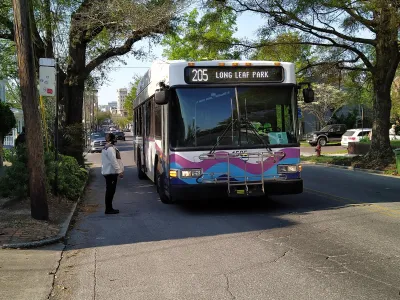
The North Carolina Department of Transportation is removing roughly 20 unauthorized bus benches installed by a local chapter of the Democratic Socialists of America, reports Emily Sawaked in Port City Daily.
According to a NCDOT spokesperson, "Because these benches are not in compliance with the NCDOT Bus Shelter & Bus Stop Guidelines and are a safety hazard and liability for the state, they are being removed from state property." The local transit agency, Wave, said they do not have the authority to remove the benches because they are on state- or city-owned property.
The DSA chapter started placing its guerilla benches at local bus stops in April 2025. Prior to their efforts, Wave records showed that of its 400 bus stops, just 62 had benches. "The group took on the project as a 'mutual aid' benefit for residents to 'improve city transit and the lives of working class Wilmington residents by making their commute easier,' according to a statement." Months after their installation, the group's use of political messaging on some benches (such as "No rent for slum lords") prompted complaints to the transit agency and NCDOT.
The DSA says the benches are part of an effort to provide amenities to underresourced areas and draw attention to the progress that a small group can make with few financial resources.
Read the full story: NCDOT removes unauthorized bus benches from state-owned roadways, city benches in limbo
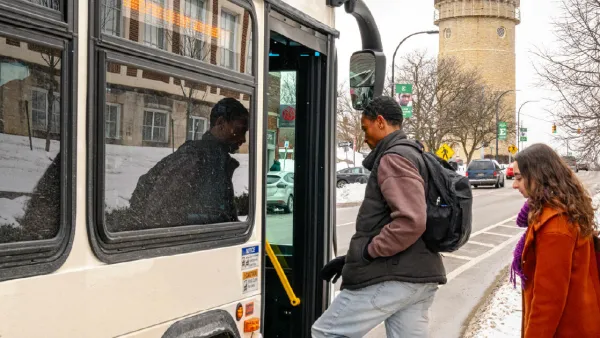
UMich Students Install DIY Bus Benches in Ann Arbor
A student urbanism club built and distributed benches at some of the city’s most-used bus stops.
Guerilla Urbanism Spurs Action From Cities
Rather than take a hostile approach to DIY urbanism, some cities are using guerilla efforts as an opportunity to understand critical infrastructure gaps.
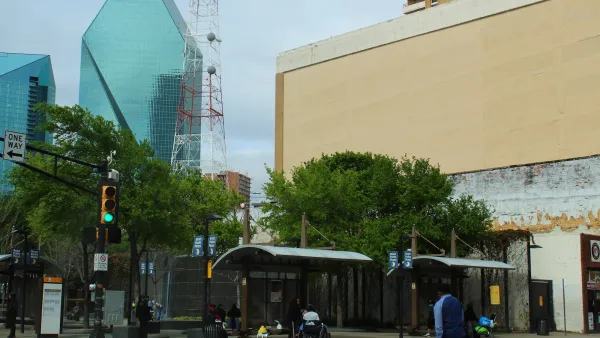
Dallas transit to invest up to $71.5M in upgraded bus shelters
The new shelters will feature solar-powered lighting and materials designed to protect riders from extreme weather.

Planetizen Federal Action Tracker
A weekly monitor of how Trump’s orders and actions are impacting planners and planning in America.

Eastern Nebraska is running out of electricity
Data centers and electrification are straining eastern Nebraska’s grid, throttling economic development.

California High-Speed Rail Authority picks trainset manufacturer
The California High-Speed Rail Authority aims to start servicing passengers by 2033.

States are counting on battery farms. Some towns don’t want them.
While fire safety has improved, some communities are still wary.

Dallas releases zoning code overhaul to officials
The drafted overhaul is over 400 pages long.

NYC renovations for dangerous, ‘mercilessly crammed’ street delayed until 2027
Construction was supposed to begin this fall.

FREE Course: Walkable City 1: Why Walkability?
After describing his path towards focusing on walkability as the essence of good planning, Jeff Speck marches through his five principal reasons for making more walkable places.
Reinventing Malls: Planning Alchemy—Turning Gray Fields Into Gold
The course focuses on the opportunities and imperatives that shape reinvention of mall sites.


City of Rosemead
Rutgers University, Edward J. Bloustein School of Planning and Public Policy
One Hundred Miles
University of Michigan School for Environment and Sustainability (SEAS)
Hunter College, City University of New York (CUNY)
The Architects Foundation
City of Cambridge
The Pocatello Development Authority
The Urban Renewal Agency of the City of Pocatello