Public officials and scientists are starting to say that adaptation to climate change is just as important as trying to stem climate change. One way to adapt is to embrace smart growth principles that reduce energy usage, according to this article.


During two recent conferences in California, experts said adaptation is an area where land use planners and policymakers can make a real difference. And during a forum elsewhere, the leader of King County, Washington, urged adaptation to a changing climate as crucial.
"There is little question that the adaptation question will soon dominate planning and engineering discussions in beach towns and river towns throughout California. The threat of rising water levels is probably going to lead to new and very expensive engineering solutions such as levees and sea walls – and, in some cases, calls to move buildings, people, and communities from harm's way."
Meanwhile, smart growth principles such as higher densities, transit and mixed-uses are being promoted as adaptations because they reduce energy usage and protect natural areas for carbon absorption and resource management.
FULL STORY: Forget About Emissions Reductions — It's Time To Adapt

Climate Change May Prompt Revolution In Transportation Planning
Transportation planners and public officials have begun to consider ways to reconfigure cities and alter driving patterns in order to reduce vehicle miles traveled and reduce greenhouse gas emissions.
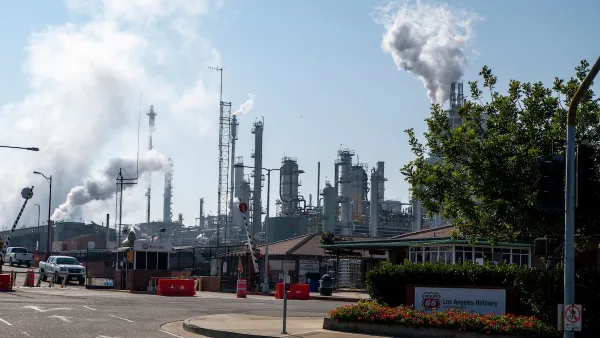
California’s Cap and Trade Program Up in the Air
The state’s carbon trading program is being attacked as ineffective from one side and overly onerous from the other.
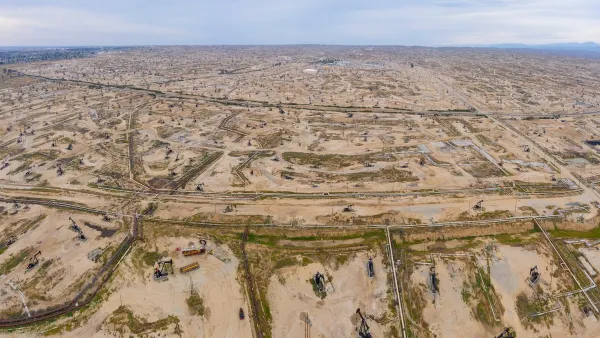
California County Approves Underground Carbon Storage Project
Kern County supervisors voted to support a carbon storage project that will inject climate-warming gases into a former oil and gas field.

Planetizen Federal Action Tracker
A weekly monitor of how Trump’s orders and actions are impacting planners and planning in America.

The state-sanctioned urbicide of Austin
People don’t kill cities. Freeways do.

US to reduce Colorado River water deliveries to Mexico
A new Colorado Treaty amendment reduces Mexico’s Colorado River water allocation by 250,000 acre feet.

Mamdani overhauls NYC's Vision Zero plan with 100 new policy goals
The overhaul aims to reduce traffic deaths and make streets safer for pedestrians, cyclists and drivers through lower speed limits, new safety infrastructure and more.

Amtrak not solely to blame for New Jersey commuter rail's unreliability, report finds
A new study from the Garden State Initiative found that NJ Transit’s budget grew 20% across a 4 year period, but reliability declined significantly over the same period.

EPA erases limits on planet-warming pollution from power plants
Under Monday’s plan, power plants would still have some limits on how much mercury, arsenic and other contaminants they can emit.

FREE Course: Walkable City 1: Why Walkability?
After describing his path towards focusing on walkability as the essence of good planning, Jeff Speck marches through his five principal reasons for making more walkable places.
Reinventing Malls: Planning Alchemy—Turning Gray Fields Into Gold
The course focuses on the opportunities and imperatives that shape reinvention of mall sites.

Eagle County Government
Harvard University Graduate School of Design
Nashville Planning Department
The Architects Foundation
University of Cincinnati Online
The Pocatello Development Authority
The Urban Renewal Agency of the City of Pocatello
Journal of the American Planning Association