The city could prohibit the construction of new fueling stations within city limits to discourage driving and pave the way for more renewable transportation infrastructure.


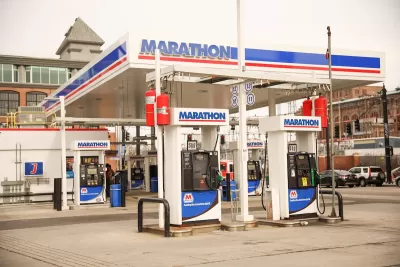
Providence, Rhode Island is considering a blanket ban on new gas stations as part of the city’s effort to reduce dependence on fossil-fueled vehicles and encourage the adoption of electric cars and more sustainable transportation modes.
The prohibition, which would be the first of its kind on the East Coast, would be part of an update to the city’s comprehensive plan, explains Lindsey McPherson in The Washington Times.
According to McPherson, “An earlier June draft of the comprehensive plan had the same goal but with softer language: ‘Discourage the development of new gas stations within City limits. Encourage the installation of electric vehicle charging stations when existing gas stations are updated/rehabilitated.’” The new language changes ‘discourage’ to ‘prohibit.’
The article notes that “The plan itself is not binding but guides the City Council as it considers zoning law changes that would enforce the goals outlined within it. The document also can be used in litigation to help settle disputes where the law is not clear.” The proposal would not affect existing gas stations.
Read the full story: Providence, Rhode Island, lawmakers considering citywide ban on new gas station

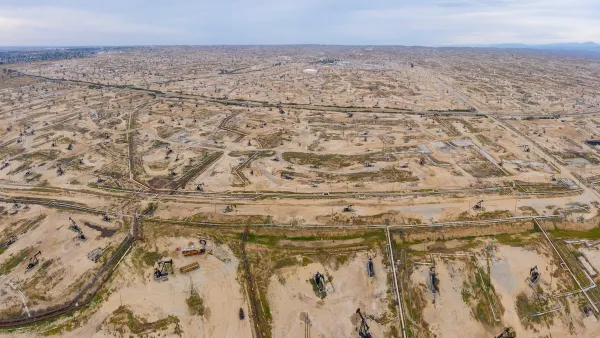
California County Approves Underground Carbon Storage Project
Kern County supervisors voted to support a carbon storage project that will inject climate-warming gases into a former oil and gas field.
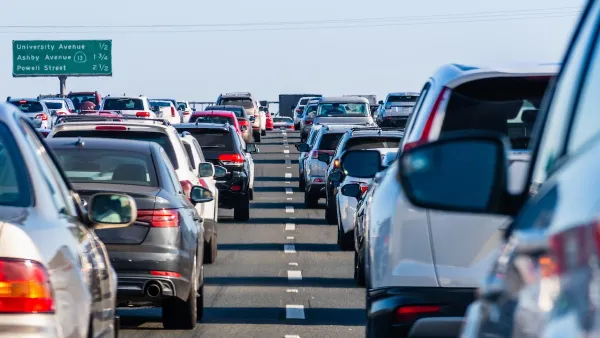
States Claim Highway Expansions Reduce Emissions
The argument is being used to channel climate funding to projects that expand automobile infrastructure, according to an analysis from Transportation for America.

Report: Americans Must Reduce Driving to Meet Climate Goals
A USDOT report calls for a set of strategies including but not limited to electrification of the transportation sector.

Planetizen Federal Action Tracker
A weekly monitor of how Trump’s orders and actions are impacting planners and planning in America.

California plans to bury El Niño’s downpour
If the state plays its cards right, it may be able to store a billion acre-feet of El Niño’s water in aquifers.

Chicago breaks ground on $3 billion megadevelopment
The new neighborhood, titled Foundry Park, will one day host 3,700 residences.

California High-Speed Rail Authority CEO resigns after $600,000 scandal
Under Ian Choudri, the authority used taxpayer dollars to fund first class flights and trips to nightclubs.

Want to study the Missouri River? Soon, you may need unanimous approval from 10 states
Legislation would require 10 governors’ permission to study or build projects moving water outside the basin.

Desperate measures: Advocates weigh draining Lake Powell to fill Colorado River
Draining the reservoir could reduce evaporation losses by a couple hundred thousand acre-feet.

FREE Course: Walkable City 1: Why Walkability?
After describing his path towards focusing on walkability as the essence of good planning, Jeff Speck marches through his five principal reasons for making more walkable places.
Reinventing Malls: Planning Alchemy—Turning Gray Fields Into Gold
The course focuses on the opportunities and imperatives that shape reinvention of mall sites.

City of Rosemead
Rutgers University, Edward J. Bloustein School of Planning and Public Policy
One Hundred Miles
Hunter College, City University of New York (CUNY)
The Architects Foundation
University of Cincinnati Online
City of Cambridge
Montrose County
The Pocatello Development Authority