In response to the growing demand for urban greenspace, cities around the nation on working on plans for large new parks -- rivaling the urban park boom during the 19th or early 20th century.


"The housing market is tanking, but one kind of real estate is gaining value in major U.S. cities: parkland.
After years of infighting over what to do with the few remaining areas of open space in metropolitan areas, several communities are creating huge urban parks - several times the size of New York's 843-acre Central Park.
"We grew so rapidly in the '80s and '90s in the rate we were consuming land, people did become alarmed," says David Goldberg, spokesman for Smart Growth America, a national coalition promoting green space. "This desire for parkland and capitalizing on natural assets is really taking hold."
It is spurred by several factors, including mounting environmental concerns, improved property values for park-side real estate, increased demand for green space from health-conscious people moving back to cities and a greater availability of vacant industrial land.
The parks development comes despite troubled public finances in many metro areas because of the housing and credit crunch."
Read the full story: Push for urban parkland takes root

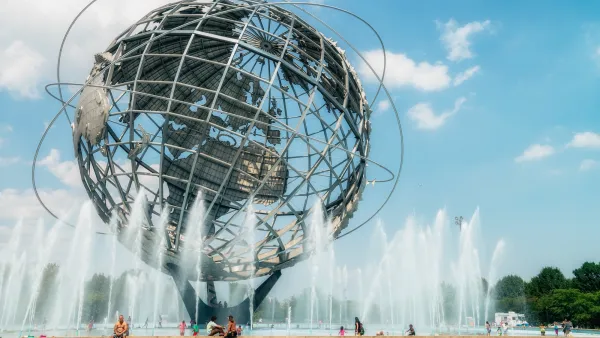
Historic Queens park is getting a $120M upgrade
The borough's largest park will undergo significant upgrades for accessibility, flood mitigation and historic preservation.
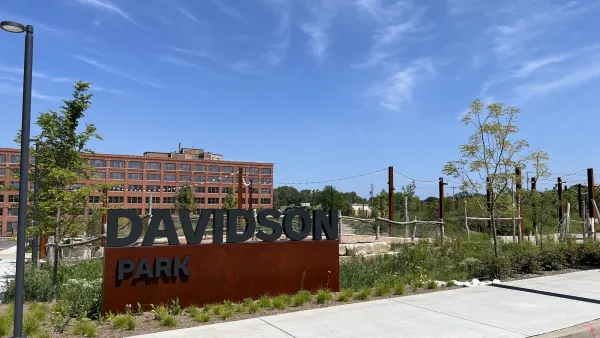
Harley-Davidson turned a Milwaukee parking lot into a green oasis
The park, adjacent to Harley-Davidson headquarters, doubles as stormwater retention infrastructure.
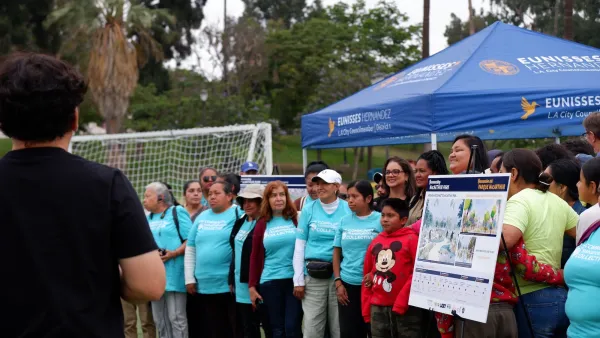
LA unveils plans to reconnect MacArthur Park
The construction of Wilshire Boulevard split the park in two in 1934.

Planetizen Federal Action Tracker
A weekly monitor of how Trump’s orders and actions are impacting planners and planning in America.

Amtrak, CN end decades-long dispute with eight-year agreement
The new operating agreement establishes an updated framework for the companies to work together, including processes to resolve disputes.

Judges permit Denver to divert 77,000 acre feet from the Colorado River for reservoir expansion
Overuse and climate change have caused the Colorado River’s water levels to plummet.

NYC DOT wants faster, more permanent street upgrades
The city is examining ways to build more concrete infrastructure without getting entangled in 'decades-long' projects.

'Something we’ve never seen before:' rising utility rates could strain city finances nationwide
Data centers, climate change and other factors have caused utility rates in the United States to increase by 38% since 2020.

Trump to overrule local leaders, lease millions of acres of America’s Pacific Island territories’ seafloors to mining companies
International law says that the Indigenous people of America’s territories have a right to prior and informed consent regarding projects that impact their countries.

FREE Course: Walkable City 1: Why Walkability?
After describing his path towards focusing on walkability as the essence of good planning, Jeff Speck marches through his five principal reasons for making more walkable places.
Reinventing Malls: Planning Alchemy—Turning Gray Fields Into Gold
The course focuses on the opportunities and imperatives that shape reinvention of mall sites.

Harvard University Graduate School of Design
KFH Group Inc.
Greater Baltimore Committee
The Architects Foundation
University of Cincinnati Online
The Pocatello Development Authority
The Urban Renewal Agency of the City of Pocatello