Impressive growth of visitors from nontraditional places, including China, have now put tourism ahead of gold mining in Namibia.


"As more people jump into the region's growing tourism sector, countries are starting to shift their attention away from the region's old colonial masters and toward newer markets. Tourism, they say, is not only supporting widespread growth – it is supporting new global relationships, as well."
"According to the UN's World Tourism Organization, almost 26 million international tourists visited sub-Saharan Africa in 2006. This was a 10 percent increase over 2005, which is almost twice the average global tourism growth rate, according to the organization."
"Namibia saw its highest-ever tourism numbers in 2007, with around 600,000 visitors. Today, 17.9 percent of Namibia's jobs are connected to tourism, according to Jacqueline Asheeke, CEO of the Federation of Namibia Tourism Associations. In neighboring South Africa, tourism has surpassed gold mining as the country's No. 1 foreign currency earner, says Michael Tatalias, the CEO of Southern African Tourism Services, an association of private tourism businesses."
"'Tourism is the new gold,' he says."
Read the full story: Namibia strikes 'new gold' – tourists
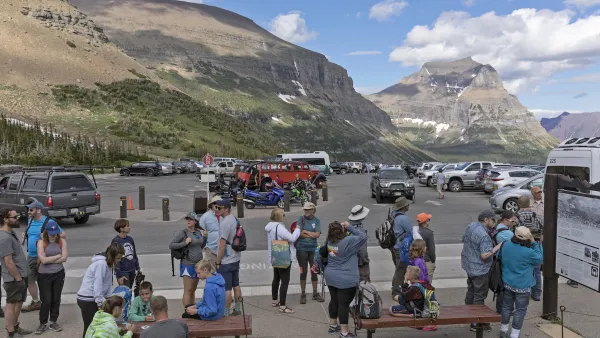
Glacier National Park drops reservation requirement, plans to double down on shuttle network
Since 2021, visitors with cars have had to make a reservation to access the park.

Spain Fines Airbnb $75 Million After Crackdown on Unlicensed Rentals
The government took action after residents in tourist centers protested, blaming tourist rentals for a growing housing crisis.

Spain Moves to Ban 66,000 Airbnbs
The national government is requiring the short-term rental operator to remove thousands of illegal listings from its site as part of an effort to stem a growing housing crisis.

Planetizen Federal Action Tracker
A weekly monitor of how Trump’s orders and actions are impacting planners and planning in America.

California plans to bury El Niño’s downpour
If the state plays its cards right, it may be able to store a billion acre-feet of El Niño’s water in aquifers.

Desperate measures: Advocates weigh draining Lake Powell to fill Colorado River
Draining the reservoir could reduce evaporation losses by a couple hundred thousand acre-feet.

Chicago voters approve permanent festival grounds, penalty for vacant property owners
Currently, major summer and fall festivals take over public parks for weeks at a time, drawing criticism from nearby residents

NYC votes to cut outdoor dining red tape, speed up permitting
New York City also voted to allow the Department of Transportation to begin work on urgent projects before notifying elected officials.

California appears to reject Prop. 45
The proposition would have expanded the projects that qualify for a streamlined environmental review, effectively paring down the California Environmental Quality Act.

FREE Course: Walkable City 1: Why Walkability?
After describing his path towards focusing on walkability as the essence of good planning, Jeff Speck marches through his five principal reasons for making more walkable places.
Reinventing Malls: Planning Alchemy—Turning Gray Fields Into Gold
The course focuses on the opportunities and imperatives that shape reinvention of mall sites.

City of Rosemead
Rutgers University, Edward J. Bloustein School of Planning and Public Policy
One Hundred Miles
Hunter College, City University of New York (CUNY)
The Architects Foundation
University of Cincinnati Online
City of Cambridge
Montrose County
The Pocatello Development Authority