This article from the Brooklyn Daily Eagle looks at the increasing public demand for Complete Streets in Brooklyn.


"For four decades, activists for greener, safer NYC streets have scrounged at the margins of this automobilized streetscape. A few feet of traffic lanes converted to bike lanes, the occasional sidewalk extended to relieve a dangerous intersection - all important changes, but all within the context of streets that serve cars, first and foremost. But what would our streets look like if they were redesigned, building-to-building, to first accommodate walkers, bicyclists, the disabled and surface transit? The days of living at the margins are over: the Complete Streets revolution has begun."
"The Complete Streets movement represents a newer, bolder approach to making streets safe, accessible and multi-modal. Advocates have shifted their tactics: Instead of improving streets one block or intersection at time, they are working towards new design standards that can be implemented on a grand scale as streets come up for reconstruction or resurfacing. In much the same way that the motor-vehicle lobby irrevocably altered streetscapes in the early 20th century, Complete Streets advocates are creating the blueprints for 21st century streets."
Read the full story: Completing NYC Streets For The Next Century

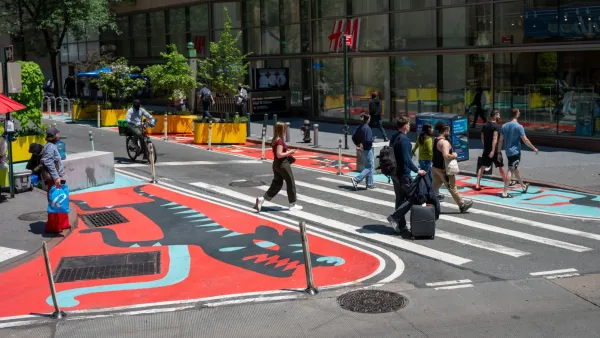
See Downtown Brooklyn’s Dramatic Complete Streets Transformation
A streetscape redesign spearheaded by the Downtown Brooklyn Partnership has quickly made many of Brooklyn’s streets unrecognizable.
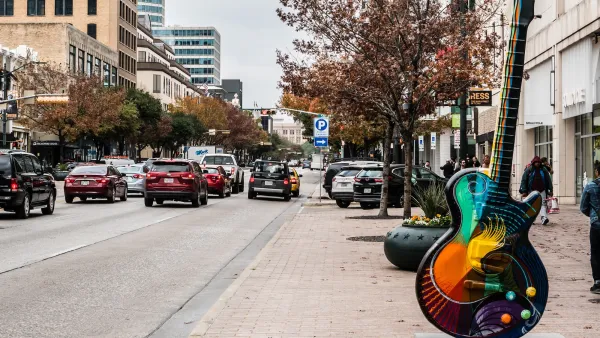
Austin Kicks off Multimodal Congress Avenue Redesign
The Congress Avenue Urban Design Initiative is bringing new pedestrian infrastructure and ‘storefront activation zones’ to the popular street.
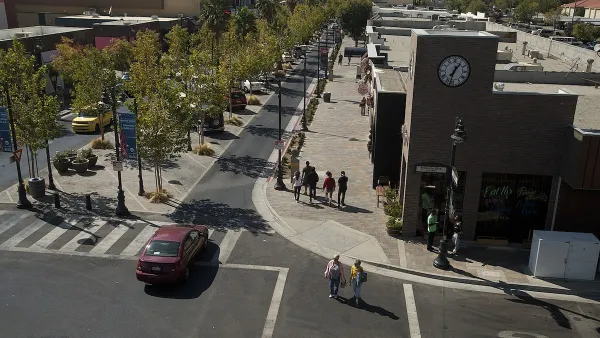
The Vast Potential of the Right-of-Way
One writer argues that the space between two building faces is the most important element of the built environment.

Planetizen Federal Action Tracker
A weekly monitor of how Trump’s orders and actions are impacting planners and planning in America.

Amtrak, CN end decades-long dispute with eight-year agreement
The new operating agreement establishes an updated framework for the companies to work together, including processes to resolve disputes.

Judges permit Denver to divert 77,000 acre feet from the Colorado River for reservoir expansion
Overuse and climate change have caused the Colorado River’s water levels to plummet.

NYC DOT wants faster, more permanent street upgrades
The city is examining ways to build more concrete infrastructure without getting entangled in 'decades-long' projects.

'Something we’ve never seen before:' rising utility rates could strain city finances nationwide
Data centers, climate change and other factors have caused utility rates in the United States to increase by 38% since 2020.

Trump to overrule local leaders, lease millions of acres of America’s Pacific Island territories’ seafloors to mining companies
International law says that the Indigenous people of America’s territories have a right to prior and informed consent regarding projects that impact their countries.

FREE Course: Walkable City 1: Why Walkability?
After describing his path towards focusing on walkability as the essence of good planning, Jeff Speck marches through his five principal reasons for making more walkable places.
Reinventing Malls: Planning Alchemy—Turning Gray Fields Into Gold
The course focuses on the opportunities and imperatives that shape reinvention of mall sites.

Harvard University Graduate School of Design
KFH Group Inc.
Greater Baltimore Committee
The Architects Foundation
University of Cincinnati Online
The Pocatello Development Authority
The Urban Renewal Agency of the City of Pocatello