Hoboken, New Jersey also has the nation's highest percentage of transit commuters.


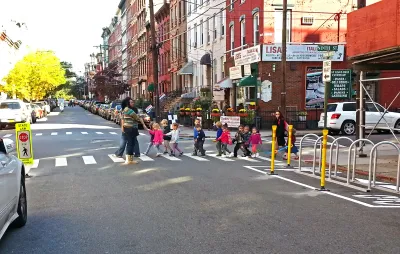
Hoboken, New Jersey has managed a rare feat for an American city: it hasn't seen any traffic deaths since January 17, 2017, writes Shia Levitt in Reasons to be Cheerful.
As Levitt explains, "That analysis showed that, between 2014 and 2018, 40% of the accidents causing serious injuries or death in Hoboken involved bikers or pedestrians, even though people walking and bicycling were only involved in 8% of all crashes. Given that most bicycle and pedestrian crashes (88%) happened in intersection crosswalks, those became a major priority."
The city focused its Vision Zero strategy first on the most vulnerable users, prioritizing safety projects near school, parks, and senior centers. The city also took steps to enforce a statewide daylighting law that prevents cars from parking within 25 feet of intersections and installed physical deterrents and other crosswalk treatments. "After especially extensive road upgrades in 2022, Hoboken saw 18% fewer injury crashes and a 62% reduction in serious injuries from 2022 to 2023."
FULL STORY: The City Where Traffic Fatalities Vanished

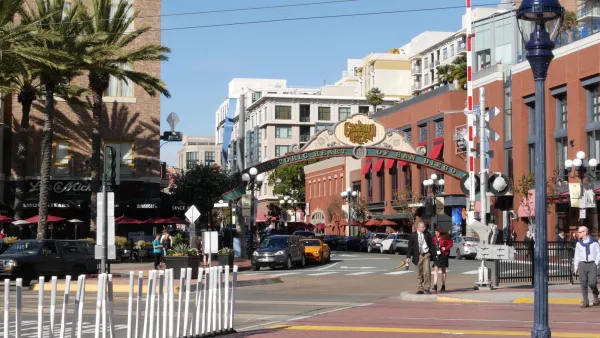
San Diego budget axes multimodal team at DOT
The budget scales back funding for some bike lane and traffic safety projects that are already in the works.
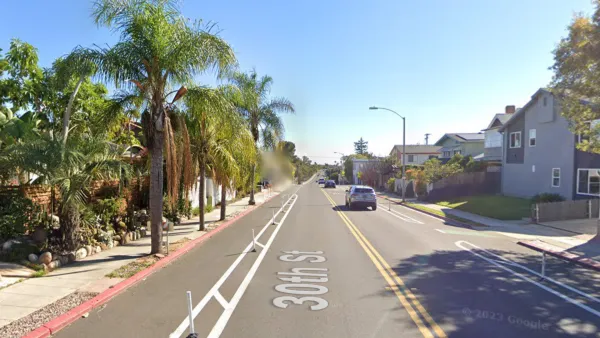
After San Diego Installed a Protected Bike Lane, Ridership More Than Doubled — and Hasn’t Stopped Growing.
“When people feel safe, they ride.”
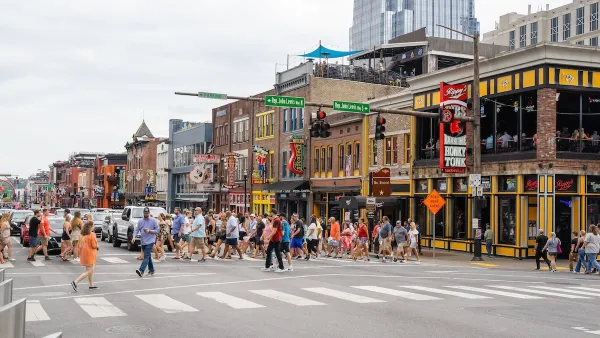
The Best Complete Streets Policies in the US, Ranked
San Antonio and Nashville top the list, with most large cities not making an appearance in the top 40.

Planetizen Federal Action Tracker
A weekly monitor of how Trump’s orders and actions are impacting planners and planning in America.

The state-sanctioned urbicide of Austin
People don’t kill cities. Freeways do.

US to reduce Colorado River water deliveries to Mexico
A new Colorado Treaty amendment reduces Mexico’s Colorado River water allocation by 250,000 acre feet.

5 New England states march closer to 800 megawatt wind energy project
Securing federal approval for the project may be complicated under the Trump administration, which has historically been hostile towards domestic wind power.

Baltimore to break ground on $50 million Transit Priority Project
The project will bring faster bus trips, safer streets and better bike connections to Baltimore.

Airbnb launches $250 million 'last-dollar financing' housing accelerator, makes first investment in Austin
The company will put $6.4 million towards affordable housing development in Texas’ capital.

FREE Course: Walkable City 1: Why Walkability?
After describing his path towards focusing on walkability as the essence of good planning, Jeff Speck marches through his five principal reasons for making more walkable places.
Reinventing Malls: Planning Alchemy—Turning Gray Fields Into Gold
The course focuses on the opportunities and imperatives that shape reinvention of mall sites.

Eagle County Government
Harvard University Graduate School of Design
Nashville Planning Department
The Architects Foundation
University of Cincinnati Online
The Pocatello Development Authority
The Urban Renewal Agency of the City of Pocatello
Journal of the American Planning Association