Transit agencies like BART and TriMet face lingering budget shortfalls, forcing major service cuts and layoffs, while federal plans to ban fare-free transit throw a wrench in NYC Mayor Mamdani’s proposal to make the city’s buses ‘fast and free.’



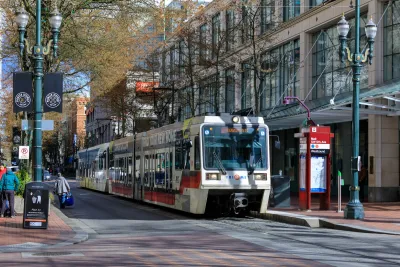
Public transit funding remains a pain point at major agencies around the country, with California’s BART and Portland’s TriMet both set to make significant service and staffing cuts. The federal government is looking to ban free transit, challenging a key campaign promise from NYC Mayor Mamdani, who pledged to make NYC buses fast and free — a plan that has brought significant economic and social benefits to other cities such as France’s Dunkirk. A proposed Florida law would allow ADUs in all of the state’s residential communities, and Santa Rosa is looking to boost economic activity downtown by allowing open containers in select areas. In San Diego, a protected bike lane has shifted travel behavior and brought twice as many riders to the corridor.
The full list of February’s most-read stories:
A bill approved by the Florida Senate would permit accessory dwelling units (ADUs) by-right in single-family zoned neighborhoods. The bill would prohibit the units from being rented for less than 30 days at a time.
NYC Mayor Mamdani’s administration said it will not be able to expand the CityFHEPS rent assistance voucher program yet, despite the mayor’s campaign promise to make the program available to more households. The program currently serves about 65,000 households but is, according to Ana Champeny, vice president for research at the Citizens Budget Commission, “growing at an unsustainable clip.”
Portland’s TriMet transit agency announced another round of service cuts that were implemented starting March 1. The agency plans to make additional cuts starting in August and could eliminate dozens of bus routes and a portion of the MAX Green Line light rail.
California’s Bay Area Rapid Transit agency (BART) plans to close up to 15 stations, lay off 1,200 employees, and make major service cuts to most lines if it doesn’t receive additional funding from the state. The agency is pinning its hopes on a proposed sales tax increase that will be on the November ballot.
U.S. Department of Transportation (USDOT) wants to ban cities receiving federal transportation funding from offering free bus service. The rule would apply to areas with populations larger than 200,000 and transit fleets of 100 or more buses. USDOT cited security concerns as a reason for opposing fare-free transit programs.
Vancouver adopted its first-ever Official Development Plan (ODP), a legally binding document designed to guide growth and development for the next 30 years and beyond. The plan, required by provincial law, makes significant changes to zoning regulations for housing and introduces new planning tools that focus on increasing the housing supply.
Santa Rosa, California is creating two weekend “entertainment zones” that will allow downtown visitors to carry out wine and beer in designated areas. The program is designed to increase sales for downtown businesses and incentivize people to linger in the area.
A new protected bike lane led to doubled bike trips on 30th Street in its first year. After that, ridership continued to grow, indicating a long-term shift in travel patterns along the corridor.
Dunkirk, France has offered free bus service since 2018. 99 percent of residents rank it as the city’s most important public policy.
A new book, “Road to Nowhere: How a Highway Map Wrecked Baltimore,” highlights the impacts of proposed highway projects on existing communities even when the project never materializes.

March Must-Reads: Top 10 Articles From Last Month
Proposed housing solutions, Chicago transit in peril, and executive actions in limbo.
April must-reads: Top 10 articles from last month
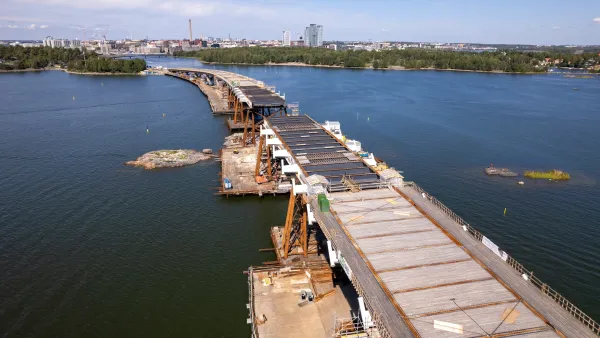
The world's longest car-free bridge opens in Finland, Amtrak's new Mardi Gras line shatters ridership predictions, and Bay Area commuters could lose a third of Caltrain stations.
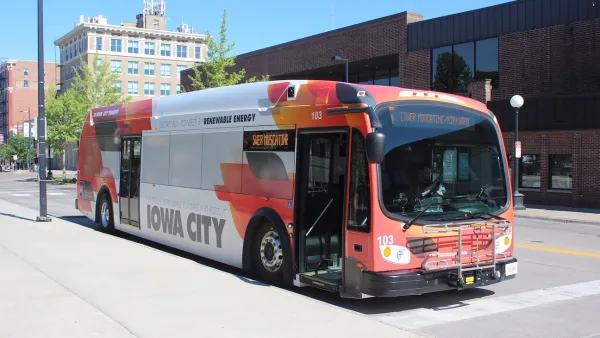
Iowa City's free bus program made ridership spike by 68%. Now, it could go away.
The bus system gained roughly 700,000 new riders since it launched free service in 2023.

Planetizen Federal Action Tracker
A weekly monitor of how Trump’s orders and actions are impacting planners and planning in America.

The state-sanctioned urbicide of Austin
People don’t kill cities. Freeways do.

US to reduce Colorado River water deliveries to Mexico
A new Colorado Treaty amendment reduces Mexico’s Colorado River water allocation by 250,000 acre feet.

5 New England states march closer to 800 megawatt wind energy project
Securing federal approval for the project may be complicated under the Trump administration, which has historically been hostile towards domestic wind power.

Baltimore to break ground on $50 million Transit Priority Project
The project will bring faster bus trips, safer streets and better bike connections to Baltimore.

Airbnb launches $250 million 'last-dollar financing' housing accelerator, makes first investment in Austin
The company will put $6.4 million towards affordable housing development in Texas’ capital.

FREE Course: Walkable City 1: Why Walkability?
After describing his path towards focusing on walkability as the essence of good planning, Jeff Speck marches through his five principal reasons for making more walkable places.
Reinventing Malls: Planning Alchemy—Turning Gray Fields Into Gold
The course focuses on the opportunities and imperatives that shape reinvention of mall sites.

Eagle County Government
Harvard University Graduate School of Design
Nashville Planning Department
The Architects Foundation
University of Cincinnati Online
The Pocatello Development Authority
The Urban Renewal Agency of the City of Pocatello
Journal of the American Planning Association

