In “Road to Nowhere: How a Highway Map Wrecked Baltimore,” historian Emily Lieb demonstrates how the mere threat of a highway project, combined with systemic redlining and predatory real estate practices, can dismantle a community just as effectively as physical construction can.



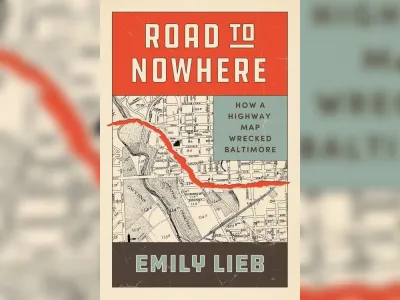
This review is part of a special collaboration between Planetizen and Booked on Planning, a biweekly podcast where AICP planners Stephanie Rouse and Jennifer Hiatt chat with authors of the latest books shaping urban planning today. Listen to the episode with today’s author in the player below.
Every planner knows the devastation midcentury highway projects wrought on neighborhoods across the country in cities like New York City, Boston, and Seattle. But what about the highway projects never started? Can a simple line on a map be catastrophic to a neighborhood? In "Road to Nowhere: How a Highway Map Wrecked Baltimore," historian Emily Lieb delivers a masterful autopsy of urban planning gone wrong. While many histories of the American interstate system focus on the physical destruction caused by bulldozers, Lieb’s work offers a more haunting revelation: a community can be dismantled by a mere line on a map, even if a single yard of concrete is never poured.
At the heart of the book is Rosemont, a West Baltimore neighborhood. Lieb reveals the interwoven tragedies of how segregated school policies, redlining, and prejudicial lending worked in tandem to trap the residents of Rosemont in a cycle of disinvestment. For 40 years, Rosemont was held hostage by shifting maps, causing property values to plummet and inviting predatory real estate practices.
Rosemont was established as a middle class white neighborhood, but over the course of one summer in the mid-1950s, Rosemont had “gone white to negro” according to a Baltimore Sun headline, transforming into a vibrant hub for the Black middle class. Lieb lays out the case that this transformation in demographics was by design. The Baltimore Board of School Commissioners made the decision to designate a school near the Rosemont neighborhood a “colored” school, following their Jim Crow restrictions and creating a housing need for the Black families whose children attended the school. Blockbusting became rampant as real estate investors used racial scare tactics to buy out white residents low and sell high to black residents. This was the first step toward Rosemont, built on the aspirations of families seeking their share of the American Dream, becoming collateral damage for the proposed East-West Expressway (I-70).
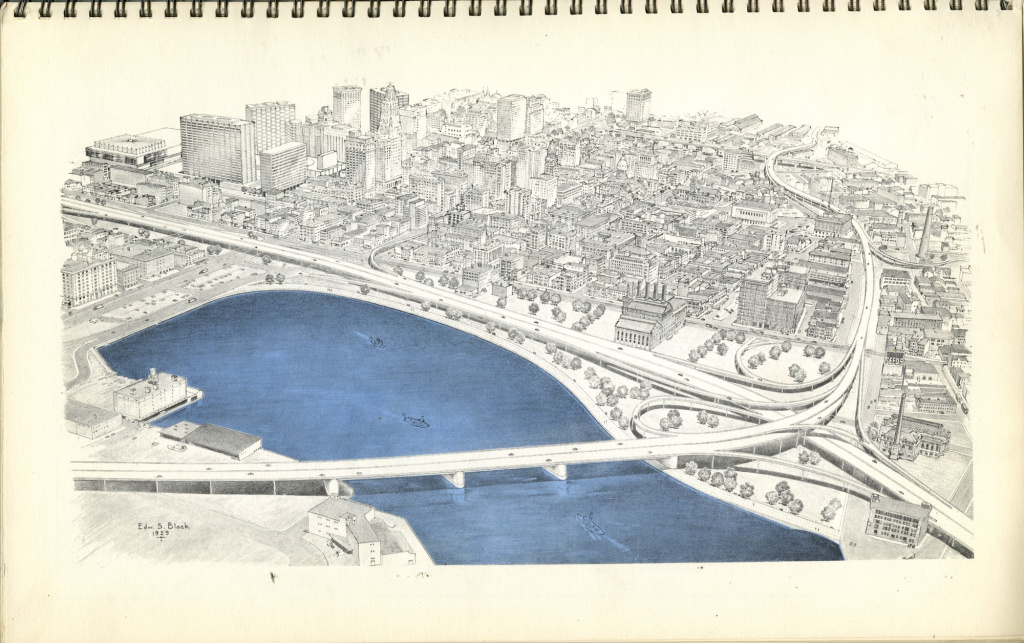
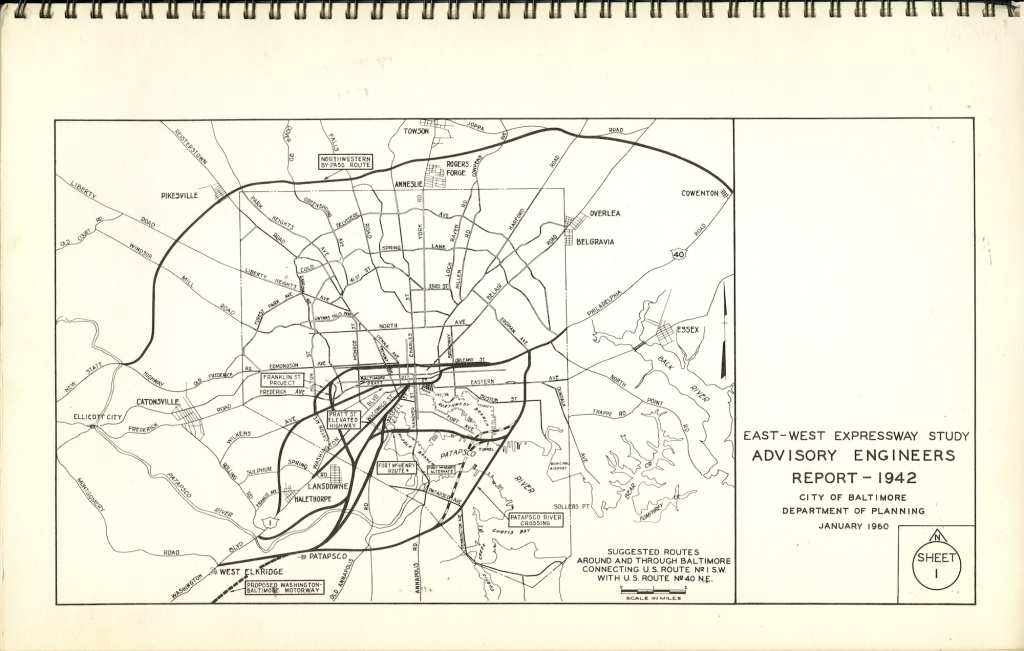
The next step was a new highway design intended to renew downtown Baltimore. At first, residents of the Rosemont neighborhood were unaware they needed to worry about these designs. Government officials were continually reconsidering the design of the proposed East-West Expressway. When the lines on the map finally settled, Rosemont was square in its path.
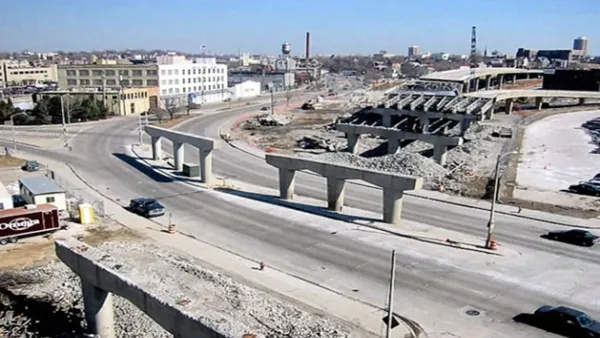
Lieb argues that the threat of the highway was as destructive as the road itself. The Baltimore City Council condemned Rosemont in preparation for construction. Some Rosemont residents sold quickly and left the neighborhood to start again. Some stayed, waiting to see if they would ever be forced to leave. The decades of uncertainty left people unable to invest in their homes. What was left was a neighborhood pocked by vacancy and disinvestment, left to deteriorate as the bureaucratic process slowly ground to halt. Ultimately, nothing was ever built through Rosemont but what happened to the neighborhood was “still as bad as a bomb.”
While the focus is hyper-local, Lieb effectively uses Rosemont as a window into a national scandal. She shows how federal programs like the FHA’s Section 23, intended to help low-income buyers, were exploited by speculators to profit from the neighborhood's decline. Once Baltimore officials determined no highway was going to get built, they turned to federal assistance programs to try to rebuild the neighborhood. However, lack of oversight, shoddy construction, and misaligned incentives continued to contribute to Rosemont’s decline. Despite the inhumane bureaucracy, Lieb highlights the ingenuity and persistence of the residents who fought to stay in their homes.
"Road to Nowhere" is an absorbing, meticulously researched indictment of how blight is often a manufactured condition rather than an organic one. It challenges the notion that residents are responsible for their neighborhood's decay, placing the blame squarely on the shoulders of the planners, politicians, and power brokers who refused to see the humanity of the people in their path.

Bridging Divides: The Crucial Role of Collaboration in Highway Removal
Highway removal is most successful when agencies at all levels of government work closely with each other and the impacted community.
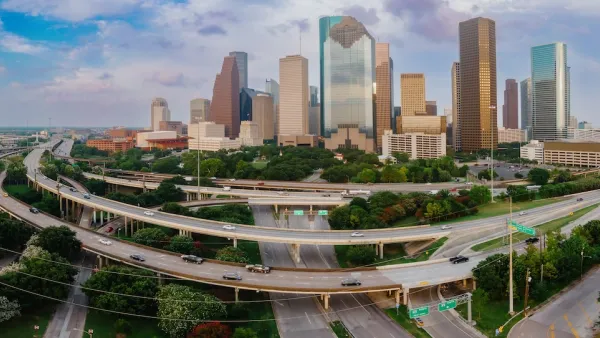
Interactive Map Highlights Freeway-Related Displacement in Houston
A new map illustrates the neighborhoods and buildings that were razed to make way for freeways and estimates the number of people displaced by roadways.
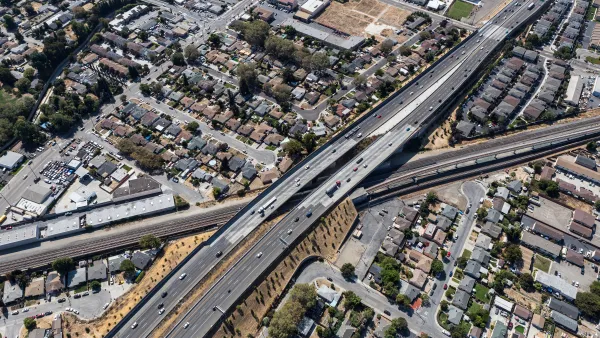
The Limitations of ‘Reconnecting Communities’
The Biden administration has pledged to correct the damage imposed on communities by highways and infrastructure, but many projects are only committing to minor improvements, not transformative changes.

Planetizen Federal Action Tracker
A weekly monitor of how Trump’s orders and actions are impacting planners and planning in America.

Amtrak, CN end decades-long dispute with eight-year agreement
The new operating agreement establishes an updated framework for the companies to work together, including processes to resolve disputes.
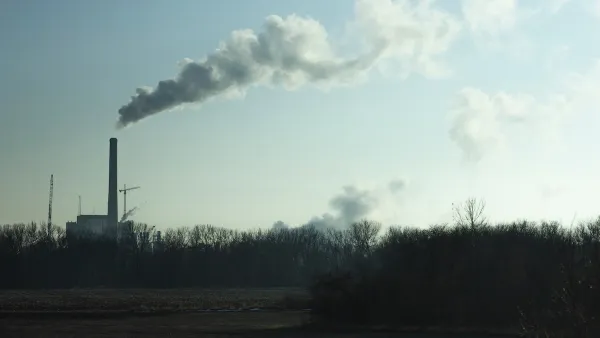
Nation's most wind-powered state turns to coal as data centers increase energy demand
For the first time in decades, Iowa has increased its generation of coal power.

Alabama scores up to $2.5 billion federal loan for largest infrastructure project in state’s history
The Mobile River Bridge and Bayway Project aims to ease congestion at Alabama’s worst bottleneck.

Trump is considering data centers on 6 states' public land — some state officials say they had no idea
If the administration approves the proposed projects, data center and data center-related developments will cover 17,600 acres of public land.

Despite court ruling, Trump is keeping nearly all wind projects in the US on hold
At least 110 wind energy projects have not heard from the government since a federal judge ruled that the Trump administration's freeze on wind turbine clearances was likely illegal.

FREE Course: Walkable City 1: Why Walkability?
After describing his path towards focusing on walkability as the essence of good planning, Jeff Speck marches through his five principal reasons for making more walkable places.
Reinventing Malls: Planning Alchemy—Turning Gray Fields Into Gold
The course focuses on the opportunities and imperatives that shape reinvention of mall sites.

KFH Group Inc.
Greater Baltimore Committee
Eagle County Government
The Architects Foundation
University of Cincinnati Online
The Pocatello Development Authority
The Urban Renewal Agency of the City of Pocatello

