A new map illustrates the neighborhoods and buildings that were razed to make way for freeways and estimates the number of people displaced by roadways.


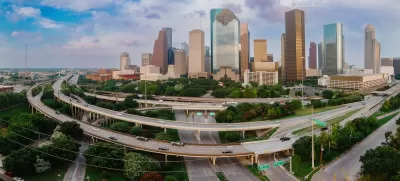
An interactive map from the Baker Institute Center for Energy Studies at Rice University visualizes the displacement of people and buildings caused by highway construction in Houston. “Displayed alongside the interactive database are historical maps of Houston, aerial photography before and after highway construction, freeway plans and proposals, and details about each of the more than 11,000 structures in our database of buildings removed for urban freeways.”
According to the researchers, “The map also estimates the number of individuals displaced by highway construction between 1946 and 1974, who were mostly Black Houstonians. We hope this history will allow both the public and policymakers to explore the legacies of segregation and inequality as debates over the rebuilding, reshaping, and expansion of Houston's highway system continue.”
FULL STORY: A history of highway displacement in Houston

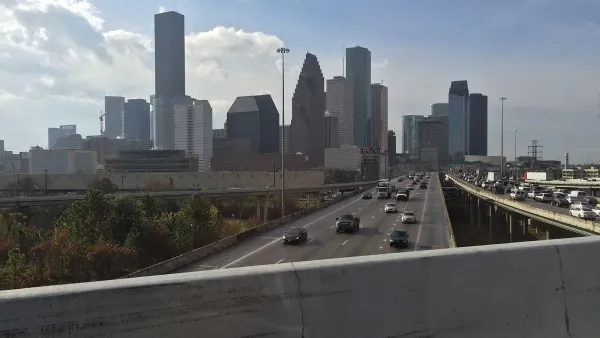
Contentious Houston Freeway Widening Project Inches Forward
Federal officials have given TxDOT the go-ahead to resume work on a small portion of a controversial interstate widening project in downtown Houston.
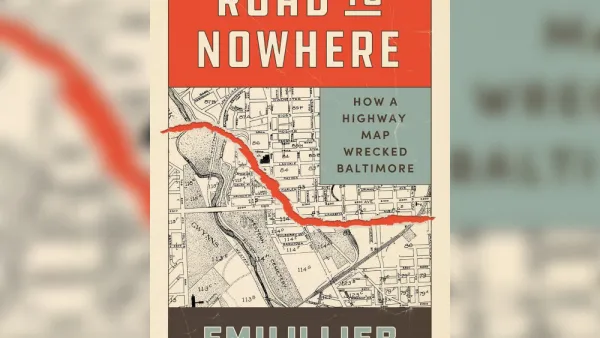
Tracing the Destruction of the Highway Baltimore Never Built
In “Road to Nowhere: How a Highway Map Wrecked Baltimore,” historian Emily Lieb demonstrates how the mere threat of a highway project, combined with systemic redlining and predatory real estate practices, can dismantle a community just as effectively as physical construction can.
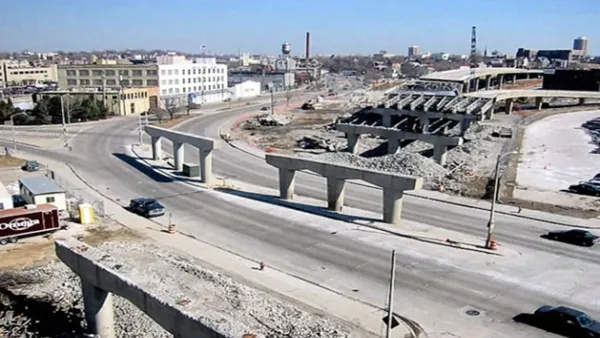
Bridging Divides: The Crucial Role of Collaboration in Highway Removal
Highway removal is most successful when agencies at all levels of government work closely with each other and the impacted community.

Planetizen Federal Action Tracker
A weekly monitor of how Trump’s orders and actions are impacting planners and planning in America.

The state-sanctioned urbicide of Austin
People don’t kill cities. Freeways do.

US to reduce Colorado River water deliveries to Mexico
A new Colorado Treaty amendment reduces Mexico’s Colorado River water allocation by 250,000 acre feet.

Baltimore to break ground on $50 million Transit Priority Project
The project will bring faster bus trips, safer streets and better bike connections to Baltimore.

Airbnb launches $250 million 'last-dollar financing' housing accelerator, makes first investment in Austin
The company will put $6.4 million towards affordable housing development in Texas’ capital.

Guerilla urbanists are building DIY bus stop benches in Chicago
A before-and-after of one of the bus stops with a new bench. The new benches are not officially sanctioned or permitted, but the residents who placed them hope they will be the start of a network of DIY benches across the city.

FREE Course: Walkable City 1: Why Walkability?
After describing his path towards focusing on walkability as the essence of good planning, Jeff Speck marches through his five principal reasons for making more walkable places.
Reinventing Malls: Planning Alchemy—Turning Gray Fields Into Gold
The course focuses on the opportunities and imperatives that shape reinvention of mall sites.

Eagle County Government
Harvard University Graduate School of Design
Nashville Planning Department
The Architects Foundation
University of Cincinnati Online
The Pocatello Development Authority
The Urban Renewal Agency of the City of Pocatello
Journal of the American Planning Association