To comply with new provincial law, Vancouver will adopt a new city plan aimed at guiding development for the next three decades.



The city of Vancouver is poised to adopt its first-ever Official Development Plan (ODP), “a legally binding land use framework that will guide growth, development, and infrastructure investment for the next 30 years and beyond.”
As Kenneth Chan reports in Daily Hive, the plan is a result of provincial legislation passed in 2024 that requires the city to adopt an interim citywide ODP by the end of June. “The legislation also stipulates the City must meet the second deadline by the end of June 2030 to turn this interim ODP into the new permanent ODP, including repealing local area-specific ODPs.”
The ODP builds on the foundation of the former Vancouver Plan to comply with new provincial requirements, including housing-related legislation. “For example, following the regional district’s plan, the ODP reinforces protections for existing industrial land uses and identifies potential residential uses on employment lands within 200 metres of a SkyTrain station.”
The new plan includes some major, controversial changes: “under the new rules, rezoning applications that align with the ODP and include at least 50 per cent residential floor area will no longer require a public hearing.”
The ODP also introduces two new planning tools, the Urban Structure Strategy and the Generalized Land Use (GLU) designations. The USS outlines how Vancouver is expected to evolve over the next 50 to 100 years, while the GLU designations summarize the maximum development potential of individual parcels based on existing zoning plans. “While GLU designations do not grant automatic development rights, they significantly shape expectations for height, density, and land use across the city.”
The plan requires cities to demonstrate sufficient land capacity to meet housing needs over the next 20 years and emphasizes expanding rental housing, social housing, and other affordable housing options.
FULL STORY: Vancouver Plan to be replaced by first-ever citywide Official Development Plan


Seattle Adopts a New Growth Plan, but Major Zoning Battles are Just Beginning
Approving the comprehensive plan update is just the first step in rewriting the city’s zoning code to accommodate more density and affordable housing.
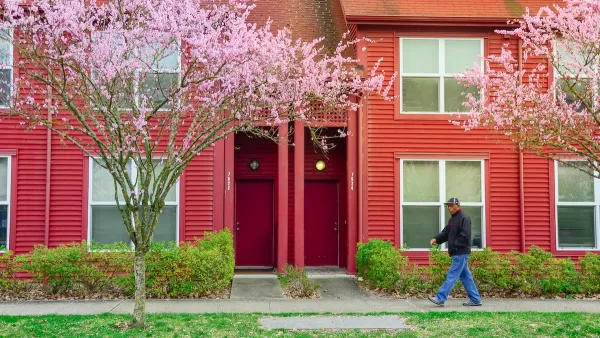
Seattle’s Zoning Reform Could Unlock a ‘Multiplex Boom’
A package of stackable density bonuses could make it easier for developers to build 12-plexes.

Vancouver Poised to Increase Residential Zoning
The city council will vote on a proposal to eliminate single-family only zoning in favor of rules that would allow up to six units per residential lot.

Planetizen Federal Action Tracker
A weekly monitor of how Trump’s orders and actions are impacting planners and planning in America.

The state-sanctioned urbicide of Austin
People don’t kill cities. Freeways do.

US to reduce Colorado River water deliveries to Mexico
A new Colorado Treaty amendment reduces Mexico’s Colorado River water allocation by 250,000 acre feet.

5 New England states march closer to 800 megawatt wind energy project
Securing federal approval for the project may be complicated under the Trump administration, which has historically been hostile towards domestic wind power.

Baltimore to break ground on $50 million Transit Priority Project
The project will bring faster bus trips, safer streets and better bike connections to Baltimore.

Airbnb launches $250 million 'last-dollar financing' housing accelerator, makes first investment in Austin
The company will put $6.4 million towards affordable housing development in Texas’ capital.

FREE Course: Walkable City 1: Why Walkability?
After describing his path towards focusing on walkability as the essence of good planning, Jeff Speck marches through his five principal reasons for making more walkable places.
Reinventing Malls: Planning Alchemy—Turning Gray Fields Into Gold
The course focuses on the opportunities and imperatives that shape reinvention of mall sites.

Eagle County Government
Harvard University Graduate School of Design
Nashville Planning Department
The Architects Foundation
University of Cincinnati Online
The Pocatello Development Authority
The Urban Renewal Agency of the City of Pocatello
Journal of the American Planning Association