Traffic engineers have long suffered the reputation that all we care about is moving cars. The reality could not be more different.


It’s no secret: pedestrian fatalities are on the rise, with a slew of new audits detailing the stats. The head-scratching increase is happening despite a nationwide push for Vision Zero — the initiative to eliminate traffic deaths and serious injuries by lowering speed limits, building safer crosswalks and bike paths, employing speed cameras, and more. In fact, multiple cities have been reporting that the policy is failing, sadly, and officials in some jurisdictions are unable to get their arms around the spike in traffic-related fatalities.
At first blush, it seems that Vision Zero has not delivered the lifesaving impact once promised. The statistics look bleak:
- In Houston, TX, 301 people died in 2024 as a result of traffic crashes, according to data from the Texas Department of Transportation (TxDOT). Despite the city’s Vision Zero program, started in 2019, the city’s previous record for traffic fatalities was 295 set in 2021.
- In Los Angeles, 303 people died in traffic accidents in 2024, up from 240 in 2015, the year the city launched Vision Zero. A newly released audit blamed the increase on a lack of cohesion across city departments, insufficient political support, and an imbalanced approach to implementation.
- In Washington, D.C., traffic fatalities hit a 16-year high in 2023, with 52 deaths and 363 major injuries reported. Fatalities in D.C. have risen in all but two years since Vision Zero was adopted in 2015.
- In Charlotte, NC, a 2024 audit reported that Vision Zero was failing to have a significant impact despite pouring millions of dollars into the program since 2019. The audit also reported 125 deadly crashes in 2022, up from 81 in 2020.
These statistics are very real, and it is essential to recognize that Vision Zero is much easier to “pledge” than it is to implement. One of the biggest obstacles to success is that too many cities and counties still operate under a “mobility first” mindset that prioritizes vehicle speed over safety. This culture emphasizes wide lanes and high-speed designs, both of which directly contradict Vision Zero principles.
Compounding this situation is the structure of most local governments. Vision Zero requires a holistic approach prioritizing safety and promoting safe driver behavior. Because government operations across planning, engineering and enforcement tend to be siloed, however, the coordinated effort Vision Zero demands is difficult to achieve.

Additionally, funding remains a significant barrier to many Vision Zero programs. With transportation budgets often prioritizing highway expansions over safety-focused retrofits, many jurisdictions lack the resources needed for infrastructure upgrades, public education, and enforcement initiatives. Financial strains can force cities to emphasize certain elements of Vision Zero while neglecting others. At the same time, reduced traffic enforcement further undermines the program’s effectiveness.
Critical progress
While these challenges have caused so many Vision Zero programs to stall — or be scrapped altogether — it’s important to remember that some cities have also experienced success. And that success is remarkable:
- Hoboken, N.J., for example, achieved eight consecutive years without a traffic-related death.
- Austin, Texas, saw a 22 percent reduction in fatal and serious injury crashes at targeted intersections.
- Philadelphia experienced a 34 percent reduction in fatal and serious injury crashes in locations with safety changes, including road diets and separated bike lanes.
- Total U.S. traffic deaths also declined 3.8 percent in 2024 to 39,345, the lowest number recorded since 2020.
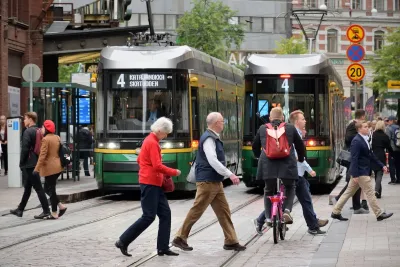
- Most recently, Helsinki, Finland has become the poster child for a well-orchestrated Vision Zero program. The Finnish capital has not experienced a single pedestrian fatality in the past 12 months, thanks to Vision Zero.
Given these successes, to quit Vision Zero and succumb to failure is a death sentence for thousands — especially children.
The momentum is real
Traffic engineers have long suffered from the reputation that all we care about is moving cars. It’s time to retire that outdated image. As a traffic engineer who has worked on dozens of Vision Zero studies, I can confidently say that this long-held characterization no longer fits the work we do, or our goals. The good news is that, by and large, the traffic engineering industry is evolving and nowhere is that clearer than in our commitment to the principles of Vision Zero.
It is more than a buzzword or a policy trend. It is a philosophical shift in how we approach traffic engineering — one that places the safety of people above the speed of vehicles. It requires transportation planners to rethink priorities as well as our professional identity and longstanding reputation. From my perspective, Vision Zero has become a framework through which we’ve improved the safety of school zones, residential neighborhoods, commercial corridors, and urban centers.
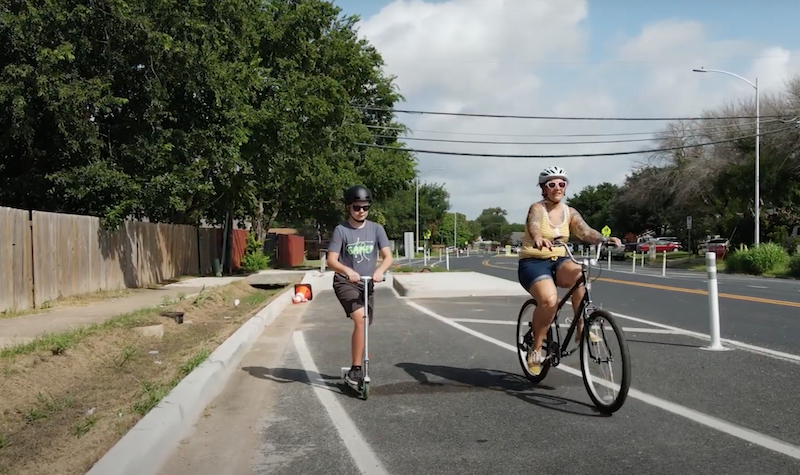
When Vision Zero first gained traction in the U.S., it challenged many established engineering norms. For years, success in transportation was measured in level of service, vehicle throughput, and reduced delay times. But Vision Zero forced the industry to confront a difficult truth. The more we prioritized speed and volume, the more we endangered the most vulnerable users of the road: pedestrians and cyclists, with particular emphasis on children and older adults. Those who sit in decision-making positions must recognize the realities of physics, namely that the human body is frail and vulnerable to a transportation system that prioritizes throughput over safety.
In community after community, we are called in to assess and respond to tragic fatalities and serious injuries, or the potential for crashes. Some of the most heartbreaking work we’ve done involved school corridors where children had been struck. The question we began to ask was not, “how can we move more cars?” but “how can we make sure no one dies trying to cross the street?”
The work is far from over. But the momentum behind Vision Zero is real. As someone who has spent a career working to make communities safer, Vision Zero represents the best of what traffic planning and engineering can provide to ensure safer roads for everyone.
The Vision Zero Toolbox
Countermeasures, such as traffic calming, are a combination of measures that reduce the negative effects of vehicles. Traffic calming mainly consists of physical measures that are aimed at creating safe streets, including slowing drivers down, reducing collision frequency and severity, and reducing the need for police enforcement while increasing access for different modes of transport.
Certainly not an exhaustive list, but proven engineering measures that slow traffic include:
- Enhanced Delineation: Also known as “rumble strips,” installing these high-friction surface treatments can allow for a 52 percent reduction in wet road crashes. On curves, the high-friction surface treatments can have a 24 percent reduction in curve crashes.
- Roadside Improvements: By making improvements, it is possible to reduce fatal crashes at curves. 27 percent of all fatal crashes occur at curves and 80 percent of all fatal crashes at curves are roadway departure crashes.
- Traffic Signals: Backplates with reflective borders have a safety benefit of potentially having a 15 percent reduction in total crashes. Backplates added to a traffic signal indication improve the visibility of the illuminated face of the signal by introducing a controlled contrast background.
- Access Management: Proper corridor access management can reduce total crashes along two-lane rural roads by up to 23 percent and can have an up to 31 percent reduction in injury and fatal crashes along urban and suburban arterials.
- Turn Lanes: Auxiliary turn lanes provide physical separation between turning traffic that is slowing or stopped and adjacent thru traffic at approaches to intersections. The safety benefit of left and right turn lanes is such that there could be a reduction of up to 48 percent reduction in total crashes for left turn lanes and up to 26 percent reduction in total crashes for right turn lanes.
- Roundabouts: The modern roundabout is a type of circular intersection configuration that safety and efficiently moves traffic thru an intersection. Changing a signalized intersection to a roundabout has been seen to have a 78 percent reduction in severe crashes.
- Road Diets: A road diet typically involved converting an existing four-lane divided roadway to a three-lane roadway consisting of two thru lanes and a center two-way left turn lane. An overall crash reduction of up to 47 percent has been achieved along with a reduction of rear-end and left turn crashes with dedicated left turn lanes. A road diet can be a low-cost safety solution when planned in conjunction with a simple pavement overlay.
And, one of the best methods for slowing cars are speed cameras. While most are not wild about speed cameras, the reality is they help encourage motorists to slow down, particularly in high-risk areas such as school zones or popular pedestrian or cycling routes. Slowing cars down encourages safer driving and reduces crashes and injuries. Think about it this way: a person struck by a vehicle traveling at 20 mph has a 90 percent chance of surviving. At 40 mph, that drops to just 10 percent. These numbers speak volumes.
Further underscoring this point, a CDC report entitled, Automated Speed-Camera Enforcement, found that speed cameras reduced total crashes from 8 to 49 percent and fatal and serious-injury crashes from 11 to 44 percent in studies that compared pre- and post-crash data collected near camera sites.
Wes Guckert, PTP, is Chairman & CEO of The Traffic Group, a Service-Disabled Veteran-Owned Small Business (SDVOSB), Maryland-based traffic engineering and transportation planning firm celebrating its 40th anniversary. For more information: www.trafficgroup.com or follow them on LinkedIn.

Milwaukee announces 60 Vision Zero projects for 2026
The city is using a combination of federal, state, and local funds to work toward its goal of eliminating traffic deaths by 2037.
After San Diego Installed a Protected Bike Lane, Ridership More Than Doubled — and Hasn’t Stopped Growing.
“When people feel safe, they ride.”
Spokane Updates its Complete Streets Policy
Mayor Lisa Brown signed a revised version of the city’s Complete Streets framework that more closely aligns with state law and the city’s municipal code.

Planetizen Federal Action Tracker
A weekly monitor of how Trump’s orders and actions are impacting planners and planning in America.

Amtrak, CN end decades-long dispute with eight-year agreement
The new operating agreement establishes an updated framework for the companies to work together, including processes to resolve disputes.

Northwest rail fans eager for Sept. 30 debut of Amtrak’s Airo fleet
Get ready for that new train smell and more seats. But they won’t go faster or run more frequently on the Cascades route in Washington and Oregon.

St. Louis Metro to test if single-car trains can reduce operating costs, maintain rider satisfaction
The pilot program will run from October to spring 2027, and begin with one single-car train operating on Metrolink’s Red and Blue lines.

Pennsylvania is building data centers in abandoned mines
Housing data centers in mines provides an alternative to destroying local forests and may spare residents from data centers’ noise and air pollution.

If Corpus Christi can’t revive desalination plant project, it may owe Texas $235 million
Earlier this month, city officials declined to pursue developing the plant for the second time in a year.

FREE Course: Walkable City 1: Why Walkability?
After describing his path towards focusing on walkability as the essence of good planning, Jeff Speck marches through his five principal reasons for making more walkable places.
Reinventing Malls: Planning Alchemy—Turning Gray Fields Into Gold
The course focuses on the opportunities and imperatives that shape reinvention of mall sites.

City of Thousand Oaks
City of Wisconsin Rapids
Harvard University Graduate School of Design
The Architects Foundation
University of Cincinnati Online
The Pocatello Development Authority
The Urban Renewal Agency of the City of Pocatello

