The conversation around pedestrianizing public streets isn’t new — think Times Square. Could one of America’s oldest streets lead the way in a revival of the pedestrian mall?


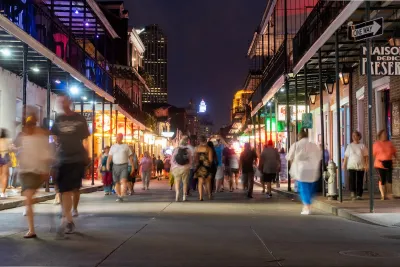
Pedestrian malls, while rarer than in European cities, aren’t new to the United States. Times Square, Santa Monica’s Third Street Promenade, and Fremont Street in Las Vegas are just a few examples of pedestrianized zones in U.S. cities (some more quasi-public than others).
In fact, according to a Streetsblog USA article by Kea Wilson, “city leaders blocked cars from entering more than 200 downtown pedestrian malls across America throughout the 1960s and '70s, hoping to replicate the success of the shopping-oriented pedestrian plazas that are a fixture across much of Europe.” But the isolated locations of many of these plazas and the lack of cultural connection with the concept led to the failure of many to thrive.
The New Year’s attack on Bourbon Street, perpetrated in part with a large truck and aided by a lack of robust safety infrastructure, sparked a new call to pedestrianize Bourbon Street in New Orleans and make it safe for people walking all the time rather than on select occasions, with advocates saying that “pedestrianizing Bourbon Street would simply strengthen the temporary barriers that are already supposed to go up during periods of peak foot traffic but often don't, immediately making the tourist Mecca safer from all manner of vehicular threats.”
Closing a space permanently to cars can make it easier and more affordable to build secure infrastructure and limit ingress while still planning for emergency vehicles. If an already popular pedestrian destination like Bourbon Street would commit to it, other U.S. cities might follow suit.
FULL STORY: Could the Comeback of the U.S. Pedestrian Mall Start on Bourbon St.?

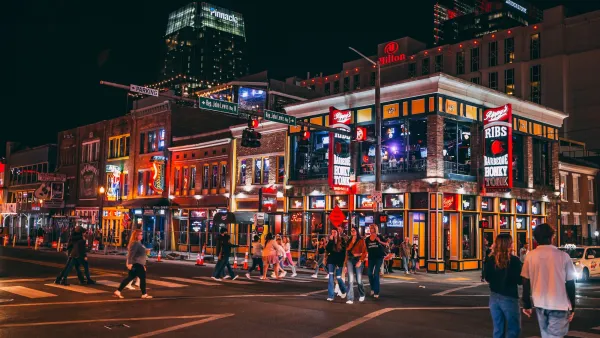
Tennessee DOT weighs making Nashville's Broadway car-free — sometimes
After a crash that killed one person and injured several others, state and city officials are in talks to consider options for closing the popular thoroughfare to cars during certain events.
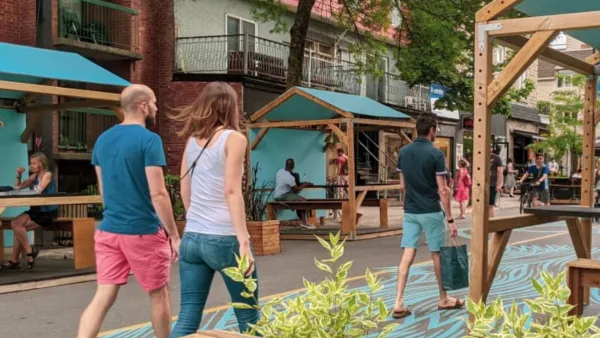
Car-Free Montreal Street Hailed as Success
A summer pedestrianization project is widely popular with residents and local businesses.
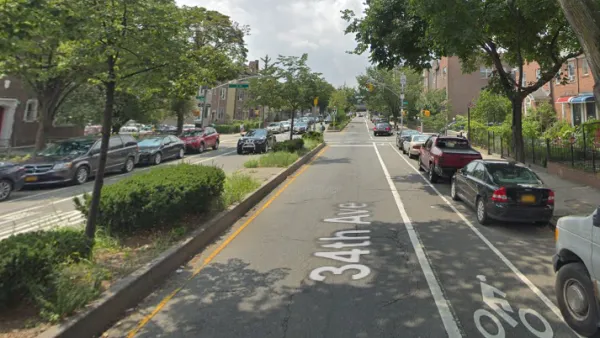
How Can NYC Keep its 'Open Streets' Post-Pandemic?
A debate over one Queens 'open street' project illustrates the challenges of maintaining open streets.

The state-sanctioned urbicide of Austin
People don’t kill cities. Freeways do.

US to reduce Colorado River water deliveries to Mexico
A new Colorado Treaty amendment reduces Mexico’s Colorado River water allocation by 250,000 acre feet.

New Jersey’s second-largest city bans standalone data centers
Jersey City will continue to allow co-location facilities, such as those meant for research institutions that store their own data.

Amtrak not solely to blame for New Jersey commuter rail's unreliability, report finds
A new study from the Garden State Initiative found that NJ Transit’s budget grew 20% across a 4 year period, but reliability declined significantly over the same period.

EPA erases limits on planet-warming pollution from power plants
Under Monday’s plan, power plants would still have some limits on how much mercury, arsenic and other contaminants they can emit.

Phoenix announces new on-demand transit service, more frequent RAPID buses
Both new services will launch in October, and are part of Phoenix's Project Effective Access Solutions for Easing Congestion.

FREE Course: Walkable City 1: Why Walkability?
After describing his path towards focusing on walkability as the essence of good planning, Jeff Speck marches through his five principal reasons for making more walkable places.
Reinventing Malls: Planning Alchemy—Turning Gray Fields Into Gold
The course focuses on the opportunities and imperatives that shape reinvention of mall sites.

Eagle County Government
Harvard University Graduate School of Design
Nashville Planning Department
The Architects Foundation
University of Cincinnati Online
The Pocatello Development Authority
The Urban Renewal Agency of the City of Pocatello
Journal of the American Planning Association