In the wake of the Eaton Fire, Altadena Green is working to preserve fire-damaged but recoverable trees, advocating for better assessment processes, educating homeowners, and protecting the community’s urban canopy from unnecessary removal.


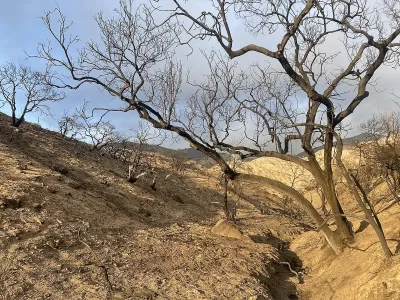
In the aftermath of the Eaton Fire, many Altadena residents who lost their homes are now fighting to save their trees from removal. The fire left countless trees scorched but still viable, yet ongoing debris cleanup threatens to cut down many that could recover with time and care. As reported by Erin Stone, to combat this, Altadena Green—a group founded by residents, arborists, and landscape experts—is working to assess trees marked for removal, educate homeowners, and advocate for preserving as much of Altadena’s tree canopy as possible. Residents like Wynne Wilson, whose fire-resistant garden was a community landmark, view tree preservation as essential to maintaining the identity and environmental resilience of the neighborhood.
Despite community efforts, many trees are at risk due to conflicting oversight from agencies managing post-fire cleanup. The Army Corps of Engineers, responsible for clearing private properties, has marked trees for removal using a controversial process that residents say lacks transparency. While homeowners can request to keep certain trees, the decision ultimately rests with contractors who may deem them hazardous. Advocates argue that local arborists should lead these assessments, as some trees, such as coast live oaks and Canary Island pines, have a strong chance of survival. The removal of too many trees could also worsen urban heat island effects, drastically changing Altadena’s climate.
To help homeowners navigate this process, Altadena Green provides resources on tree health assessments, retention requests, and alternative debris removal options. Experts caution against premature tree removal, advising residents to check for live bark before assuming a tree is dead. Research shows that fire-resistant trees can actually slow the spread of flames if properly spaced. While the fire was primarily driven by embers igniting buildings, preserving the remaining greenery represents resilience and recovery for Altadena. As the community rebuilds, protecting its beloved trees remains a crucial part of healing and adaptation.
FULL STORY: After the Eaton Fire, this group is working to save Altadena’s surviving trees

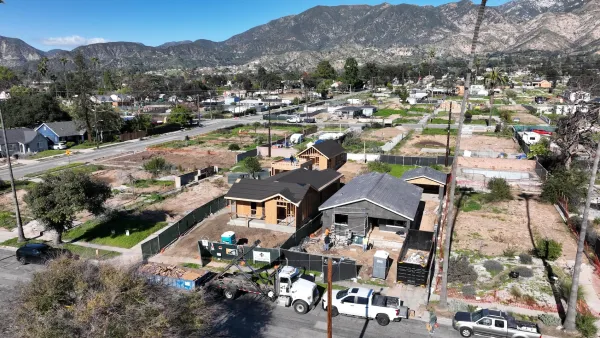
Almost 40% of LA fire survivors face a housing crisis
Many Angelenos who lost their homes in the Altadena and Pacific Palisades fires have already run out of temporary housing funds.

UCLA Experts Offer Critical Support for LA Wildfire Response and Recovery
The UCLA Luskin Center for Innovation offers expert guidance on LA wildfire response and recovery, addressing critical issues like water safety, air quality, equitable rebuilding, and climate adaptation to promote resilience and sustainability.
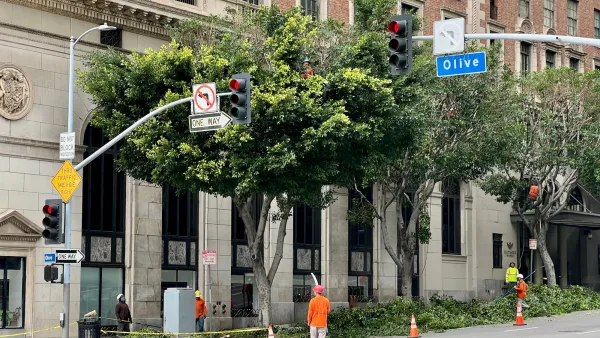
LA’s Tree Canopy is Nearing a ‘Point of Failure’
Calls to 311 for “tree emergencies” are rising, endangering a resource that helps bring down urban temperatures and reduce air pollution.

The state-sanctioned urbicide of Austin
People don’t kill cities. Freeways do.

US to reduce Colorado River water deliveries to Mexico
A new Colorado Treaty amendment reduces Mexico’s Colorado River water allocation by 250,000 acre feet.

New Jersey’s second-largest city bans standalone data centers
Jersey City will continue to allow co-location facilities, such as those meant for research institutions that store their own data.

Amtrak not solely to blame for New Jersey commuter rail's unreliability, report finds
A new study from the Garden State Initiative found that NJ Transit’s budget grew 20% across a 4 year period, but reliability declined significantly over the same period.

EPA erases limits on planet-warming pollution from power plants
Under Monday’s plan, power plants would still have some limits on how much mercury, arsenic and other contaminants they can emit.

Phoenix announces new on-demand transit service, more frequent RAPID buses
Both new services will launch in October, and are part of Phoenix's Project Effective Access Solutions for Easing Congestion.

FREE Course: Walkable City 1: Why Walkability?
After describing his path towards focusing on walkability as the essence of good planning, Jeff Speck marches through his five principal reasons for making more walkable places.
Reinventing Malls: Planning Alchemy—Turning Gray Fields Into Gold
The course focuses on the opportunities and imperatives that shape reinvention of mall sites.


Eagle County Government
Harvard University Graduate School of Design
Nashville Planning Department
The Architects Foundation
University of Cincinnati Online
The Pocatello Development Authority
The Urban Renewal Agency of the City of Pocatello
Journal of the American Planning Association