Esri's new ACS Atlas Collection offers interactive applications that visualize the latest U.S. demographic and socio-economic data, enabling users to explore over 175 curated web maps across various thematic areas.


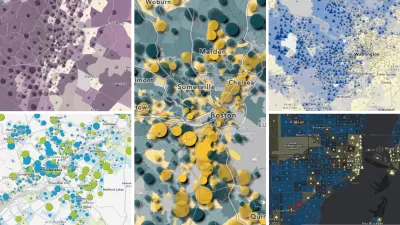
Esri's ArcGIS Living Atlas team has unveiled the American Community Survey (ACS) Atlas Collection, a suite of interactive applications designed to visualize the latest 2019-2023 ACS 5-year estimates from the U.S. Census Bureau. As reported by Laura Phoebus, this collection comprises five Atlas Instant Apps, each focusing on thematic areas such as Demographics, Social Characteristics, Economic Characteristics, and Housing. Users can explore over 175 web maps addressing various topics, including age, race, income, education, and employment, providing a comprehensive view of community trends across the United States.
The Atlas Instant Apps offer an engaging platform for users to interact with ACS data. Features include browsing and filtering maps by different categories, navigating through bookmarks, and capturing screenshots complete with legends and pop-ups. Additionally, users with ArcGIS Online accounts can save personalized copies of maps, create StoryMaps, or develop other Instant Apps directly from the Atlas interface. This functionality ensures that both novice and experienced GIS professionals can effectively utilize the ACS data for analysis and storytelling.
The ACS Atlas Collection aims to empower the GIS community by providing intuitive tools to explore and uncover new trends within curated map collections. By leveraging the ArcGIS Atlas Instant App template, Esri facilitates a more interactive and accessible means of discovering content derived from the ACS. This initiative not only enhances the user experience but also promotes informed decision-making based on the latest demographic and socio-economic data available.
FULL STORY: Introducing the American Community Survey (ACS) Atlas Collection


US Census Starts Using Postal Workers as Census Takers
A test program is using postal carriers to administer Census questionnaires.
Choosing Ignorance is Stupid
People love statistics. They let us understanding the world beyond our own senses. USA Today publishes a daily Snapshot which presents a graph of random statistics. Sports talk and business analysis are dominated by statistics. We measure our progress, or lack thereof, and compare ourselves with others, based on statistics about our size, activities and accomplishments.
Mapping the Nation's Well-Being
Who's the happiest and healthiest of them all? The New York Times posts an interactive map of the national Gallup-Healthways Well-Being Index.

The state-sanctioned urbicide of Austin
People don’t kill cities. Freeways do.

US to reduce Colorado River water deliveries to Mexico
A new Colorado Treaty amendment reduces Mexico’s Colorado River water allocation by 250,000 acre feet.

New Jersey’s second-largest city bans standalone data centers
Jersey City will continue to allow co-location facilities, such as those meant for research institutions that store their own data.

Amtrak not solely to blame for New Jersey commuter rail's unreliability, report finds
A new study from the Garden State Initiative found that NJ Transit’s budget grew 20% across a 4 year period, but reliability declined significantly over the same period.

EPA erases limits on planet-warming pollution from power plants
Under Monday’s plan, power plants would still have some limits on how much mercury, arsenic and other contaminants they can emit.

Phoenix announces new on-demand transit service, more frequent RAPID buses
Both new services will launch in October, and are part of Phoenix's Project Effective Access Solutions for Easing Congestion.

FREE Course: Walkable City 1: Why Walkability?
After describing his path towards focusing on walkability as the essence of good planning, Jeff Speck marches through his five principal reasons for making more walkable places.
Reinventing Malls: Planning Alchemy—Turning Gray Fields Into Gold
The course focuses on the opportunities and imperatives that shape reinvention of mall sites.

Eagle County Government
Harvard University Graduate School of Design
Nashville Planning Department
The Architects Foundation
University of Cincinnati Online
The Pocatello Development Authority
The Urban Renewal Agency of the City of Pocatello
Journal of the American Planning Association