Allowing cyclists to treat stop signs as yield signs does not negatively impact safety and can help people on bikes more effectively navigate roadways.


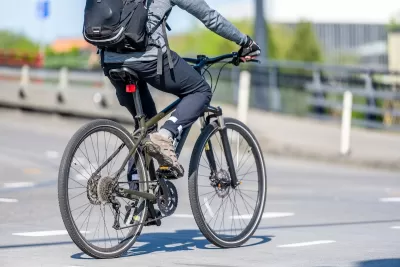
Two new studies affirm the benefits of the Bicycle Safety Stop, also known as the Idaho Stop or the bike stop-as-yield, reports Jared Sanchez in Streetsblog California.
Sanchez notes that cyclists aren’t the only ones who routinely treat stop signs as yield signs. “Of course, many people in cars also roll through stop signs when there are no other vehicles present; this is a common and logical behavior for all road users, though it carries different risks for people operating two-ton machines. For bike riders, stop-as-yield is essential for efficient riding because it conserves the momentum lost when starting after coming to a complete stop.”
One study showed that bike riders can safely navigate intersections and share the road with people in cars by treating stop signs as yields. However, “The study concluded that stop-as-yield laws would work better if states included information about them in driver handbooks — something even Idaho does not do.”
A second study revealed that almost all road users — people on bikes, walking, and in cars — reported occasionally breaking laws. While drivers and pedestrians reported flouting the law to save time, most cyclists reported they broke traffic rules for safety reasons. “Again, this study finds a need for better public education so people driving and biking can share the road safely.”
FULL STORY: New Studies Show No Downsides for Bicycle Safety Stop

Cyclists may be Right to run Stop Signs and Red Lights. Here’s why
One researcher argues that the Idaho stop might not be such a bad idea after all.
D.C. Could Legalize ‘Idaho Stop,’ Ban Right Turns on Red
Proposed legislation would allow cyclists to treat stop signs as yield signs and eliminate right turns on red in an effort to reduce cyclist and pedestrian fatalities.
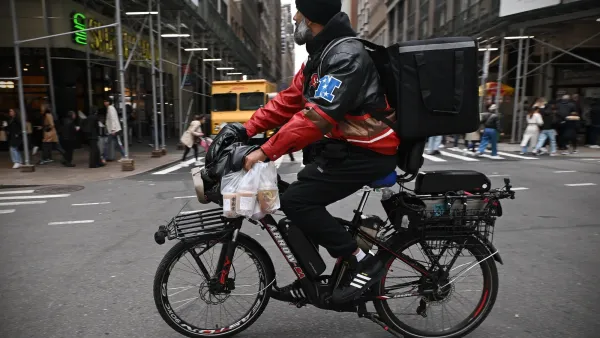
Study: Delivery Workers Are the Safest Cyclists on NYC Roads
A new study shows that delivery workers are more likely to stop at red lights and obey traffic rules than recreational or commuter riders.

Planetizen Federal Action Tracker
A weekly monitor of how Trump’s orders and actions are impacting planners and planning in America.

The state-sanctioned urbicide of Austin
People don’t kill cities. Freeways do.

US to reduce Colorado River water deliveries to Mexico
A new Colorado Treaty amendment reduces Mexico’s Colorado River water allocation by 250,000 acre feet.

Mamdani overhauls NYC's Vision Zero plan with 100 new policy goals
The overhaul aims to reduce traffic deaths and make streets safer for pedestrians, cyclists and drivers through lower speed limits, new safety infrastructure and more.

Amtrak not solely to blame for New Jersey commuter rail's unreliability, report finds
A new study from the Garden State Initiative found that NJ Transit’s budget grew 20% across a 4 year period, but reliability declined significantly over the same period.

EPA erases limits on planet-warming pollution from power plants
Under Monday’s plan, power plants would still have some limits on how much mercury, arsenic and other contaminants they can emit.

FREE Course: Walkable City 1: Why Walkability?
After describing his path towards focusing on walkability as the essence of good planning, Jeff Speck marches through his five principal reasons for making more walkable places.
Reinventing Malls: Planning Alchemy—Turning Gray Fields Into Gold
The course focuses on the opportunities and imperatives that shape reinvention of mall sites.

Eagle County Government
Harvard University Graduate School of Design
Nashville Planning Department
The Architects Foundation
University of Cincinnati Online
The Pocatello Development Authority
The Urban Renewal Agency of the City of Pocatello
Journal of the American Planning Association