Lewisville, Texas, demonstrates how equitable planning and community-driven efforts can transform underserved areas by enhancing park access and promoting social and recreational equity.


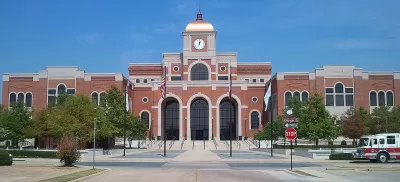
The 10-Minute Walk campaign, a nationwide initiative led by the Urban Land Institute, the National Recreation and Park Association, and The Trust for Public Land, aims to ensure all residents live within a 10-minute walk of a park. In Lewisville, Texas, this vision became reality through a study focused on increasing park access in underserved areas like "the Triangle," which faced barriers such as busy roadways and socioeconomic challenges. By leveraging data, mapping, and authentic community engagement, the city developed a plan to address these disparities and foster equity in park access.
Two standout achievements emerged from Lewisville's efforts. The Play Lewisville On Wheels program brought recreation directly to underserved neighborhoods, eliminating barriers such as transportation and cost. Similarly, the creation of Glory Park/Parque La Gloria improved the Triangle neighborhood, providing walking trails, playgrounds, and open spaces while fostering trust and social connections through a community-driven planning process. These initiatives not only enhanced recreational opportunities but also strengthened community bonds and inspired further improvements.
As a result, Lewisville has made significant progress, increasing the percentage of residents living within a 10-minute walk of a park from 60% in 2019 to 83% by 2024, with a goal of 85% by 2025. The success of Lewisville's approach underscores the importance of prioritizing equity, engaging communities authentically, and translating thoughtful plans into tangible actions. By doing so, the city has set a powerful example for advancing equitable access to parks nationwide.
Read the full story: From Plans to Parks: Learning from Lewisville


Exposition Park’s $351.5 Million Transformation
This revitalization will create vital green spaces, improve accessibility, and enhance connections with community, making Exposition Park a central hub for recreation and culture in Los Angeles.
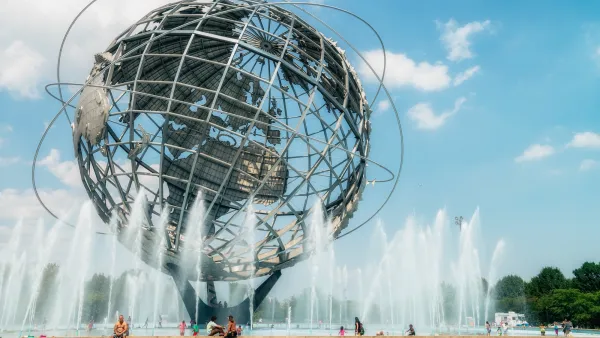
Historic Queens park is getting a $120M upgrade
The borough's largest park will undergo significant upgrades for accessibility, flood mitigation and historic preservation.
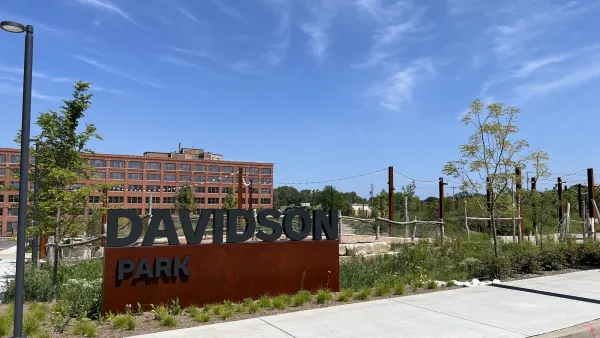
Harley-Davidson turned a Milwaukee parking lot into a green oasis
The park, adjacent to Harley-Davidson headquarters, doubles as stormwater retention infrastructure.

Planetizen Federal Action Tracker
A weekly monitor of how Trump’s orders and actions are impacting planners and planning in America.

The state-sanctioned urbicide of Austin
People don’t kill cities. Freeways do.

Colorado’s Largest Data Center Could Rise Next to Homes — Without a Public Hearing
The proposed campus would consume 11 times the power of Denver International Airport; as it has across the country, opposition mounts.

Nation's most wind-powered state turns to coal as data centers increase energy demand
For the first time in decades, Iowa has increased its generation of coal power.

NYC cools commuters with city's first rain garden above a bus stop
New York City officials say the plants in the rain garden can absorb 16 gallons of rainwater during heavy storms.

Brightline West’s future may rely on $6 billion federal loan
The company has until Nov. 2 to make a $400 million equity investment into its proposed high-speed rail line.

FREE Course: Walkable City 1: Why Walkability?
After describing his path towards focusing on walkability as the essence of good planning, Jeff Speck marches through his five principal reasons for making more walkable places.
Reinventing Malls: Planning Alchemy—Turning Gray Fields Into Gold
The course focuses on the opportunities and imperatives that shape reinvention of mall sites.


Greater Baltimore Committee
Eagle County Government
Harvard University Graduate School of Design
The Architects Foundation
University of Cincinnati Online
The Pocatello Development Authority
The Urban Renewal Agency of the City of Pocatello
Journal of the American Planning Association