New developments have clear rules for ensuring surrounding roads, water, and sewers can handle new users. Why not do the same for community amenities?



In a piece for Happy Cities, Emma Avery describes Happy Cities’ effort to address the challenges of elevating social infrastructure to the same importance as other civic amenities. “Our research aims to support municipalities in this process by collecting data and developing policy tools, recognizing that many municipalities are already overstretched trying to meet essential community needs.”
As Avery explains, “When someone proposes a new development, they must work with the city to ensure that roads, water, and sewage have the capacity to service new homes and businesses.” But when it comes to social spaces, cities usually make decisions case-by-case, leading to uneven levels of community facilities and services.
Social infrastructure is more than just amenities or buildings—it encompasses the social networks and programs that bring shared spaces to life, and creates the foundation for thriving, healthy communities.
Elevating social infrastructure to the same importance, and developing tools and metrics to measure its actual impact, “could help cities understand whether, for example, a new development has enough park space or child care nearby to support its future residents,” Avery writes.
FULL STORY: The case for social infrastructure

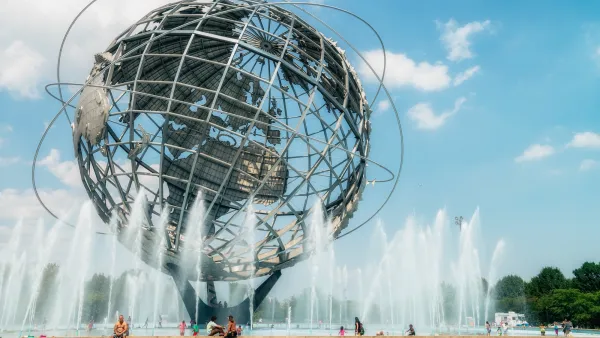
Historic Queens park is getting a $120M upgrade
The borough's largest park will undergo significant upgrades for accessibility, flood mitigation and historic preservation.
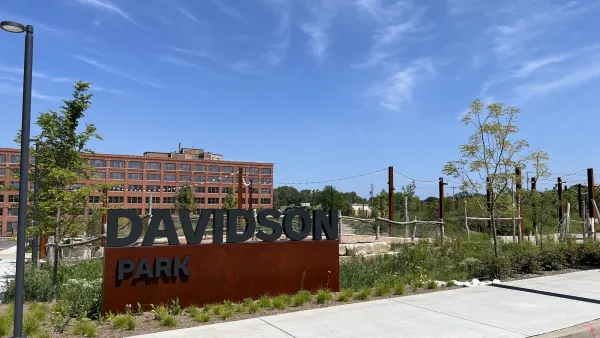
Harley-Davidson turned a Milwaukee parking lot into a green oasis
The park, adjacent to Harley-Davidson headquarters, doubles as stormwater retention infrastructure.

Jim Crow Robbed America of Public Pools. It’s Time to get Them Back.
Disparity amongst who can and can’t swim in America isn’t an accident — and it's deadly. Let’s reclaim the community pool as an essential public space.

Planetizen Federal Action Tracker
A weekly monitor of how Trump’s orders and actions are impacting planners and planning in America.

The state-sanctioned urbicide of Austin
People don’t kill cities. Freeways do.

US to reduce Colorado River water deliveries to Mexico
A new Colorado Treaty amendment reduces Mexico’s Colorado River water allocation by 250,000 acre feet.

LA Metro’s ultimatum: no extra buses for LA28 if federal funding isn’t imminently secured
If Metro does not provide additional buses, LA28 organizers will have to find a new way to manage Olympic traffic. LA28’s budget does not include a line item for transit.

Colorado’s Largest Data Center Could Rise Next to Homes — Without a Public Hearing
The proposed campus would consume 11 times the power of Denver International Airport; as it has across the country, opposition mounts.

5 New England states march closer to 800 megawatt wind energy project
Securing federal approval for the project may be complicated under the Trump administration, which has historically been hostile towards domestic wind power.

FREE Course: Walkable City 1: Why Walkability?
After describing his path towards focusing on walkability as the essence of good planning, Jeff Speck marches through his five principal reasons for making more walkable places.
Reinventing Malls: Planning Alchemy—Turning Gray Fields Into Gold
The course focuses on the opportunities and imperatives that shape reinvention of mall sites.

Eagle County Government
Harvard University Graduate School of Design
Nashville Planning Department
The Architects Foundation
University of Cincinnati Online
The Pocatello Development Authority
The Urban Renewal Agency of the City of Pocatello
Journal of the American Planning Association