This revitalization will create vital green spaces, improve accessibility, and enhance connections with community, making Exposition Park a central hub for recreation and culture in Los Angeles.


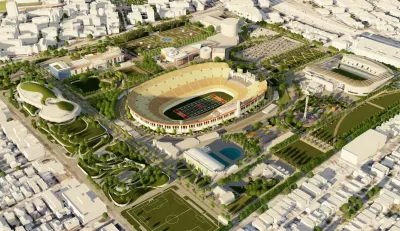
Exposition Park in Los Angeles is set for a transformative $351.5 million renovation that will add six acres of green space by relocating surface parking underground in preparation for the 2028 L.A. Olympics. As reported by Sam Lubell, the project is spearheaded by Expo Park’s new general manager, Andrea Ambriz, whose leadership aims to unify the park’s cultural and recreational facilities while significantly improving its role as a community gathering space. The plan will enhance the visitor experience by increasing green space, shade, and accessibility, replacing large asphalt lots with vibrant, usable public spaces.
The state-approved funding marks the largest investment in green infrastructure in South L.A.’s history, addressing the long-standing need for park access in one of the city's most park-poor areas. Ambriz has positioned the underground parking project as a cornerstone of the larger 2020 master plan, which also includes new public facilities, improved walkways, and spaces for community programming. The initiative aims to boost health and recreation, climate resilience, and job creation in the region.
Ambriz, who took over as general manager in 2023, has worked to gain momentum for the park’s overhaul by securing early funding, expanding her team, and building consensus among the park’s many stakeholders. Her vision for the park extends beyond its function as a venue for sports and cultural institutions, emphasizing its potential as a central hub for local residents and visitors alike. Ambriz has also been actively working to raise additional funding through public and private sources, including philanthropic donors.
While the ambitious timeline is set to have the renovations completed before the 2028 Olympics, challenges remain. These include minimizing disruptions during construction and avoiding the unintended consequence of gentrification in the surrounding area. However, Ambriz’s extensive experience and community-focused approach have inspired confidence among her partners that she will deliver a lasting, positive legacy for Exposition Park and the South L.A. community.
FULL STORY: Inside the $351.5-million makeover coming to L.A.’s Exposition Park

How South LA Green Spaces Power Community Health and Hope
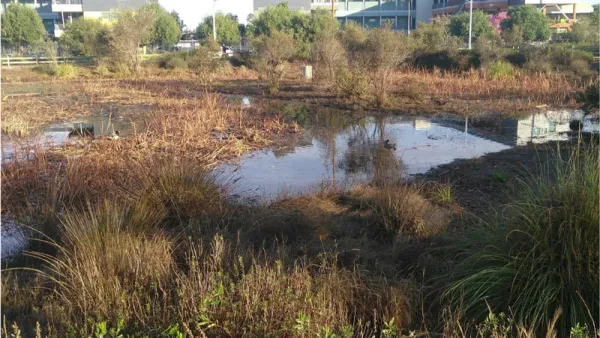
Green spaces like South L.A. Wetlands Park are helping South Los Angeles residents promote healthy lifestyles, build community, and advocate for improvements that reflect local needs in historically underserved neighborhoods.
Addressing Tree Canopy Disparity in South Los Angeles
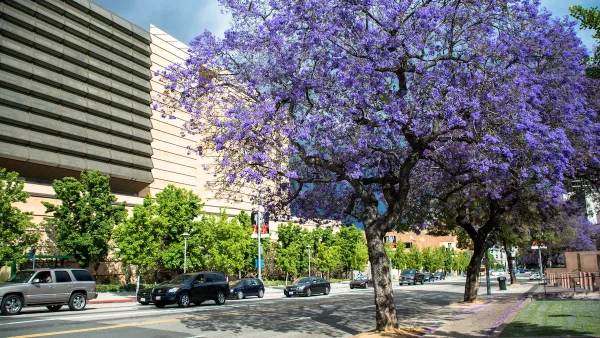
A new study highlights the complex challenge of addressing tree canopy disparities in South L.A., where historical environmental injustices, budget constraints, and competing community priorities hinder efforts to increase equitable tree coverage.
The Importance of LA's Exposition Park
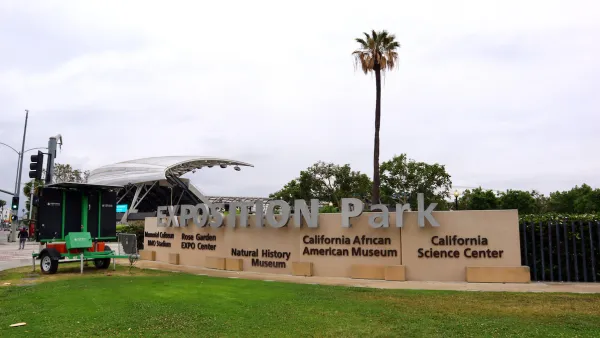
Centrally located in Los Angeles, Exposition Park is a 160-acre urban park that is home to key recreational, cultural, educational, and athletic institutions and facilities. Learn more about the park from its general manager Andrea Ambriz.

Planetizen Federal Action Tracker
A weekly monitor of how Trump’s orders and actions are impacting planners and planning in America.

The state-sanctioned urbicide of Austin
People don’t kill cities. Freeways do.

US to reduce Colorado River water deliveries to Mexico
A new Colorado Treaty amendment reduces Mexico’s Colorado River water allocation by 250,000 acre feet.

Airbnb launches $250 million 'last-dollar financing' housing accelerator, makes first investment in Austin
The company will put $6.4 million towards affordable housing development in Texas’ capital.

Guerilla urbanists are building DIY bus stop benches in Chicago
A before-and-after of one of the bus stops with a new bench. The new benches are not officially sanctioned or permitted, but the residents who placed them hope they will be the start of a network of DIY benches across the city.

Mamdani overhauls NYC's Vision Zero plan with 100 new policy goals
The overhaul aims to reduce traffic deaths and make streets safer for pedestrians, cyclists and drivers through lower speed limits, new safety infrastructure and more.

FREE Course: Walkable City 1: Why Walkability?
After describing his path towards focusing on walkability as the essence of good planning, Jeff Speck marches through his five principal reasons for making more walkable places.
Reinventing Malls: Planning Alchemy—Turning Gray Fields Into Gold
The course focuses on the opportunities and imperatives that shape reinvention of mall sites.

Eagle County Government
Harvard University Graduate School of Design
Nashville Planning Department
The Architects Foundation
University of Cincinnati Online
The Pocatello Development Authority
The Urban Renewal Agency of the City of Pocatello
Journal of the American Planning Association