Designing thoughtful, child-friendly public spaces can ease the burdens of modern parenting and offer safe spaces for children to learn self-reliance and resilience.


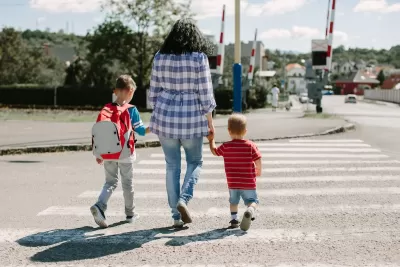
In an article in Bloomberg CityLab, Alexandra Lange argues that cities should build more spaces that are safe and friendly to children and families.
According to Lange, “Parenting experts say children need to learn independence and resilience. But cities and suburbs don’t offer safe pedestrian and bike routes to school, malls kick teenagers out on the weekends, and free time disappears under a spreadsheet of activities.” Parents, meanwhile, have to find ways to shuttle their kids to various places, often with few options other than driving.
Lange points to examples dating back as far as the early 20th century, when planners more consciously began trying to design safe, connected, family-friendly neighborhoods. She also lists ways cities can encourage family-friendly spaces without changing their existing housing stock: “Widening sidewalks, closing streets for play on afternoons and weekends, adding speed humps and opening schoolyards after hours can immediately provide the same ease for impromptu hang-outs, with even more potential playmates.”
Lange points out that, even if you don’t have children, “most of the amenities that would make having a family easier benefit everyone. You might not care about slow streets, shaded benches, or walkable shops now, but you are one pregnancy, knee operation, or visit from an older relative away from becoming suddenly, even painfully, aware of the location of every bench, elevator, ramp and bathroom on your daily commute.”
FULL STORY: Burned Out Parents Need Better Public Spaces

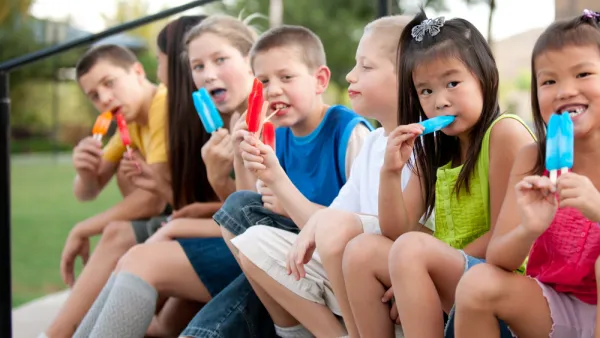
The Popsicle Test: What Makes a City Good for Children?
Low crime rates and affordable property preoccupy adults, but kids need something more: the ability to walk the streets and play out on their own. In The Guardian, Viv Groskop explores the "popsicle test" and other elements of child-friendly cities.
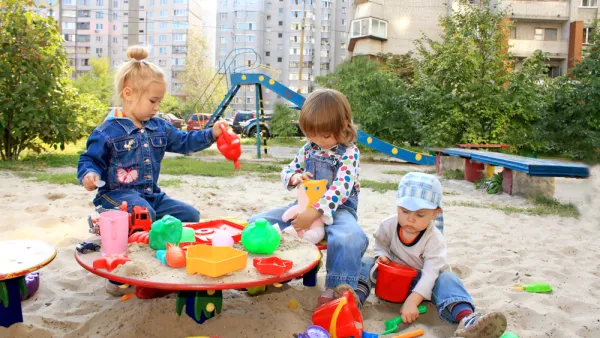
Child-Friendly Cities: What My Toddler Taught Me about City Design
In a post from the new Plan.Place blog, the author explores the city with a two-year-old as his guide and offers reflections on viewing the urban landscape anew--from an elevation of 34 inches and with a renewed sense of wonder.
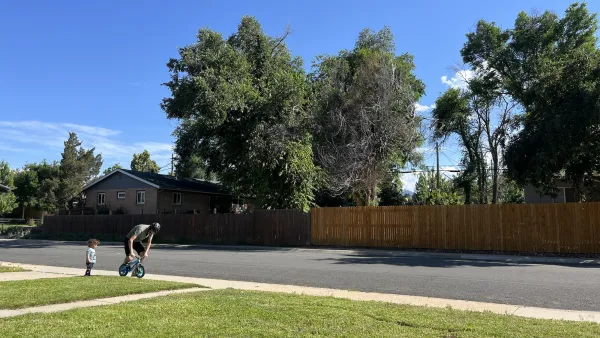
The Parking Lot Maternity Leave
New parenthood is the stress test of suburbia. I’ve learned the hard way just how spectacularly it fails.

Planetizen Federal Action Tracker
A weekly monitor of how Trump’s orders and actions are impacting planners and planning in America.

The state-sanctioned urbicide of Austin
People don’t kill cities. Freeways do.

US to reduce Colorado River water deliveries to Mexico
A new Colorado Treaty amendment reduces Mexico’s Colorado River water allocation by 250,000 acre feet.

Mamdani overhauls NYC's Vision Zero plan with 100 new policy goals
The overhaul aims to reduce traffic deaths and make streets safer for pedestrians, cyclists and drivers through lower speed limits, new safety infrastructure and more.

Amtrak not solely to blame for New Jersey commuter rail's unreliability, report finds
A new study from the Garden State Initiative found that NJ Transit’s budget grew 20% across a 4 year period, but reliability declined significantly over the same period.

EPA erases limits on planet-warming pollution from power plants
Under Monday’s plan, power plants would still have some limits on how much mercury, arsenic and other contaminants they can emit.

FREE Course: Walkable City 1: Why Walkability?
After describing his path towards focusing on walkability as the essence of good planning, Jeff Speck marches through his five principal reasons for making more walkable places.
Reinventing Malls: Planning Alchemy—Turning Gray Fields Into Gold
The course focuses on the opportunities and imperatives that shape reinvention of mall sites.

Eagle County Government
Harvard University Graduate School of Design
Nashville Planning Department
The Architects Foundation
University of Cincinnati Online
The Pocatello Development Authority
The Urban Renewal Agency of the City of Pocatello
Journal of the American Planning Association