The plan to charge motorists driving into parts of Manhattan is being challenged in multiple courts.



A series of legal challenges could derail New York City’s long-awaited congestion pricing plan, which is scheduled to begin on January 5, report Chris Dolmetsch and Michelle Kaske in Bloomberg CityLab.
According to CityLab, “On Friday in Manhattan, US District Judge Lewis J. Liman heard requests from plaintiffs in four different lawsuits to put the program on hold while the litigation proceeds. Liman didn’t immediately rule, but indicated he’s aware of the time constraints and will decide as soon as possible.” Other judges are issuing decisions that allege the plan will unfairly force people with limited public transit options to avoid driving and that it unfairly targets New Jersey residents.
“The MTA will need to seek new funding if congestion pricing fails to take effect. The transit provider plans to issue $15 billion of bonds secured by the new toll revenue to pay for extending the Second Avenue subway to Harlem, updating train signals and adding elevators to stations.”
FULL STORY: New York’s Congestion Pricing Plan Still Faces Legal Hurdles

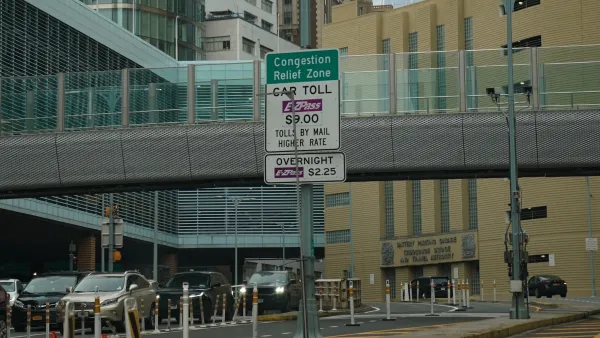
Judge Rules to Keep NYC Congestion Pricing, Ending Trump's Legal Challenge
The decision likely deals a fatal blow to efforts to end the program, but the Trump administration says it will explore other avenues for reversing the congestion pricing scheme.

NYC Congestion Pricing: Still Working
10 million fewer vehicles entered the congestion pricing zone in the first six months of the program than last year, while pedestrian fatalities are at ‘historic lows.’
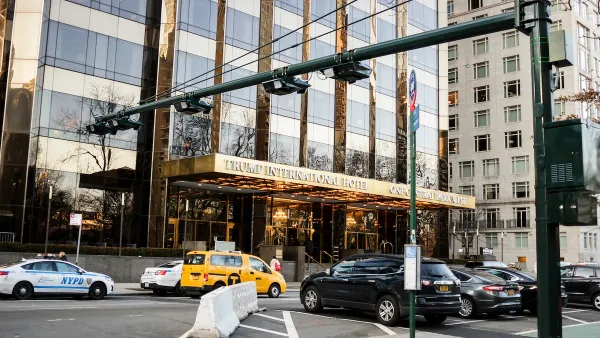
Judge Extends NYC Congestion Pricing Through at Least June 9
A federal judge halted the Trump administration’s effort to kill the program, which remains in limbo as a lawsuit filed by the MTA moves forward.

Planetizen Federal Action Tracker
A weekly monitor of how Trump’s orders and actions are impacting planners and planning in America.

The state-sanctioned urbicide of Austin
People don’t kill cities. Freeways do.

US to reduce Colorado River water deliveries to Mexico
A new Colorado Treaty amendment reduces Mexico’s Colorado River water allocation by 250,000 acre feet.

5 New England states march closer to 800 megawatt wind energy project
Securing federal approval for the project may be complicated under the Trump administration, which has historically been hostile towards domestic wind power.

Baltimore to break ground on $50 million Transit Priority Project
The project will bring faster bus trips, safer streets and better bike connections to Baltimore.

Airbnb launches $250 million 'last-dollar financing' housing accelerator, makes first investment in Austin
The company will put $6.4 million towards affordable housing development in Texas’ capital.

FREE Course: Walkable City 1: Why Walkability?
After describing his path towards focusing on walkability as the essence of good planning, Jeff Speck marches through his five principal reasons for making more walkable places.
Reinventing Malls: Planning Alchemy—Turning Gray Fields Into Gold
The course focuses on the opportunities and imperatives that shape reinvention of mall sites.

Eagle County Government
Harvard University Graduate School of Design
Nashville Planning Department
The Architects Foundation
University of Cincinnati Online
The Pocatello Development Authority
The Urban Renewal Agency of the City of Pocatello
Journal of the American Planning Association