A new camera technology can detect when vehicles pass too close to people on bikes.



A handlebar-mounted camera technology developed at the University of Arizona and Arizona State University could help keep cyclists safer on the road by collecting data about close-passing drivers, reports Kea Wilson for Streetsblog USA.
The camera is paired with a sensor that detects when a vehicle passes dangerously close to a cyclist and collects information that can be used for legal evidence and, collectively, inform planners and policymakers about close-passing “hot spots” and where safe bike infrastructure is lacking.
According to Wilson, “One Australian study estimates that up to 38 percent of motor vehicle drivers who hit cyclists were either overtaking or close-passing the vulnerable road user. But similar stats are hard to come by in most U.S. jurisdictions.” Now, advocates hope that technology like CycleSafe, as the sensor is dubbed, will help change that.
Robert Heinrichs, associate professor at Arizona State's School of Computing and Augmented Intelligence, says “it's not impossible that the CycleSafe software could someday be programmed to automatically notify EMS when a serious crash is detected, potentially saving lives in hit-and-runs; it could also generate video footage for educational campaigns aimed at showing drivers just how terrifying a close pass really is for a person in the saddle.”
FULL STORY: New Camera Tech Hopes to Stop Drivers From Close-Passing Cyclists

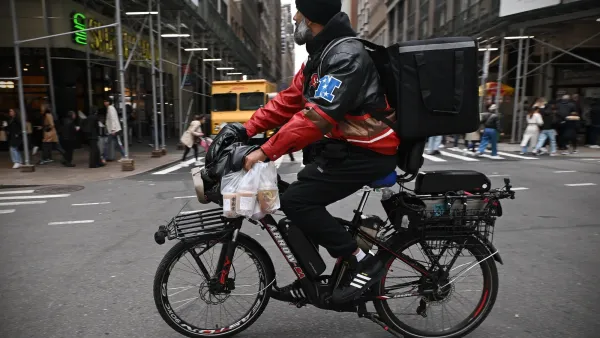
Study: Delivery Workers Are the Safest Cyclists on NYC Roads
A new study shows that delivery workers are more likely to stop at red lights and obey traffic rules than recreational or commuter riders.
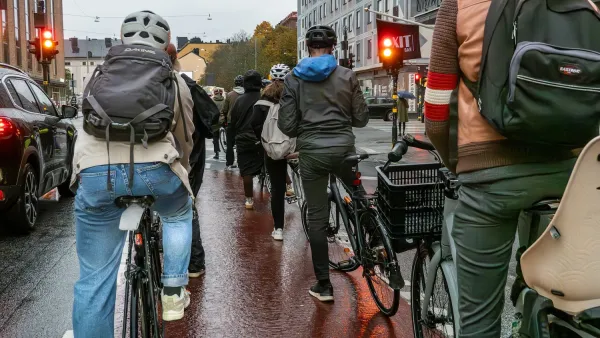
Cyclists may be Right to run Stop Signs and Red Lights. Here’s why
One researcher argues that the Idaho stop might not be such a bad idea after all.

The 5 Safest Cities for Cyclists in America — and What They Have in Common
Cities with low fatality rates for people on bikes have made strong commitments to building safe, protected bike networks and supporting Complete Streets.

Planetizen Federal Action Tracker
A weekly monitor of how Trump’s orders and actions are impacting planners and planning in America.

The state-sanctioned urbicide of Austin
People don’t kill cities. Freeways do.

US to reduce Colorado River water deliveries to Mexico
A new Colorado Treaty amendment reduces Mexico’s Colorado River water allocation by 250,000 acre feet.

Brightline West’s future may rely on $6 billion federal loan
The company has until Nov. 2 to make a $400 million equity investment into its proposed high-speed rail line.

LA Metro’s ultimatum: no extra buses for LA28 if federal funding isn’t imminently secured
If Metro does not provide additional buses, LA28 organizers will have to find a new way to manage Olympic traffic. LA28’s budget does not include a line item for transit.

Colorado’s Largest Data Center Could Rise Next to Homes — Without a Public Hearing
The proposed campus would consume 11 times the power of Denver International Airport; as it has across the country, opposition mounts.

FREE Course: Walkable City 1: Why Walkability?
After describing his path towards focusing on walkability as the essence of good planning, Jeff Speck marches through his five principal reasons for making more walkable places.
Reinventing Malls: Planning Alchemy—Turning Gray Fields Into Gold
The course focuses on the opportunities and imperatives that shape reinvention of mall sites.

Eagle County Government
Harvard University Graduate School of Design
Nashville Planning Department
The Architects Foundation
University of Cincinnati Online
The Pocatello Development Authority
The Urban Renewal Agency of the City of Pocatello
Journal of the American Planning Association