The city’s efforts to improve road safety have been outweighed by other factors such as larger vehicle sizes.


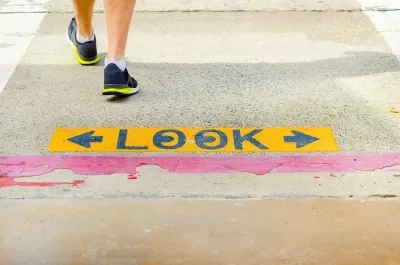
A report from the think tank Circulate San Diego outlines some of the reasons why traffic deaths in the Southern California city have risen in the past decade despite the city’s pledge to eliminate traffic deaths by 2025.
As Andrew Bowen explains, the rise in pedestrian deaths in San Diego “reflects a broader national increase, driven by factors like larger vehicle use, high-speed incidents, and insufficient street lighting.”
The report commends the city’s plans for street safety, but notes that it has not acted with enough urgency to make changes to its roadways. “Among the report's recommendations are a dramatic increase in spending on traffic safety infrastructure and greater use of "quick-build" projects, which modify a street's design using paint and flexible bollards rather than concrete and asphalt.” The report also recommends automated traffic enforcement as a more affordable and equitable solution.
Read the full story: Report suggests bigger vehicles, slow construction timelines led to San Diego's 'Vision Zero' failure

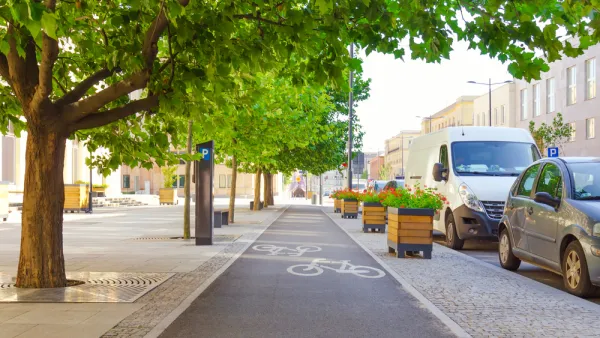
How “Proven Safety Countermeasures” Save Lives
A bill named in honor of a U.S. diplomat killed while on her bicycle would let state DOTs access full federal funding for road safety projects.
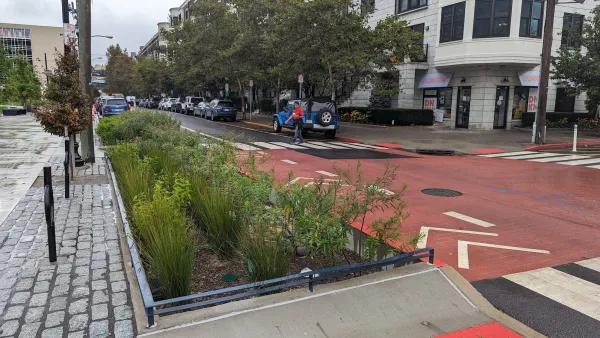
Hoboken's $20 Vision Zero fix
The New Jersey city eliminated traffic deaths for the last nine years in a row.
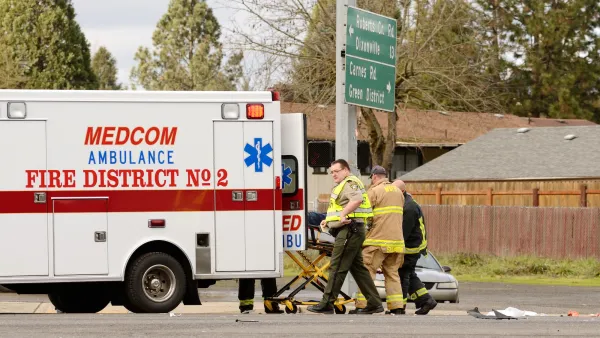
'Dangerous by Design' 2026 report highlights 72% increase in pedestrian deaths since 2009
Although US traffic deaths dropped in the last two years, the number of people killed on US roads remains much higher than two decades ago.

Planetizen Federal Action Tracker
A weekly monitor of how Trump’s orders and actions are impacting planners and planning in America.

California plans to bury El Niño’s downpour
If the state plays its cards right, it may be able to store a billion acre-feet of El Niño’s water in aquifers.

Desperate measures: Advocates weigh draining Lake Powell to fill Colorado River
Draining the reservoir could reduce evaporation losses by a couple hundred thousand acre-feet.

California city breaks ground on transit connector
The project includes three mobility hubs and a pedestrian bridge.

After public outcry, Massachusetts city releases housing development tracker
Cambridge’s tracker currently shows 250 housing projects in various stages of development.

40 years after approval, Chicago breaks ground on new park
The park honors Jean Baptiste Point du Sable, the city’s first permanent non-native settler.

FREE Course: Walkable City 1: Why Walkability?
After describing his path towards focusing on walkability as the essence of good planning, Jeff Speck marches through his five principal reasons for making more walkable places.
Reinventing Malls: Planning Alchemy—Turning Gray Fields Into Gold
The course focuses on the opportunities and imperatives that shape reinvention of mall sites.

City of Rosemead
Rutgers University, Edward J. Bloustein School of Planning and Public Policy
One Hundred Miles
Hunter College, City University of New York (CUNY)
The Architects Foundation
University of Cincinnati Online
City of Cambridge
Montrose County
The Pocatello Development Authority