Regions at high risk for flooding, wildfires, and other climate-fueled disasters continue to see rapid population growth.


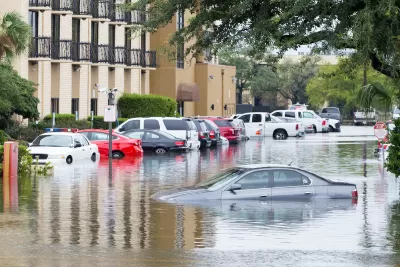
Americans are moving to regions at high risk of climate-related disasters, putting more people in the path of dangerous hurricanes, wildfires, and other climate crises, reports Aimee Picchi for CBS News.
This is despite spiking insurance costs — and the refusal of some insurers to cover homeowners in certain states, such as Florida and California, altogether. A 2023 report found that over 3 million Americans have moved to new areas due to growing flood risks and prohibitively high insurance rates. “The average annual premium for a Florida homeowner is $5,500 — about 140% higher than the typical U.S. homeowner's cost of $2,285, according to Bankrate.”
However, “The populations of high-risk counties have grown at a rate that's 3 percentage points faster than low-risk counties over the last three decades, according to research from economists Agustin Indaco, Francesc Ortega and Xinle Pang.” In the West, where wildfires are growing larger and more destructive, is also seeing outsized population growth as people newly untethered from office jobs seek more affordable housing options.
According to a recent study, the bulk of migration, as well as development in flood-prone areas, is mainly concentrated in Florida and Louisiana, as well as other parts of the Gulf Coast.
FULL STORY: Americans are flocking to U.S. regions most threatened by climate change

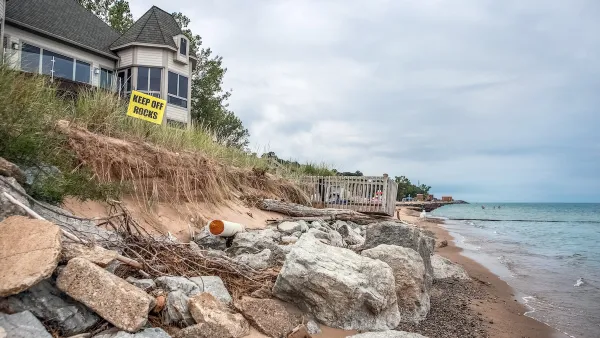
How US Cities Can Prepare for Climate Disasters
Resilience, encompassing infrastructure, governance, economic strength, and social cohesion, is critical for cities to mitigate rising climate risks like flooding, wildfires, and heat, ensuring long-term recovery and adaptability.
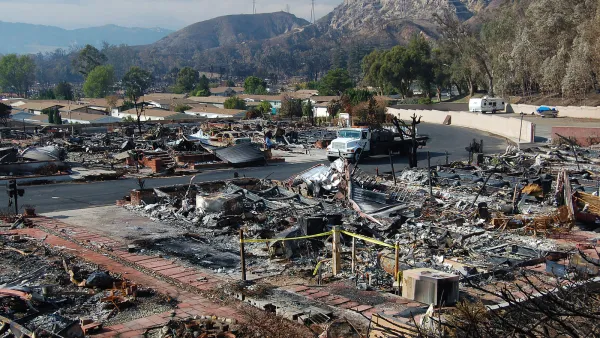
Rental Housing at Risk From Environmental Hazards
From wildfires to hurricanes, environmental risks pose a threat to around 40 percent of U.S. rental units.
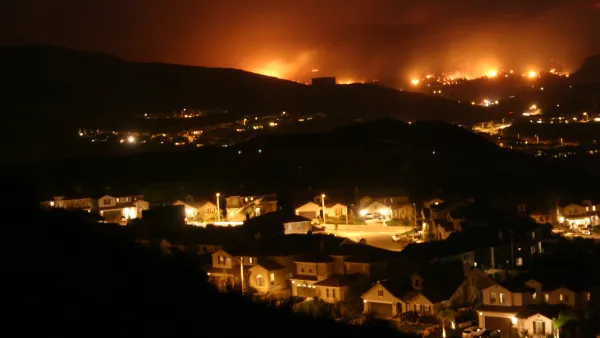
California Bans Insurance Companies From Dropping Homeowners in Wildfire Zones
The one-year moratorium is a stopgap measure to assist homeowners affected by recent wildfires as the state assesses ways of addressing the root causes of increasingly damaging natural disasters.

Planetizen Federal Action Tracker
A weekly monitor of how Trump’s orders and actions are impacting planners and planning in America.

The state-sanctioned urbicide of Austin
People don’t kill cities. Freeways do.

US to reduce Colorado River water deliveries to Mexico
A new Colorado Treaty amendment reduces Mexico’s Colorado River water allocation by 250,000 acre feet.

5 New England states march closer to 800 megawatt wind energy project
Securing federal approval for the project may be complicated under the Trump administration, which has historically been hostile towards domestic wind power.

Baltimore to break ground on $50 million Transit Priority Project
The project will bring faster bus trips, safer streets and better bike connections to Baltimore.

Airbnb launches $250 million 'last-dollar financing' housing accelerator, makes first investment in Austin
The company will put $6.4 million towards affordable housing development in Texas’ capital.

FREE Course: Walkable City 1: Why Walkability?
After describing his path towards focusing on walkability as the essence of good planning, Jeff Speck marches through his five principal reasons for making more walkable places.
Reinventing Malls: Planning Alchemy—Turning Gray Fields Into Gold
The course focuses on the opportunities and imperatives that shape reinvention of mall sites.

Eagle County Government
Harvard University Graduate School of Design
Nashville Planning Department
The Architects Foundation
University of Cincinnati Online
The Pocatello Development Authority
The Urban Renewal Agency of the City of Pocatello
Journal of the American Planning Association