Moderate-income households can access up to $8,000 in incentives to switch from oil heating systems to more efficient electric heat pumps.



Seattle announced a new $4,000 rebate for moderate-income households that switch oil heating systems to electric heat pumps, reports Ysabelle Kempe in Smart Cities Dive. “The rebate means income-qualified residents can access a total of up to $8,000 in support for transitioning to heat pumps, by stacking the new rebate with the city’s existing, non-income-restricted $2,000 instant rebate and a $2,000 federal tax credit.”
The city plans to eliminate oil heating by 2030 and received $3.2 million from Washington state to expand its Clean Heat Program. City officials say an average household could save as much as $1,100 per year on heating costs by switching to a heat pump. “The state funding comes from Washington’s cap-and-invest program, which requires businesses to obtain allowances from the state to emit greenhouse gases,” Kempe explains.
Read the full story: Seattle boosts electric heat pump incentives with goal to eliminate oil-heated homes

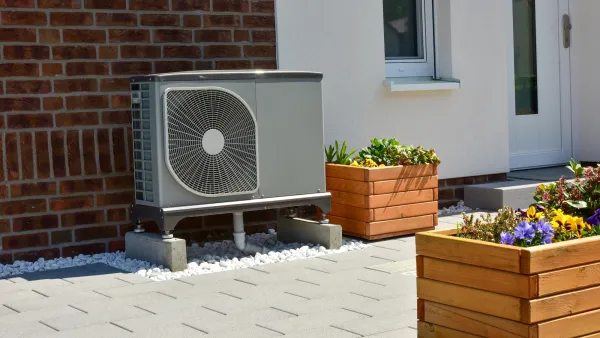
Oregon Requires Energy-efficient Heat Pumps in New Housing
A new state law is expected to save residents an average of $125 per month on energy costs.
Colorado Launches New Efficiency and Weatherization Rebate Program
The state is using federal funds to assist homeowners in replacing inefficient appliances and making their homes more climate-friendly and resilient.
Massachusetts Moves Toward Decarbonization
The state developed a framework for planning to phase out natural gas, denying industry calls to allow hydrogen and renewable natural gas.

Planetizen Federal Action Tracker
A weekly monitor of how Trump’s orders and actions are impacting planners and planning in America.

Amtrak, CN end decades-long dispute with eight-year agreement
The new operating agreement establishes an updated framework for the companies to work together, including processes to resolve disputes.

Judges permit Denver to divert 77,000 acre feet from the Colorado River for reservoir expansion
Overuse and climate change have caused the Colorado River’s water levels to plummet.

NYC DOT wants faster, more permanent street upgrades
The city is examining ways to build more concrete infrastructure without getting entangled in 'decades-long' projects.

'Something we’ve never seen before:' rising utility rates could strain city finances nationwide
Data centers, climate change and other factors have caused utility rates in the United States to increase by 38% since 2020.

Trump to overrule local leaders, lease millions of acres of America’s Pacific Island territories’ seafloors to mining companies
International law says that the Indigenous people of America’s territories have a right to prior and informed consent regarding projects that impact their countries.

FREE Course: Walkable City 1: Why Walkability?
After describing his path towards focusing on walkability as the essence of good planning, Jeff Speck marches through his five principal reasons for making more walkable places.
Reinventing Malls: Planning Alchemy—Turning Gray Fields Into Gold
The course focuses on the opportunities and imperatives that shape reinvention of mall sites.

Harvard University Graduate School of Design
KFH Group Inc.
Greater Baltimore Committee
The Architects Foundation
University of Cincinnati Online
The Pocatello Development Authority
The Urban Renewal Agency of the City of Pocatello