The facility, which was completed in just 122 days, was rushed through so quickly, it is still missing environmental permits and infrastructure needed to ensure it doesn’t put stress on the grid or local water supply.



A few months ago, Elon Musk took over a factory in an industrial zone of South Memphis with the goal of building the “world’s largest supercomputer”; last week, just 122 days later, the computer, dubbed the Colossus, was brought online. Its primary purpose is to provide computing power for xAI’s central tool, Grok. But city officials, environmental agencies, and community members, who were kept mostly in the dark during the process, are reeling after the local utility reported that the facility, which Musk has said will eventually double in size, will need a million gallons of water per day and 150 megawatts of electricity — enough to power 100,000 homes per year.
NPR reporter Dara Kerr writes, “The limited oversight and rushed nature of this project have allowed xAI to skirt environmental rules, which could impact the surrounding communities. For instance, the company’s on-site methane gas generators currently don’t have permits.” In addition to sky-high resource consumption, local officials and environmental agencies are concerned about how the additional pollution will impact several adjacent historically Black neighborhoods, who have already been disproportionately burdened by poor air quality caused by existing heavy industrial uses in the area.
The local utility, Memphis Light, Gas and Water, has assured locals that Musk’s supercomputer’s consumption of water and electricity won’t affect them, reports Kerr. But given the secrecy around the project, the fact that many details have yet to be made public (or even worked out at all), and Musk’s tendency to overpromise (at best) or lie (at worst) about his ventures, it’s little wonder residents and local officials are wary.
Concern about water and energy consumption, as well as greenhouse gas emissions, of AI — and the data centers needed to run it — is growing nationwide. A recent analysis by the Guardian showed that greenhouse gas emissions from data centers owned by major tech companies like Google, Microsoft, Meta and Apple are 7.62 times higher than officially reported.
FULL STORY: How Memphis became a battleground over Elon Musk’s xAI supercomputer

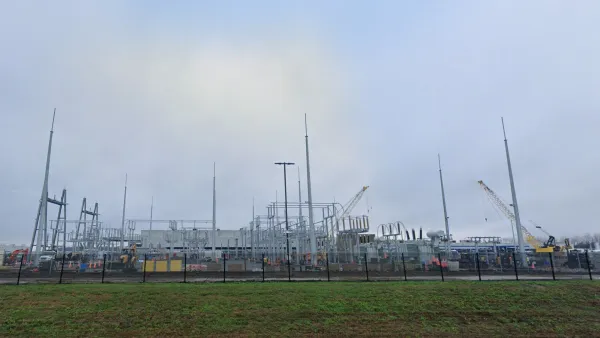
Memphis Data Center Will Harness Wastewater for Cooling
The xAI-owned Colossus facility uses as much water as 10,000 households.
Ratepayers Could Be on the Hook for Data Centers’ Energy Use
Without regulatory changes, data centers’ high demand for energy would be subsidized by taxpayers, according to a new study.
Addressing AI’s Massive Energy Needs
How policy can support ‘efficiency-forward’ approaches to AI growth.

The state-sanctioned urbicide of Austin
People don’t kill cities. Freeways do.

US to reduce Colorado River water deliveries to Mexico
A new Colorado Treaty amendment reduces Mexico’s Colorado River water allocation by 250,000 acre feet.

New Jersey’s second-largest city bans standalone data centers
Jersey City will continue to allow co-location facilities, such as those meant for research institutions that store their own data.

Amtrak not solely to blame for New Jersey commuter rail's unreliability, report finds
A new study from the Garden State Initiative found that NJ Transit’s budget grew 20% across a 4 year period, but reliability declined significantly over the same period.

EPA erases limits on planet-warming pollution from power plants
Under Monday’s plan, power plants would still have some limits on how much mercury, arsenic and other contaminants they can emit.

Phoenix announces new on-demand transit service, more frequent RAPID buses
Both new services will launch in October, and are part of Phoenix's Project Effective Access Solutions for Easing Congestion.

FREE Course: Walkable City 1: Why Walkability?
After describing his path towards focusing on walkability as the essence of good planning, Jeff Speck marches through his five principal reasons for making more walkable places.
Reinventing Malls: Planning Alchemy—Turning Gray Fields Into Gold
The course focuses on the opportunities and imperatives that shape reinvention of mall sites.

Eagle County Government
Harvard University Graduate School of Design
Nashville Planning Department
The Architects Foundation
University of Cincinnati Online
The Pocatello Development Authority
The Urban Renewal Agency of the City of Pocatello
Journal of the American Planning Association