Dedicated bus lanes on busy arterials can act as traffic calming mechanisms to reduce speeding.


A new study reveals that dedicated bus lanes have the additional benefit of improving overall road safety, writes Chris McCahill for State Smart Transportation Initiative.
In Albuquerque, a team of researchers found that traffic speeds dropped significantly along corridors with bus rapid transit (BRT) infrastructure, making it an “especially effective” tool to curb speeding. “The effects were largest at intersections along the BRT route and in places where the number of general-purpose lanes was reduced. Average vehicle speeds dropped by around 15% when there was a lane reduction, versus 10% at other locations, and 85th percentile speeds dropped by 12% to 14%, versus 8% at other locations.” The study notes that speeds did not change much on roads with the fastest posted speed limit (40 mph).
The authors add that other studies have shown similar effects from bike lanes, trees, and other design cues. The findings are important because major arterial roads are often inappropriate for typical traffic calming interventions. “Converting arterial corridors to more multimodal arrangements can provide road users with mobility options while simultaneously improving safety outcomes.”
FULL STORY: Dedicated bus lanes improve safety


Experts Reject Florida Study That Killed St. Pete Bus Lane as ‘Incomplete,’ ‘Unfair’
A transit activist has filed a suit against FDOT, which used a a one-page study to justify removing a dedicated bus lane.
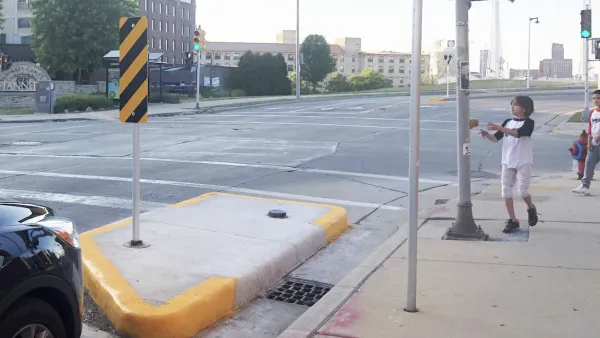
Milwaukee's Secret to Reducing Speeding by 27%
The city’s efforts to make roads safer are paying off.
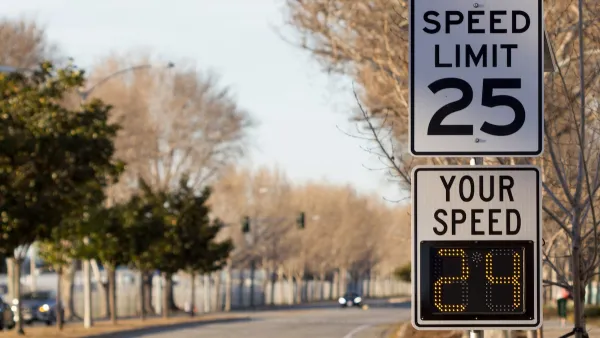
Philadelphia Launches ‘Speed Slots’ Traffic Calming Pilot
The project focuses on a 1.4-mile stretch of Lincoln Drive where cars frequently drive above the posted speed limit.

The state-sanctioned urbicide of Austin
People don’t kill cities. Freeways do.

US to reduce Colorado River water deliveries to Mexico
A new Colorado Treaty amendment reduces Mexico’s Colorado River water allocation by 250,000 acre feet.

New Jersey’s second-largest city bans standalone data centers
Jersey City will continue to allow co-location facilities, such as those meant for research institutions that store their own data.

Amtrak not solely to blame for New Jersey commuter rail's unreliability, report finds
A new study from the Garden State Initiative found that NJ Transit’s budget grew 20% across a 4 year period, but reliability declined significantly over the same period.

EPA erases limits on planet-warming pollution from power plants
Under Monday’s plan, power plants would still have some limits on how much mercury, arsenic and other contaminants they can emit.

Phoenix announces new on-demand transit service, more frequent RAPID buses
Both new services will launch in October, and are part of Phoenix's Project Effective Access Solutions for Easing Congestion.

FREE Course: Walkable City 1: Why Walkability?
After describing his path towards focusing on walkability as the essence of good planning, Jeff Speck marches through his five principal reasons for making more walkable places.
Reinventing Malls: Planning Alchemy—Turning Gray Fields Into Gold
The course focuses on the opportunities and imperatives that shape reinvention of mall sites.

Eagle County Government
Harvard University Graduate School of Design
Nashville Planning Department
The Architects Foundation
University of Cincinnati Online
The Pocatello Development Authority
The Urban Renewal Agency of the City of Pocatello
Journal of the American Planning Association