The program, years in the works, pledges to add 3,000 new bus shelters and 450 shade structures to protect riders from extreme heat and weather.


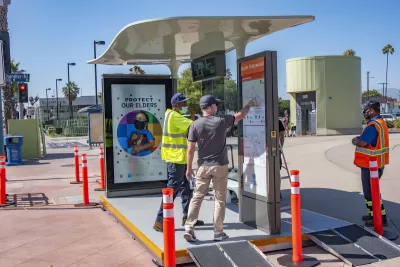
Los Angeles officials celebrated the city’s Sidewalk and Transit Amenities Program (STAP) aimed at providing shade and seating at more of the city’s bus stops at a ribbon cutting for a new bus shelter in Tarzana on June 27, just as another major heat wave is set to sweep across Southern California, with temperatures expected to be well over 100 in many parts of the region.
As Linh Tat explains in the Los Angeles Daily News, the program is run by the Bureau of Street Services (StreetsLA) and plans to install 3,000 new bus shelters and 450 shade structures. “Its goal is to ensure that 75% of bus riders in each of L.A.’s 15 City Council districts are boarding buses from stops that have shelters.” In 2022, just a quarter of L.A. bus stops had any shade or shelter.
The new shelters include larger shade canopies, lighting, accessible seating configurations, and digital displays. “Priority for the new shelters are based on factors like the number of riders who use the stop; the area’s exposure to heat; locations that tend to serve minority or low-income populations or households without access to cars; key destinations or stops with long wait times,” Tat adds.
Read the full story: LA launches new, shadier bus shelters as another heatwave approaches


Where to Preview L.A.'s New Bus Shelters
Angelenos can try out the new designs at six locations this summer, with the full program set to launch in 2022.
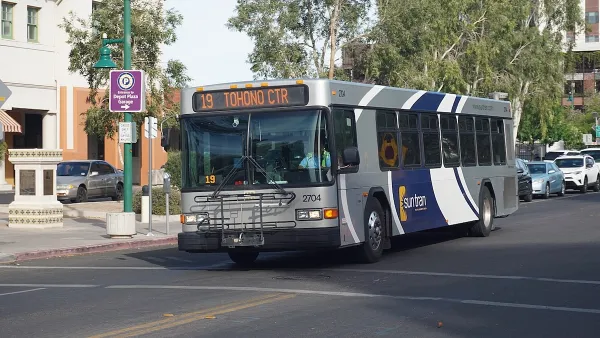
Tucson Keeps Buses Fare-Free
The city is doubling down on its efforts to boost bus ridership as part of its climate action plan.
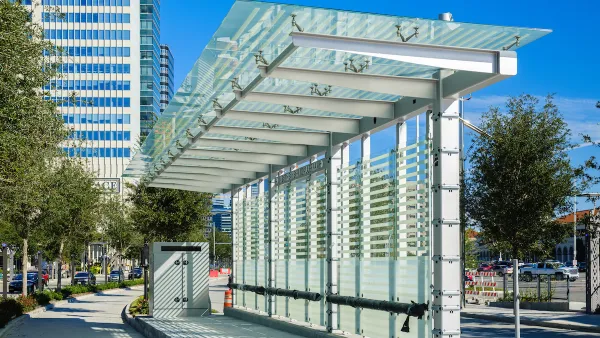
Houston Metro Prototypes Bus Shelter Fans
The agency is working on designs for a bus stop shelter with built-in solar-powered fans to keep waiting riders cool.

Planetizen Federal Action Tracker
A weekly monitor of how Trump’s orders and actions are impacting planners and planning in America.

California plans to bury El Niño’s downpour
If the state plays its cards right, it may be able to store a billion acre-feet of El Niño’s water in aquifers.

Chicago breaks ground on $3 billion megadevelopment
The new neighborhood, titled Foundry Park, will one day host 3,700 residences.

Satanic Place Names
From streams and lakes to valleys and canyons, I mapped more than 1,000 places named after the Devil.

California High-Speed Rail Authority CEO resigns after $600,000 scandal
Under Ian Choudri, the authority used taxpayer dollars to fund first class flights and trips to nightclubs.

Want to study the Missouri River? Soon, you may need unanimous approval from 10 states
Legislation would require 10 governors’ permission to study or build projects moving water outside the basin.

FREE Course: Walkable City 1: Why Walkability?
After describing his path towards focusing on walkability as the essence of good planning, Jeff Speck marches through his five principal reasons for making more walkable places.
Reinventing Malls: Planning Alchemy—Turning Gray Fields Into Gold
The course focuses on the opportunities and imperatives that shape reinvention of mall sites.

City of Rosemead
Rutgers University, Edward J. Bloustein School of Planning and Public Policy
One Hundred Miles
Hunter College, City University of New York (CUNY)
The Architects Foundation
University of Cincinnati Online
City of Cambridge
Montrose County
The Pocatello Development Authority