Advocates of the program are calling on Gov. Hochul to reinstate the program in light of the decision.


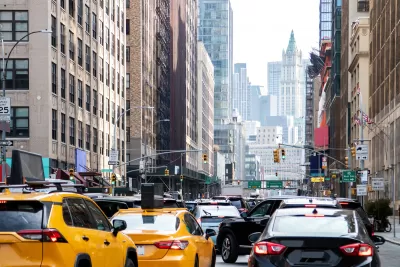
In the ongoing saga of New York City’s beleaguered congestion pricing program, a federal judge ruled against a lawsuit challenging the program, throwing Governor Kathy Hochul’s decision to suspend it into further question.
As Gersh Kuntzman explains in Streetsblog NYC, the lawsuit accused the MTA of violating the National Environmental Policy Act. The judge disagreed, saying that the MTA conducted a “meticulous” 45,000-page analysis of the program’s potential impacts.
Kuntzman outlines the judge’s point-by-point refutation of the plaintiffs’ arguments. “Liman's 113-page opinion dealt mostly with jurisdictional claims and whether plaintiffs had sued the right people or whether they had standing in the first place. But it also included a clear lack of patience for most of the plaintiffs' arguments, such as the contention that congestion pricing was such a significant change that its magnitude alone required a formal environmental impact statement instead of the supposedly less-rigorous environmental assessment.”
Commenting on the decision, Riders Alliance Executive Director Betsy Plum said, “Now that a federal court has upheld the MTA's exhaustive environmental review, our governor should feel comfortable with moving forward and delivering the program's benefits.”
A ruling in a separate case brought by the state of New Jersey is still pending.
Read the full story: Federal Judge Sets Aside a Key Congestion Pricing Lawsuit

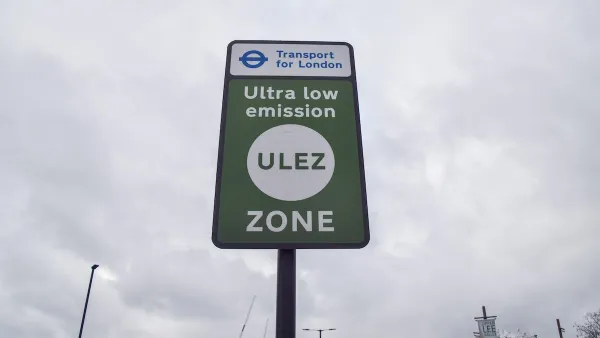
London Congestion Pricing Zone Has No Impact on Local Spending
The city’s cordon pricing scheme did not affect how much people spent at local businesses, new research finds.

Congestion Pricing Compromise?
A CBS News New York report suggests that Gov. Kathy Hochul is considering lifting her ‘indefinite pause’ on the Manhattan congestion pricing project if the $15 toll was lowered. Litigation threatened by the NYC comptroller may be a factor.
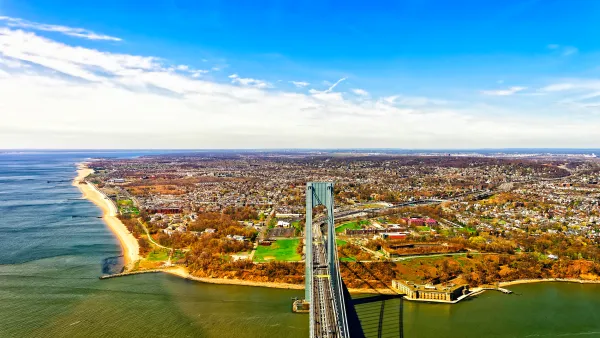
Staten Island Sues Over Congestion Pricing, Too
The borough’s president says the plan would bring more traffic to Staten Island and unjustly burden its residents with air pollution and tolls.

Planetizen Federal Action Tracker
A weekly monitor of how Trump’s orders and actions are impacting planners and planning in America.

Amtrak, CN end decades-long dispute with eight-year agreement
The new operating agreement establishes an updated framework for the companies to work together, including processes to resolve disputes.

Judges permit Denver to divert 77,000 acre feet from the Colorado River for reservoir expansion
Overuse and climate change have caused the Colorado River’s water levels to plummet.

Boston has spent millions making the Green Line more accessible — and there’s no end in sight
While the city has invested millions into expanding and adding platforms to the Green Line to make it more accessible, new train cars set to arrive next year will be too tall for disabled passengers to board without raising the current platforms.

Idaho may see an 18% drop in federal surface transit funding — the largest estimated cut in the US
Transit systems in rural communities are much more reliant on federal funding to provide their services.

How ‘post-disaster gentrification’ alters neighborhoods after natural calamities
After hurricanes, fires or other calamities, the original residents of a community are often replaced by younger, wealthier residents.

FREE Course: Walkable City 1: Why Walkability?
After describing his path towards focusing on walkability as the essence of good planning, Jeff Speck marches through his five principal reasons for making more walkable places.
Reinventing Malls: Planning Alchemy—Turning Gray Fields Into Gold
The course focuses on the opportunities and imperatives that shape reinvention of mall sites.

Harvard University Graduate School of Design
KFH Group Inc.
Greater Baltimore Committee
The Architects Foundation
University of Cincinnati Online
The Pocatello Development Authority
The Urban Renewal Agency of the City of Pocatello