The city’s cordon pricing scheme did not affect how much people spent at local businesses, new research finds.


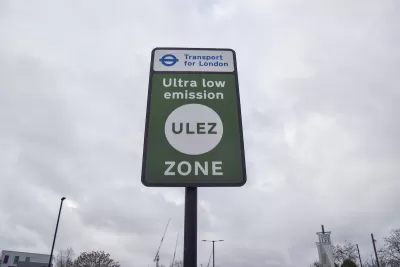
London’s congestion pricing zone, known as the Ultra Low Emission Zone (ULEZ), has not economically harmed local businesses, according to new research.
In an analysis of credit card transactions within the zone, “The 2023 trend line does not fall below the 2022 one: there was no above–expected negative spending effect caused by ULEZ’s expansion.”
According to a post in Centre for Cities by Oscar Selby, “So far, card transaction data does not suggest that ULEZ is harming high street spend. This should reassure policy makers in London, who committed to the emission zone a while ago, and strengthen the convictions of policy makers in New York who are now following suit.”
Meanwhile, the public health and transit benefits are clear, both in London — “London has the worst air quality of any UK city and the capital’s emission zone is helping to change this” — and, more recently, in New York, where the congestion pricing program’s first week yielded faster bus commutes and reduced congestion.
FULL STORY: ULEZ expansion hasn’t hurt high street spending

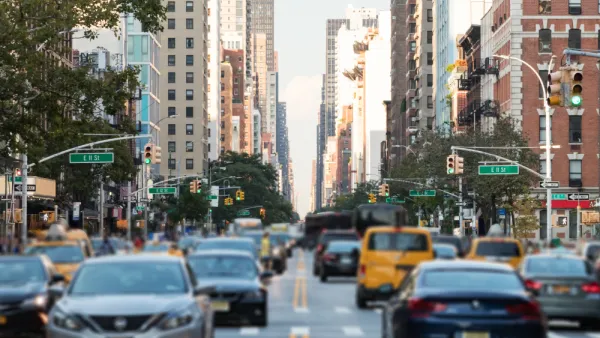
USDOT Revokes Approval for NYC Congestion Pricing
Despite the administration’s stated concern for the “working class,” 85 percent of Manhattan commuters use public transit to enter the city.
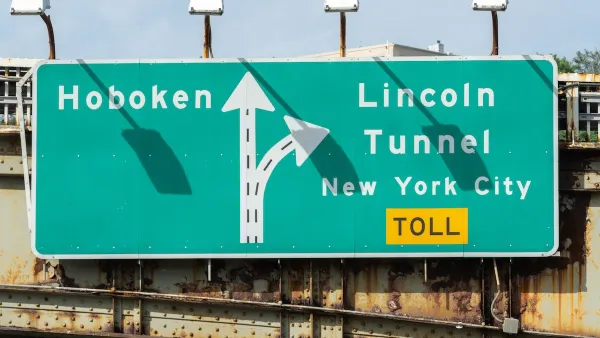
NYC Congestion Pricing Reduced Traffic in its First Week
The program has taken tens of thousands of vehicles off the city’s roads in its first week.
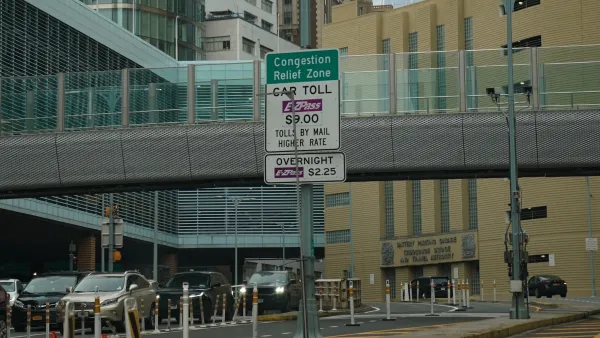
Judge Rules to Keep NYC Congestion Pricing, Ending Trump's Legal Challenge
The decision likely deals a fatal blow to efforts to end the program, but the Trump administration says it will explore other avenues for reversing the congestion pricing scheme.

Planetizen Federal Action Tracker
A weekly monitor of how Trump’s orders and actions are impacting planners and planning in America.

The state-sanctioned urbicide of Austin
People don’t kill cities. Freeways do.

US to reduce Colorado River water deliveries to Mexico
A new Colorado Treaty amendment reduces Mexico’s Colorado River water allocation by 250,000 acre feet.

Amtrak not solely to blame for New Jersey commuter rail's unreliability, report finds
A new study from the Garden State initiative found that NJ Transit’s budget grew 20% across a 4 year period, but reliability declined significantly over the same period.

EPA erases limits on planet-warming pollution from power plants
Under Monday’s plan, power plants would still have some limits on how much mercury, arsenic and other contaminants they can emit.

Phoenix announces new on-demand transit service, more frequent RAPID buses
Both new services will launch in October, and are part of Phoenix's Project Effective Access Solutions for Easing Congestion.

FREE Course: Walkable City 1: Why Walkability?
After describing his path towards focusing on walkability as the essence of good planning, Jeff Speck marches through his five principal reasons for making more walkable places.
Reinventing Malls: Planning Alchemy—Turning Gray Fields Into Gold
The course focuses on the opportunities and imperatives that shape reinvention of mall sites.

Eagle County Government
Harvard University Graduate School of Design
Nashville Planning Department
The Architects Foundation
University of Cincinnati Online
The Pocatello Development Authority
The Urban Renewal Agency of the City of Pocatello
Journal of the American Planning Association