President Biden just signed a proclamation to expand the San Gabriel Mountains National Monument by over 100,000 acres.


Last week, President Biden took action to expand the San Gabriel Mountains National Monument, which President Obama designated in 2014. The proclamation adds 105,919 acres of U.S. Forest Service lands to the south and west of the Monument’s 346,177 acres, protects additional cultural, scientific, and historic objects, and expands access to outdoor recreation on public lands.
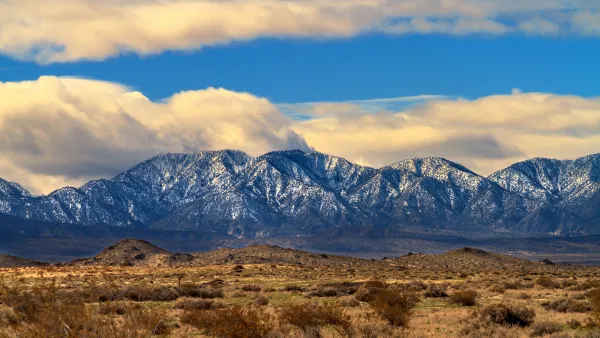
The lands added to the San Gabriel Mountains National Monument contain unique cultural, geological, and ecological resources. A diversity of animals, birds, reptiles, and other wildlife, including numerous sensitive, threatened, and endangered species, live among the unique geological and ecological features of the area, including its unusual canyons, chaparral and coastal sage scrub lands, riparian woodlands, and conifer forests. These lands are also homes to some of California’s most imperiled and iconic birds, including the endangered California condor. The area includes key habitats that support wetland-dependent plant species, sensitive fish and amphibians, and migration corridors. In addition, the area is geologically significant, with the landscape of the San Gabriel Mountains shaped by massive geologic forces over hundreds of millions of years.
As reported by Alex Wigglesworth, this expansion has been widely praised by the Indigenous leaders, politicians, conservationists, and community organizers who had long fought for the enlargement of the protected natural area which serves as the backyard of the Los Angeles Basin. The San Gabriel Mountains National Monument is within an hour’s drive of 18 million people.
To learn more, please read the source article.
Read the full story: San Gabriel Mountains National Monument expands by more than 100,000 acres


Feds Weigh Expansion of San Gabriel Mountains National Monument
The White House is sending a top-level cabinet member who oversees the U.S. Forest Service to the San Gabriel Valley east of Los Angeles to hear public comments on the proposed expansion the San Gabriel Mountains National Monument.
Growing Support for Expanding the San Gabriel Mountains National Monument
Members of Congress are proposing an expansion to the national monument by over 109,000 acres, increasing its size by nearly a third.

Key Wins for Conservation in 2024
The year brought some important victories to advocates for public lands, national monuments, and the reclamation of Indigenous history.

Planetizen Federal Action Tracker
A weekly monitor of how Trump’s orders and actions are impacting planners and planning in America.

The state-sanctioned urbicide of Austin
People don’t kill cities. Freeways do.

US to reduce Colorado River water deliveries to Mexico
A new Colorado Treaty amendment reduces Mexico’s Colorado River water allocation by 250,000 acre feet.

Brightline West’s future may rely on $6 billion federal loan
The company has until Nov. 2 to make a $400 million equity investment into its proposed high-speed rail line.

LA Metro’s ultimatum: no extra buses for LA28 if federal funding isn’t imminently secured
If Metro does not provide additional buses, LA28 organizers will have to find a new way to manage Olympic traffic. LA28’s budget does not include a line item for transit.

Colorado’s Largest Data Center Could Rise Next to Homes — Without a Public Hearing
The proposed campus would consume 11 times the power of Denver International Airport; as it has across the country, opposition mounts.

FREE Course: Walkable City 1: Why Walkability?
After describing his path towards focusing on walkability as the essence of good planning, Jeff Speck marches through his five principal reasons for making more walkable places.
Reinventing Malls: Planning Alchemy—Turning Gray Fields Into Gold
The course focuses on the opportunities and imperatives that shape reinvention of mall sites.

Eagle County Government
Harvard University Graduate School of Design
Nashville Planning Department
The Architects Foundation
University of Cincinnati Online
The Pocatello Development Authority
The Urban Renewal Agency of the City of Pocatello
Journal of the American Planning Association