Community advocates say the city’s plan may not do enough to reverse the negative impacts of a major expressway.


The City of Chicago announced it received a $2 million federal Reconnecting Communities grant aimed at improving “community safety, cohesion, and quality of life through enhanced connectivity over and around the [Eisenhower Expressway],” according to a press release from the city.
In an article for Streetsblog Chicago, John Greenfield describes the city’s plans for the Interstate 290 corridor, which are light on details but include “improvements for people walking and bicycling on existing streets and paths surrounding and crossing the corridor, adding or enhancing pedestrian bridges and bicycle facilities.”
In response, Kyle Lucas, cofounder of nonprofit Better Streets Chicago, said the grant is a positive step. “However, this fails to address IDOT’s plans to widen I-290 further. $2 million for a few bike lanes, pedestrian bump outs, and bushes on top of yet another multi-billion-dollar highway expansion project will do little to address either the historical nor ongoing harms that highways impose.” Lucas adds, “Our leaders must get serious about investing in expanding and modernizing transit – like extending the Blue Line – instead of doubling down on the planning mistakes of the '50s.”
FULL STORY: City announces $2M federal grant to address harms caused by I-290 by improving walk/bike/transit access

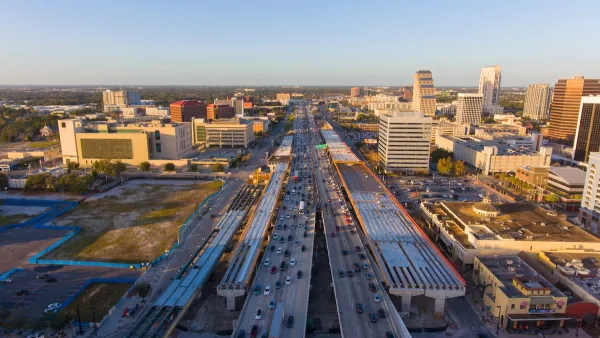
Disconnecting Communities: Measuring the Social Impacts of Freeways
Research from 50 major U.S. cities shows social connections are weakest in neighborhoods where highways are present.
Reconnecting Communities Grant Round Offers $600M for Highway Mitigation Projects
The program is part of the 2021 infrastructure law and calls for improving access in communities disadvantaged by freeways.
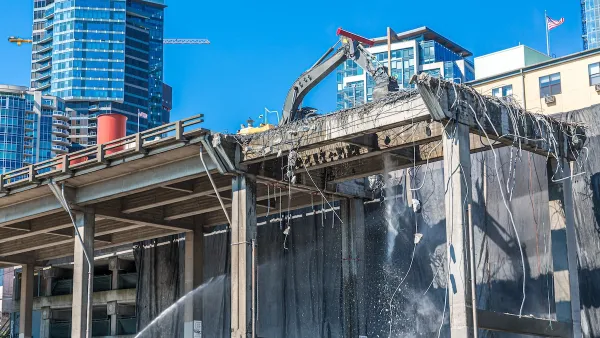
Highway Removal Slowed by Outdated Policy, Lack of Committed Funding
Resistance from state transportation departments and precarious funding sources mean highway removal projects are few and far between, despite their benefits.

Planetizen Federal Action Tracker
A weekly monitor of how Trump’s orders and actions are impacting planners and planning in America.

The state-sanctioned urbicide of Austin
People don’t kill cities. Freeways do.

US to reduce Colorado River water deliveries to Mexico
A new Colorado Treaty amendment reduces Mexico’s Colorado River water allocation by 250,000 acre feet.

Mamdani overhauls NYC's Vision Zero plan with 100 new policy goals
The overhaul aims to reduce traffic deaths and make streets safer for pedestrians, cyclists and drivers through lower speed limits, new safety infrastructure and more.

Amtrak not solely to blame for New Jersey commuter rail's unreliability, report finds
A new study from the Garden State Initiative found that NJ Transit’s budget grew 20% across a 4 year period, but reliability declined significantly over the same period.

EPA erases limits on planet-warming pollution from power plants
Under Monday’s plan, power plants would still have some limits on how much mercury, arsenic and other contaminants they can emit.

FREE Course: Walkable City 1: Why Walkability?
After describing his path towards focusing on walkability as the essence of good planning, Jeff Speck marches through his five principal reasons for making more walkable places.
Reinventing Malls: Planning Alchemy—Turning Gray Fields Into Gold
The course focuses on the opportunities and imperatives that shape reinvention of mall sites.

Eagle County Government
Harvard University Graduate School of Design
Nashville Planning Department
The Architects Foundation
University of Cincinnati Online
The Pocatello Development Authority
The Urban Renewal Agency of the City of Pocatello
Journal of the American Planning Association