The proposed legislation would impact the construction of planned IndyGo Blue Line, the third phase of the city’s bus rapid transit system.


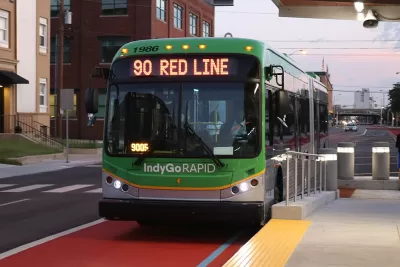
Indiana lawmakers heard testimony this week on a bill that would prohibit public transportation projects from including dedicated transit lanes, according to Indiana news outlet Fox 59. Senate Bill 52 was introduced in January for consideration in the 2024 legislative session, but efforts to pass similar legislation go back as far as 2022. According to the bill, the prohibition would only be through July 2025.
As previously reported by Fox 59, critics of the bill like State Senator Andrea Hunley say it is obviously part of a campaign against the IndyGo Blue Line in Indianapolis, “a project years in the making.” The 24.5-mile-long Blue Line, the third phase of IndyGo’s bus rapid transit system connecting Cumberland on the east with the Indianapolis International Airport on the west side of the city, has been delayed since May 2022 when the project estimate came in far above than expected. IndyGo currently has the Blue Line’s opening set for 2027.
After more than three hours of testimony, the Indiana House Committee on Roads and Transportation opted to hold the bill for next week, which opens the opportunity for the committee to debate amendments and potentially vote on the measure, writes Fox 59 reporter David Gay.
Objectors to the bill testified that dedicated transit lanes would result in more reliable bus service and more safety for people who walk along busy streets. Meanwhile, some business owners along the proposed Blue Line route were in favor of the measure, expressing concern that reducing the number of lanes on the streets in front of their locations would negatively impact their revenue and lower property values.
FULL STORY: Indiana House Committee on Roads, Transportation hears 3+ hours of testimony on Senate Bill 52

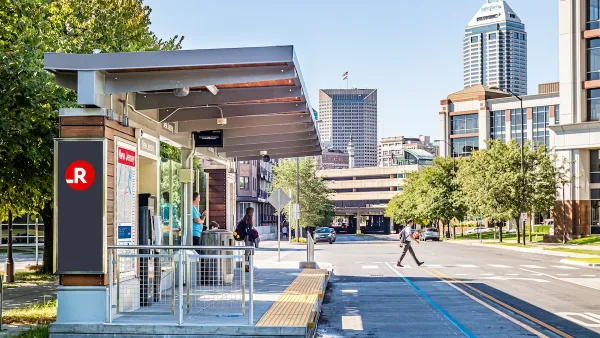
Indianapolis Receives FTA Grant for New BRT Line
The Blue Line will be the third bus rapid transit corridor in the city.

State Bill Could Kill Indy BRT Line
A law proposed in the Indiana state legislature would ban dedicated bus lanes and force IndyGo to cancel a planned bus rapid transit line to the city's airport.
Funding for Planned Bus Rapid Transit Routes Survives Scare in the Indiana General Assembly
Despite the temporary victory for transit advocates in Indianapolis, the battle over transit funding continuous in the Indiana General Assembly.

The state-sanctioned urbicide of Austin
People don’t kill cities. Freeways do.

US to reduce Colorado River water deliveries to Mexico
A new Colorado Treaty amendment reduces Mexico’s Colorado River water allocation by 250,000 acre feet.

New Jersey’s second-largest city bans standalone data centers
Jersey City will continue to allow co-location facilities, such as those meant for research institutions that store their own data.

Amtrak not solely to blame for New Jersey commuter rail's unreliability, report finds
A new study from the Garden State Initiative found that NJ Transit’s budget grew 20% across a 4 year period, but reliability declined significantly over the same period.

EPA erases limits on planet-warming pollution from power plants
Under Monday’s plan, power plants would still have some limits on how much mercury, arsenic and other contaminants they can emit.

Phoenix announces new on-demand transit service, more frequent RAPID buses
Both new services will launch in October, and are part of Phoenix's Project Effective Access Solutions for Easing Congestion.

FREE Course: Walkable City 1: Why Walkability?
After describing his path towards focusing on walkability as the essence of good planning, Jeff Speck marches through his five principal reasons for making more walkable places.
Reinventing Malls: Planning Alchemy—Turning Gray Fields Into Gold
The course focuses on the opportunities and imperatives that shape reinvention of mall sites.


Eagle County Government
Harvard University Graduate School of Design
Nashville Planning Department
The Architects Foundation
University of Cincinnati Online
The Pocatello Development Authority
The Urban Renewal Agency of the City of Pocatello
Journal of the American Planning Association