Taller hoods are a major contributor to crashes that kill pedestrians.


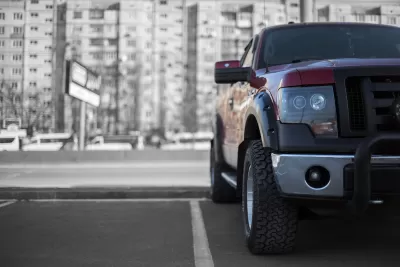
More evidence is piling up that extra-tall vehicle hoods, increasingly common on American trucks and SUVs, are more dangerous to pedestrians.
As Jonathan M. Gitlin reports in Wired, “Data from the 1990s found that a pedestrian hit by a light truck was two to three times more likely to be killed, with another study finding that light trucks were twice as likely to injure a pedestrian than a car, especially at low speed.”
More recently, a new study reveals similar results. “When examined by vehicle type, vans proved to be the least dangerous to pedestrians, with a 6.6 percent chance of death. Cars were a bit worse—8.5 percent of pedestrians hit by a sedan or hatchback were killed. Compact SUVs were roughly the same as cars, at 8.8 percent.” By comparison, SUVs killed 12.4 percent of pedestrians they hit, while pickups had a death rate of 11.9 percent.
Pickup trucks and full-size SUVs have 27 to 28 percent taller hoods than average cars and are 51 to 55 percent heavier. Between 2016 and 2021, median front-end height increased by 5 percent. After a more granular analysis, study author Justin Tyndall found that hood height is a primary factor. “In fact, the study estimates that a 4-inch (100-mm) increase in front-end height translates to a 28 percent increase in pedestrian death.”
FULL STORY: Tall Vehicle Hoods Really Are Increasing Pedestrian Deaths

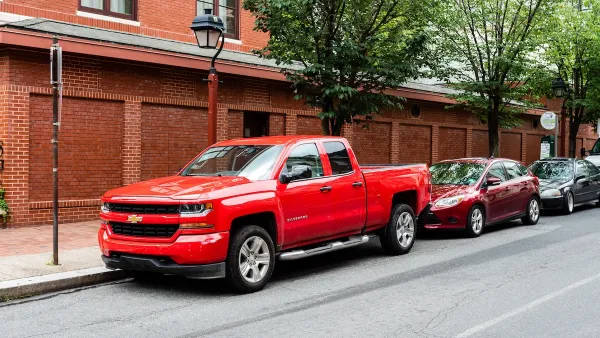
Heavier Vehicles Don’t Keep Passengers Safer
A new study shows that modern safety features are more important than size and weight once vehicles weigh over 4,000 pounds.
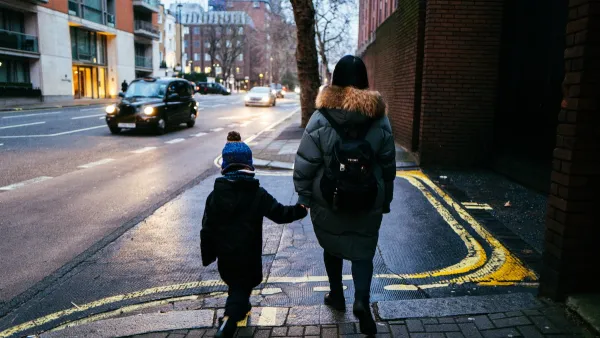
Study: Large SUVs Double Risk of Death for Children Under 10
New research from the United Kingdom reveals the higher risk of larger vehicles for pedestrians and cyclists.
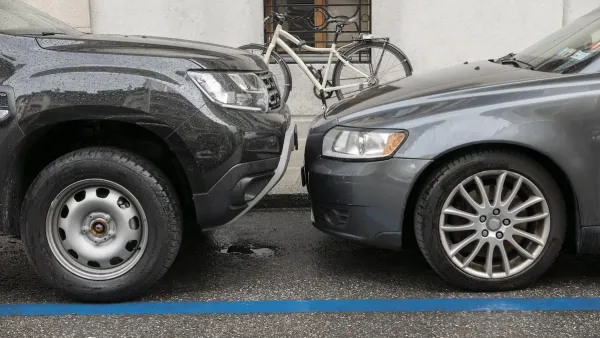
Tall Vehicles: Unsafe at Any Speed
Vehicles with taller front-end designs are more likely to injure pedestrians even when traveling at lower speeds.

The state-sanctioned urbicide of Austin
People don’t kill cities. Freeways do.

US to reduce Colorado River water deliveries to Mexico
A new Colorado Treaty amendment reduces Mexico’s Colorado River water allocation by 250,000 acre feet.

New Jersey’s second-largest city bans standalone data centers
Jersey City will continue to allow co-location facilities, such as those meant for research institutions that store their own data.

Amtrak not solely to blame for New Jersey commuter rail's unreliability, report finds
A new study from the Garden State Initiative found that NJ Transit’s budget grew 20% across a 4 year period, but reliability declined significantly over the same period.

EPA erases limits on planet-warming pollution from power plants
Under Monday’s plan, power plants would still have some limits on how much mercury, arsenic and other contaminants they can emit.

Phoenix announces new on-demand transit service, more frequent RAPID buses
Both new services will launch in October, and are part of Phoenix's Project Effective Access Solutions for Easing Congestion.

FREE Course: Walkable City 1: Why Walkability?
After describing his path towards focusing on walkability as the essence of good planning, Jeff Speck marches through his five principal reasons for making more walkable places.
Reinventing Malls: Planning Alchemy—Turning Gray Fields Into Gold
The course focuses on the opportunities and imperatives that shape reinvention of mall sites.

Eagle County Government
Harvard University Graduate School of Design
Nashville Planning Department
The Architects Foundation
University of Cincinnati Online
The Pocatello Development Authority
The Urban Renewal Agency of the City of Pocatello
Journal of the American Planning Association