The ability of the MTA to complete its accessibility upgrades relies on funding from the upcoming congestion pricing program.


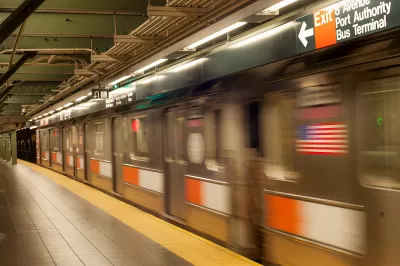
The full accessibility of New York City’s transit system hinges on revenue from the city’s upcoming congestion pricing scheme, according to a report from the NYU Rudin Center for Transportation which “finds the Metropolitan Transportation Authority’s ability to deliver the remaining accessible stations hinges on the $15 billion in capital funding to be generated from the Central Business District Tolling Program.”
The congestion pricing program, years in the making, will charge drivers who enter a designated area of Manhattan, with prices higher during peak hours to encourage off-peak driving. Revenue from the program is a key component of the funding needed to make New York’s transit stations fully accessible and is expected to bring in roughly $15 million.
According to the report, “Accessing the public transit system can present challenges for the 13% of New Yorkers with physical disabilities. Currently 30% of subway stations have elevators or ramps, significantly limiting services for those with ambulatory disabilities and other access needs.”
FULL STORY: Progress Toward Making NYC Transit System Fully Accessible Hinges on Congestion Pricing: NYU Rudin Center

Mobile App Makes DC Transit Easy to Navigate for Visually Impaired Riders
The app gives step-by-step directions and audio and visual cues accessible from anywhere for thousands of bus stops and rail stations.
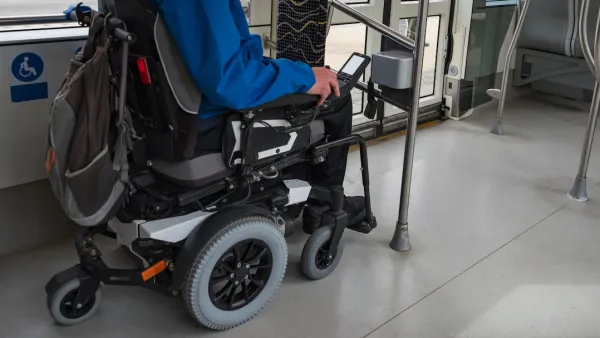
USDOT Issues Accessibility Guidelines for Transit Stations
A new rule aims to clarify accessibility requirements to help state and local DOTs upgrade their facilities more quickly to meet ADA standards.
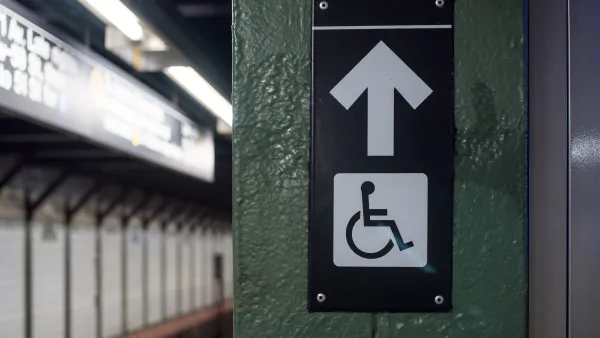
New York Must Make Almost All Subway Stations Accessible by 2055, Judge Rules
Another recent ruling is forcing the agency to accelerate its efforts to make all New York subway stations accessible to people with disabilities and mobility issues.

Planetizen Federal Action Tracker
A weekly monitor of how Trump’s orders and actions are impacting planners and planning in America.

The state-sanctioned urbicide of Austin
People don’t kill cities. Freeways do.

US to reduce Colorado River water deliveries to Mexico
A new Colorado Treaty amendment reduces Mexico’s Colorado River water allocation by 250,000 acre feet.

5 New England states march closer to 800 megawatt wind energy project
Securing federal approval for the project may be complicated under the Trump administration, which has historically been hostile towards domestic wind power.

Baltimore to break ground on $50 million Transit Priority Project
The project will bring faster bus trips, safer streets and better bike connections to Baltimore.

Airbnb launches $250 million 'last-dollar financing' housing accelerator, makes first investment in Austin
The company will put $6.4 million towards affordable housing development in Texas’ capital.

FREE Course: Walkable City 1: Why Walkability?
After describing his path towards focusing on walkability as the essence of good planning, Jeff Speck marches through his five principal reasons for making more walkable places.
Reinventing Malls: Planning Alchemy—Turning Gray Fields Into Gold
The course focuses on the opportunities and imperatives that shape reinvention of mall sites.

Eagle County Government
Harvard University Graduate School of Design
Nashville Planning Department
The Architects Foundation
University of Cincinnati Online
The Pocatello Development Authority
The Urban Renewal Agency of the City of Pocatello
Journal of the American Planning Association