The project entered the engineering phase and received just over $1 billion in federal funding last week.



A project dubbed the Inglewood Transit Connector (ITC) received $1 billion in federal funding, putting the project one step closer to reality. The 1.6-mile ‘people mover’ would connect Inglewood’s sports stadiums and downtown area and link to the Los Angeles Metro K Line, reports Kristine Klein in The Architect’s Newspaper. “In addition to the funding boost, the ITC, according to the City of Inglewood, has entered ‘the Engineering phase of project development under the Federal Transit Administration’s (FTA) Capital Investment Grant (CIG) program.’”
Inglewood, in western Los Angeles County, will host several events during the 2028 Olympics, though the people mover is not scheduled to open for operation until 2030. “While the mode of transportation will likely be packed on game days, project coordinators anticipate commuters will also benefit from it. ITC will have the capacity to carry 11,000 riders each hour. It replaces and augments the Metro Bus service presently used in the area, reduces traffic congestion on the roadways, and offers an alternative transportation option amidst the region’s growing transit network.”
However, the project will also displace 44 local businesses. Inglewood Mayor Butts says the city has allocated at least $5 million for their assistance.
Read the full story: Inglewood, California’s people mover receives $1 billion in federal funding
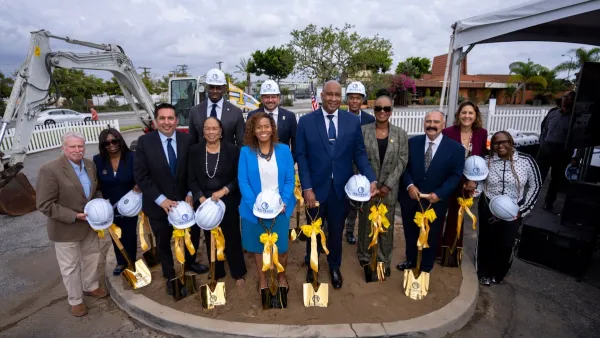
California city breaks ground on transit connector
The project includes three mobility hubs and a pedestrian bridge.
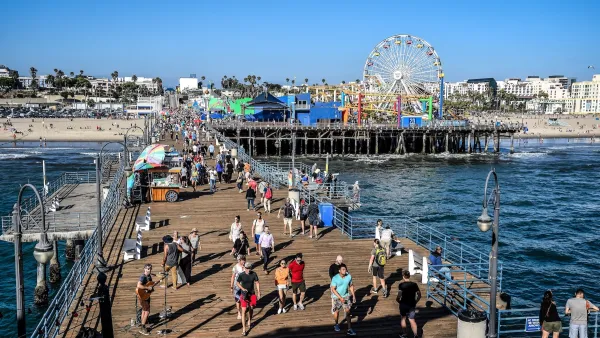
LA County's 'Beach Bus' offers $6 round-trip rides from inland LA to the beach
The annual summer service shuttles residents from eastside communities to Santa Monica.
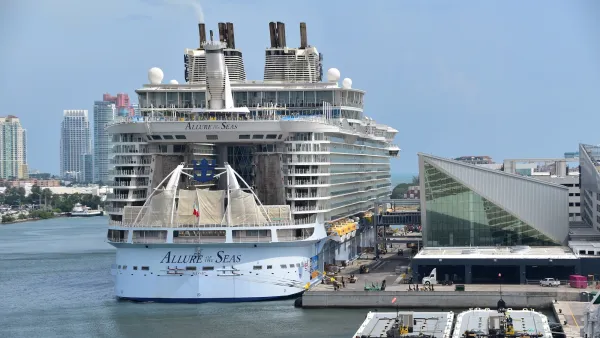
Miami Considers Airport-to-Port Train to Ease Cruise Ship Traffic
Miami’s port is one of the world’s busiest cruise ship terminals.

Planetizen Federal Action Tracker
A weekly monitor of how Trump’s orders and actions are impacting planners and planning in America.

California plans to bury El Niño’s downpour
If the state plays its cards right, it may be able to store a billion acre-feet of El Niño’s water in aquifers.

Desperate measures: Advocates weigh draining Lake Powell to fill Colorado River
Draining the reservoir could reduce evaporation losses by a couple hundred thousand acre-feet.

Mamdani’s pied-à-terre tax survives legal challenge
A panel of judges found that the plaintiffs failed to demonstrate injury as a result of New York City's implementation of the tax.

Eastern Nebraska is running out of electricity
Data centers and electrification are straining eastern Nebraska’s grid, throttling economic development.

Seattle passes record-breaking transit services expansion
Proposition 1 will double the city’s transit tax to add 95,000 more bus trips and preserve 180,000 bus trips annually.

FREE Course: Walkable City 1: Why Walkability?
After describing his path towards focusing on walkability as the essence of good planning, Jeff Speck marches through his five principal reasons for making more walkable places.
Reinventing Malls: Planning Alchemy—Turning Gray Fields Into Gold
The course focuses on the opportunities and imperatives that shape reinvention of mall sites.

City of Rosemead
Rutgers University, Edward J. Bloustein School of Planning and Public Policy
One Hundred Miles
University of Michigan School for Environment and Sustainability (SEAS)
Hunter College, City University of New York (CUNY)
The Architects Foundation
City of Cambridge
Montrose County
The Pocatello Development Authority