The car-centric design of many U.S. cities traps young people at home, preventing them from engaging in social activities and urban life.



In an opinion piece published in Congress for New Urbanism’s Public Square, high school senior Rahul Rejeev argues that “The lack of effective transit, coupled with the lack of kid-friendly destinations and the feeling of more dangerous neighborhoods, means that today’s youth find it harder than ever to go outside, meet up with friends, and form more meaningful relationships.”
The American reliance on the personal automobile particularly impacts young people, many of whom face barriers that prevent them from getting their licenses or buying cars even when they’re old enough. “Lack of mobility coupled with large distances means that kids are far from the places where they want to hang out,” isolating them from social and economic opportunities. “Public transport is the only guaranteed way for a young person to be free and enjoy mobility,” Rejeev writes.
For Rejeev, zoning reform, pedestrian-friendly infrastructure, and efficient public transit are not just ways to curb carbon emissions and reduce car dependency, but also significant ways to improve the lives of young people.
FULL STORY: Children, left behind by suburbia, need better community design

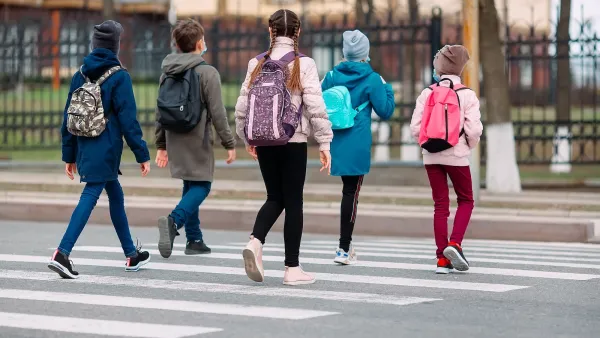
The number of kids walking to school dropped from over 50% to 11% since the 1960s
Unsafe pedestrian infrastructure makes walking to school dangerous or impossible for a growing number of American students.
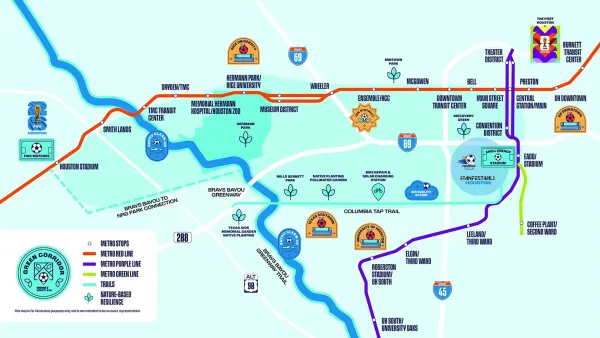
Houston improved walkability ahead of the World Cup. Will it last?
Some mobility advocates say the city's 'Green Corridor' amounts to 'lipstick on a pig' rather than a true commitment to better transit and walking infrastructure.
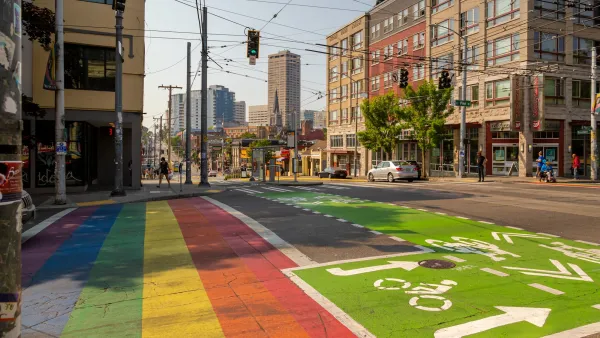
Seattle Creates 4 ‘Low-pollution Neighborhoods’
The pilot program is designed to reduce air pollution and increase access to transit and safe walking and biking infrastructure.

The state-sanctioned urbicide of Austin
People don’t kill cities. Freeways do.

US to reduce Colorado River water deliveries to Mexico
A new Colorado Treaty amendment reduces Mexico’s Colorado River water allocation by 250,000 acre feet.

New Jersey’s second-largest city bans standalone data centers
Jersey City will continue to allow co-location facilities, such as those meant for research institutions that store their own data.

Amtrak not solely to blame for New Jersey commuter rail's unreliability, report finds
A new study from the Garden State Initiative found that NJ Transit’s budget grew 20% across a 4 year period, but reliability declined significantly over the same period.

EPA erases limits on planet-warming pollution from power plants
Under Monday’s plan, power plants would still have some limits on how much mercury, arsenic and other contaminants they can emit.

Phoenix announces new on-demand transit service, more frequent RAPID buses
Both new services will launch in October, and are part of Phoenix's Project Effective Access Solutions for Easing Congestion.

FREE Course: Walkable City 1: Why Walkability?
After describing his path towards focusing on walkability as the essence of good planning, Jeff Speck marches through his five principal reasons for making more walkable places.
Reinventing Malls: Planning Alchemy—Turning Gray Fields Into Gold
The course focuses on the opportunities and imperatives that shape reinvention of mall sites.

Eagle County Government
Harvard University Graduate School of Design
Nashville Planning Department
The Architects Foundation
University of Cincinnati Online
The Pocatello Development Authority
The Urban Renewal Agency of the City of Pocatello
Journal of the American Planning Association