The city aims to eliminate the majority of landfill waste by 2040.


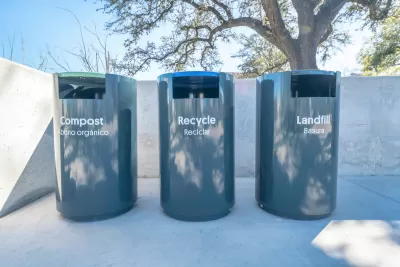
A new Comprehensive Plan from Austin Resource Recovery (ARR) charts the city’s path to zero waste, a commitment the city fell behind on after only diverting 40 percent of materials from landfills by 2020, short of its goal of 75 percent.
As Hannah Rossi reports in The Austin Chronicle, the plan identifies the city’s population growth, the increase in “abnormal weather events,” and waste stream privatization as challenges to achieving its zero waste by 2040 goal. According to the plan, privatization “precludes the city from being able to collect accurate data on its progress towards achieving zero waste, as companies fear that any numbers they share will become public record – and ammunition for competitors.”
The plan highlights the urgency of “more infrastructure, more recycling and circular economy education programs, and more access to digital tools and collection services.”
The agency says it has started work on several projects including “an EPA-funded furniture repair and reuse warehouse,” but “acknowledges that there is a long road ahead to ticking off the more than 60 near- and long-term goals it lays out in its Comprehensive Plan.”
FULL STORY: Austin Resource Recovery Charts a New Course to Achieving Zero Waste

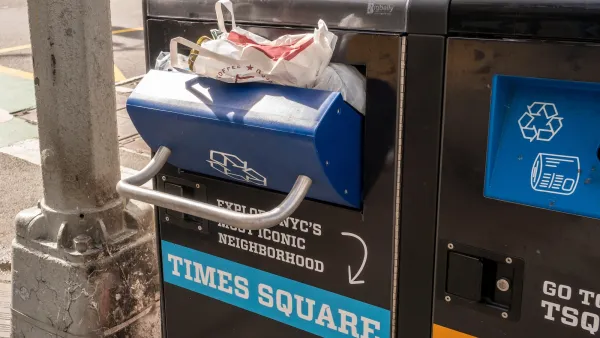
Why is Public Sanitation so Hard?
U.S. cities struggle to keep streets and sidewalks clean. Some are turning to high-tech trash cans to help.
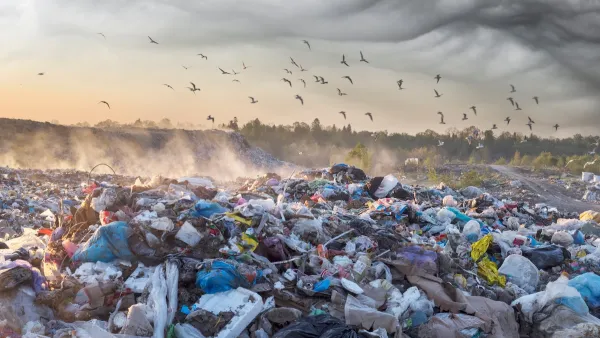
Colorado Landfills Emit as Much Pollution as 1M Cars
Landfills are the third-largest source of methane pollution in Colorado, after agriculture and fossil fuel extraction.
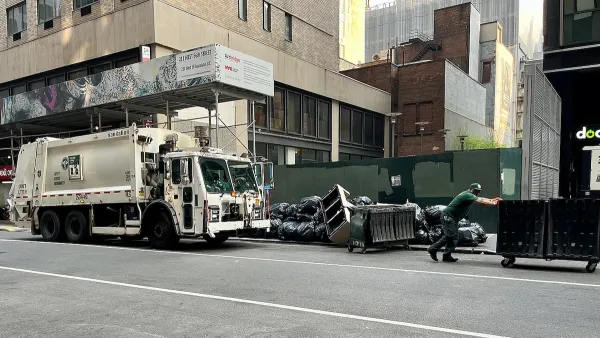
Parked Cars Hamper NYC Trash Containerization Effort
Sanitation workers must manually collect bags from containers blocked by parked cars, slowing a process that is meant to be safer and more efficient.

Planetizen Federal Action Tracker
A weekly monitor of how Trump’s orders and actions are impacting planners and planning in America.

The state-sanctioned urbicide of Austin
People don’t kill cities. Freeways do.

US to reduce Colorado River water deliveries to Mexico
A new Colorado Treaty amendment reduces Mexico’s Colorado River water allocation by 250,000 acre feet.

Mamdani overhauls NYC's Vision Zero plan with 100 new policy goals
The overhaul aims to reduce traffic deaths and make streets safer for pedestrians, cyclists and drivers through lower speed limits, new safety infrastructure and more.

Amtrak not solely to blame for New Jersey commuter rail's unreliability, report finds
A new study from the Garden State Initiative found that NJ Transit’s budget grew 20% across a 4 year period, but reliability declined significantly over the same period.

EPA erases limits on planet-warming pollution from power plants
Under Monday’s plan, power plants would still have some limits on how much mercury, arsenic and other contaminants they can emit.

FREE Course: Walkable City 1: Why Walkability?
After describing his path towards focusing on walkability as the essence of good planning, Jeff Speck marches through his five principal reasons for making more walkable places.
Reinventing Malls: Planning Alchemy—Turning Gray Fields Into Gold
The course focuses on the opportunities and imperatives that shape reinvention of mall sites.

Eagle County Government
Harvard University Graduate School of Design
Nashville Planning Department
The Architects Foundation
University of Cincinnati Online
The Pocatello Development Authority
The Urban Renewal Agency of the City of Pocatello
Journal of the American Planning Association