Many of Europe’s pedestrian-friendly, transit-rich cities weren’t always that way.


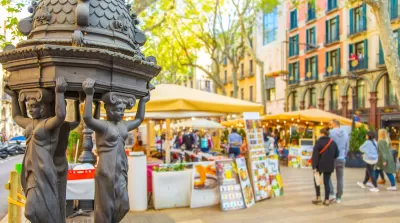
It’s no news to urbanists that many European cities—for a wealth of reasons including history, geography, and politics—are more walkable, bike-friendly, and less car-focused than their American counterparts. In a conversation with Strong Towns described by Seairra Jones, travel host and guidebook author Rick Steves outlines how cities can achieve safe, pedestrian-oriented urban spaces.
“Our conversation ranged from the importance of populated downtowns, to the social and economic benefits of shared spaces, to how every great place has hidden heroes who helped make it that way,” Jones writes. Steves praises the robust bike infrastructure of places like Copenhagen, where ample secure bike parking makes it easy for residents to get around the city core without cars. When it comes to the lack of reliable train service in the United States, Stevens points out that “I think we have the infrastructure, but the priority for the infrastructure is not people, it's cargo.”
Moreover, while many of Europe’s most famous walkable streets and cities seem like historical artifacts, some are actually recent transformations. Through the efforts or advocates, “now, the roads are thinner, the sidewalks are wider. And the roads are used by local residents and service vehicles and police and public transit.” Steves adds, “I live in a beautiful community, and it's so clear to me that beautiful communities don't just happen. They happen because of quiet heroism of local citizens who get involved, sit in meetings, stick at something they're passionate about, and make a difference in a grassroots kind of way.”
FULL STORY: Rick Steves: What Americans Can Learn From Europe’s People-Friendly Places

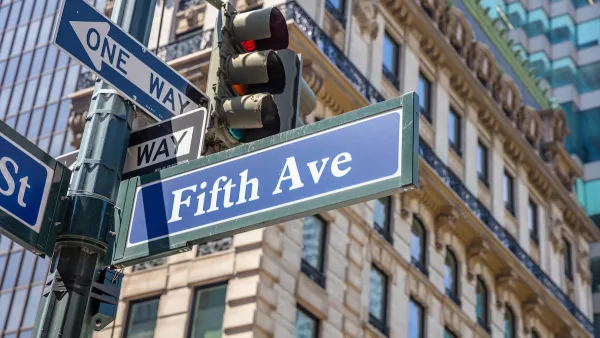
What Will Become of Fifth Avenue?
Visitors to the iconic shopping street overwhelmingly arrive by walking, transit, or bike. Why are bike and pedestrian infrastructure improvement lagging so far behind another famous NYC street, Broadway?
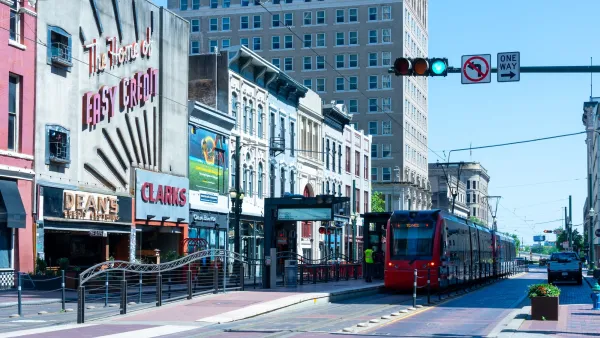
Houston's pedestrian promenade on track to be ready for World Cup crowds
The city is transforming seven downtown blocks along a light rail line into a car-free zone focused on outdoor dining and entertainment.
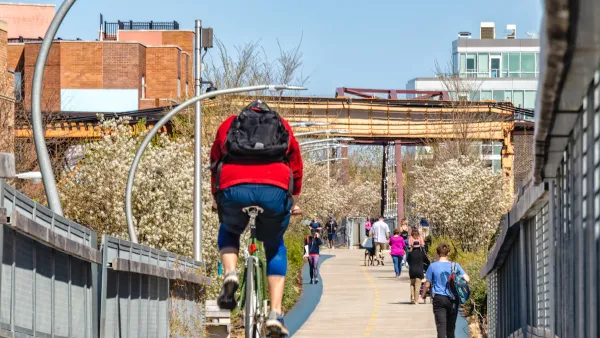
A Framework for Effective Transit-Oriented Development
Six principles for building vibrant, accessible communities with a focus on sustainable transportation.

Planetizen Federal Action Tracker
A weekly monitor of how Trump’s orders and actions are impacting planners and planning in America.

The state-sanctioned urbicide of Austin
People don’t kill cities. Freeways do.

US to reduce Colorado River water deliveries to Mexico
A new Colorado Treaty amendment reduces Mexico’s Colorado River water allocation by 250,000 acre feet.

Mamdani overhauls NYC's Vision Zero plan with 100 new policy goals
The overhaul aims to reduce traffic deaths and make streets safer for pedestrians, cyclists and drivers through lower speed limits, new safety infrastructure and more.

Amtrak not solely to blame for New Jersey commuter rail's unreliability, report finds
A new study from the Garden State Initiative found that NJ Transit’s budget grew 20% across a 4 year period, but reliability declined significantly over the same period.

EPA erases limits on planet-warming pollution from power plants
Under Monday’s plan, power plants would still have some limits on how much mercury, arsenic and other contaminants they can emit.

FREE Course: Walkable City 1: Why Walkability?
After describing his path towards focusing on walkability as the essence of good planning, Jeff Speck marches through his five principal reasons for making more walkable places.
Reinventing Malls: Planning Alchemy—Turning Gray Fields Into Gold
The course focuses on the opportunities and imperatives that shape reinvention of mall sites.

Eagle County Government
Harvard University Graduate School of Design
Nashville Planning Department
The Architects Foundation
University of Cincinnati Online
The Pocatello Development Authority
The Urban Renewal Agency of the City of Pocatello
Journal of the American Planning Association