The lines were chosen based on the income levels, ridership, and lack of subway access in surrounding neighborhoods.


Writing in El País, María Antonia Sánchez-Vallejo outlines New York City’s free transit pilot program, being launched on five bus lines that serve some of the city’s lowest-income neighborhoods.
The lines are spread out across each of the city’s five boroughs and will offer free rides for at least six months, with the possibility of extending the program to one year. “The authorities have explained that the routes were chosen based on ridership, fare non-payment rates and poverty in adjacent communities, as well as the routes’ access to commercial corridors.”
“As in Boston, where more than half of the users of the free lines live in low-income neighborhoods, the New York experiment seeks not only an environmental benefit, but above all to alleviate the unequal mobility of its residents in pursuit of greater spatial equity, which those who advocate alternative transportation models consider an essential step towards environmental sustainability.”
The program is expected to benefit up to 44,000 of the system’s 1.4 million weekly users each day. The article notes that “New York’s buses are the slowest in the country, with an average speed of 13 kilometers per hour (8mph). They are often excruciatingly slow, with runs that can exceed an hour in length.”
FULL STORY: New York rolls out free public transportation pilot project on five city bus lines

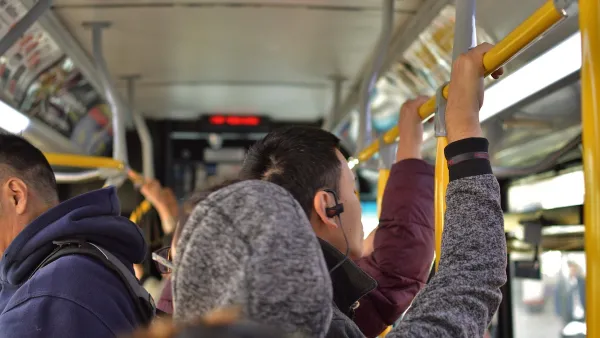
New York MTA Makes Five Bus Routes Fare-Free
The state-funded effort is a way to assess how free fares impact ridership.
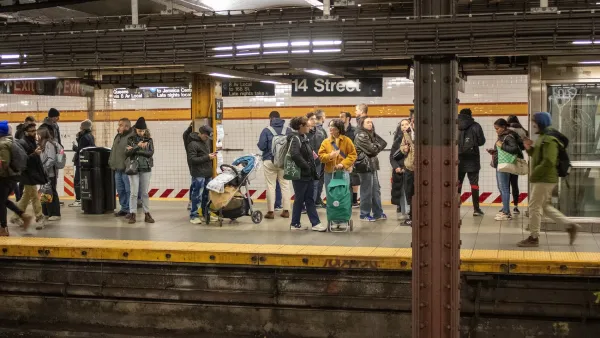
Report: Expanding MTA Fair Fares subway program would benefit New Yorkers more than free buses
A report from the city's Citizens Budget Commission recommends subsidizing fares for more low-income subway riders rather than making buses free for everyone.
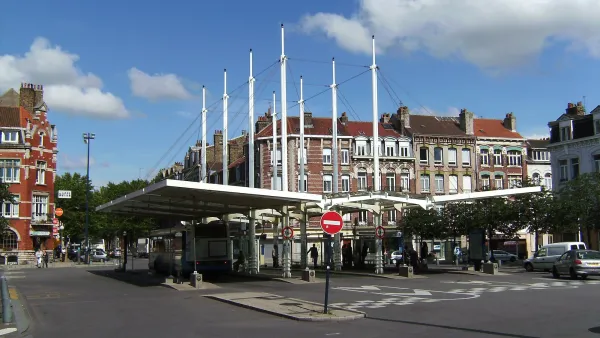
Zohran's Free Buses are Possible — Just Ask This French City
Dunkirk’s free buses are bringing social and economic rewards at a small cost to the city.

Planetizen Federal Action Tracker
A weekly monitor of how Trump’s orders and actions are impacting planners and planning in America.

The state-sanctioned urbicide of Austin
People don’t kill cities. Freeways do.

US to reduce Colorado River water deliveries to Mexico
A new Colorado Treaty amendment reduces Mexico’s Colorado River water allocation by 250,000 acre feet.

Mamdani overhauls NYC's Vision Zero plan with 100 new policy goals
The overhaul aims to reduce traffic deaths and make streets safer for pedestrians, cyclists and drivers through lower speed limits, new safety infrastructure and more.

Amtrak not solely to blame for New Jersey commuter rail's unreliability, report finds
A new study from the Garden State Initiative found that NJ Transit’s budget grew 20% across a 4 year period, but reliability declined significantly over the same period.

EPA erases limits on planet-warming pollution from power plants
Under Monday’s plan, power plants would still have some limits on how much mercury, arsenic and other contaminants they can emit.

FREE Course: Walkable City 1: Why Walkability?
After describing his path towards focusing on walkability as the essence of good planning, Jeff Speck marches through his five principal reasons for making more walkable places.
Reinventing Malls: Planning Alchemy—Turning Gray Fields Into Gold
The course focuses on the opportunities and imperatives that shape reinvention of mall sites.

Eagle County Government
Harvard University Graduate School of Design
Nashville Planning Department
The Architects Foundation
University of Cincinnati Online
The Pocatello Development Authority
The Urban Renewal Agency of the City of Pocatello
Journal of the American Planning Association