After residents rejected transit expansion proposals in 2019 and 2020, local officials went back to the drawing board, removing heavy rail plans and focusing on microtransit and local buses.


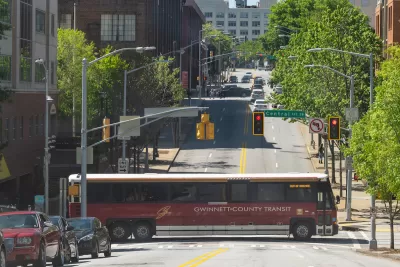
Georgia’s Gwinnett County is asking its voters to approve an ambitious $17 billion Transit Development Plan that would expand on-demand transit and bus service and create a new 26-mile bus rapid transit (BRT) line.
According to an article by Jared Brey in Governing, the plan would be funded via a one-cent sales tax increase. Brey points out that “It’s a proposal with a lot of uncertainty, given that county voters rejected a similar tax in both 2019 and 2020, and voted against transit expansions in the 1990s and the 1970s.”
However, the new plan focuses on improving mobility within the county, rather than making connections to the city of Atlanta, which many in the county have long opposed. Brey explains that “residents made it clear they don’t want to be part of MARTA, and the new plan favors countywide microtransit service along with lower-cost bus rapid transit, instead of rail.”
County officials say the microtransit expansion would benefit all residents, even those who don’t use transit, by reducing congestion on local roads. A referendum has not been scheduled, but could be on the ballot next November.
FULL STORY: Atlanta Suburbs Will Try Again to Expand Public Transit

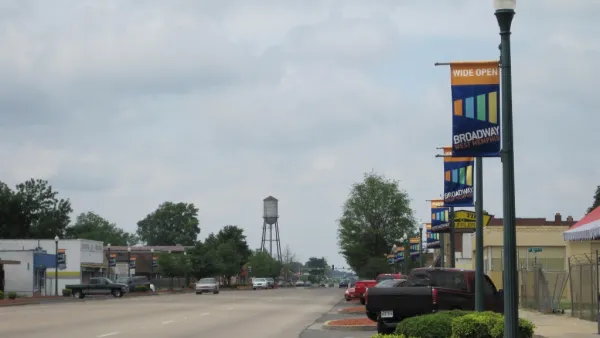
West Memphis to launch new transit system
The city across the Mississippi River from Memphis, Tennessee will soon begin service on its own, on-demand transit system.

El Paso launches improved bus network, new microtransit service
Sun Metro is eliminating some bus lines in favor of more frequent service, estimating that only 1% of riders will have to walk farther to reach a station.

South Florida Microtransit Nears 1.5 Million Rides
Fort Lauderdale’s LauderGO! shuttle service reported 700,000 rides.

Planetizen Federal Action Tracker
A weekly monitor of how Trump’s orders and actions are impacting planners and planning in America.

The state-sanctioned urbicide of Austin
People don’t kill cities. Freeways do.

US to reduce Colorado River water deliveries to Mexico
A new Colorado Treaty amendment reduces Mexico’s Colorado River water allocation by 250,000 acre feet.

5 New England states march closer to 800 megawatt wind energy project
Securing federal approval for the project may be complicated under the Trump administration, which has historically been hostile towards domestic wind power.

Baltimore to break ground on $50 million Transit Priority Project
The project will bring faster bus trips, safer streets and better bike connections to Baltimore.

Airbnb launches $250 million 'last-dollar financing' housing accelerator, makes first investment in Austin
The company will put $6.4 million towards affordable housing development in Texas’ capital.

FREE Course: Walkable City 1: Why Walkability?
After describing his path towards focusing on walkability as the essence of good planning, Jeff Speck marches through his five principal reasons for making more walkable places.
Reinventing Malls: Planning Alchemy—Turning Gray Fields Into Gold
The course focuses on the opportunities and imperatives that shape reinvention of mall sites.

Eagle County Government
Harvard University Graduate School of Design
Nashville Planning Department
The Architects Foundation
University of Cincinnati Online
The Pocatello Development Authority
The Urban Renewal Agency of the City of Pocatello
Journal of the American Planning Association